
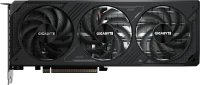
INNO3D GeForce RTX 5070 X3 OC (N50703-12D7X-195064L)
 | Expecting restock The next-generation graphics card represents the next step in the development of the NVIDIA RTX family of graphics cards. It stands out due to its smart balance between high performance and support for current image post-processing technologies. The manufacturer positions it as an optimal solution for gamers and professionals dealing with resource-intensive tasks. It is intended to replace outdated NVIDIA graphics accelerators with the numbers 7 and 8 in the name (RTX 2070/2080/3070/3080), making it ideal for running modern high-budget games at 1440p resolution with high graphics settings and optional ray tracing.
The basis of the INNO3D GeForce RTX 5070 X3 OC is the GB205 graphics processor, manufactured using a 4-nm technological process at TSMC. The graphics card is equipped wi...th 12 GB of GDDR7 memory with a 192-bit bus, providing a bandwidth of up to 672 GB/s. The configuration includes 6144 CUDA cores with a base frequency of 2542 MHz, as well as 192 tensor cores for AI workloads and 48 specialized RT cores for ray tracing. In native rendering, the model shows a moderate performance increase (15-20%) compared to its predecessor, the RTX 4070.
However, the key advantage lies in the significantly improved support for DLSS 4.0 technology, which uses an innovative multi-frame generation algorithm. DLSS 4.0 represents a substantial leap forward in upscaling technology, where the neural network analyzes several previous frames to create a higher quality image with minimal artifacts and increased stability. This allows for achieving high frame rates in modern games with ray tracing enabled, even at 4K resolution. |




INNO3D GeForce RTX 5070 X3 OC | ||||||||||||||||||||||||||||||||||||||||||||||||||||||||||||||||||||||||||||||||||||||||
|
| |||||||||||||||||||||||||||||||||||||||||||||||||||||||||||||||||||||||||||||||||||||||

The next-generation graphics card represents the next step in the development of the NVIDIA RTX family of graphics cards. It stands out due to its smart balance between high performance and support for current image post-processing technologies. The manufacturer positions it as an optimal solution for gamers and professionals dealing with resource-intensive tasks. It is intended to replace outdated NVIDIA graphics accelerators with the numbers 7 and 8 in the name (RTX 2070/2080/3070/3080), making it ideal for running modern high-budget games at 1440p resolution with high graphics settings and optional ray tracing.
The basis of the INNO3D GeForce RTX 5070 X3 OC is the GB205 graphics processor, manufactured using a 4-nm technological process at TSMC. The graphics card is equipped with 12 GB of GDDR7 memory with a 192-bit bus, providing a bandwidth of up to 672 GB/s. The configuration includes 6144 CUDA cores with a base frequency of 2542 MHz, as well as 192 tensor cores for AI workloads and 48 specialized RT cores for ray tracing.
In native rendering, the model shows a moderate performance increase (15-20%) compared to its predecessor, the RTX 4070. However, the key advantage lies in the significantly improved support for DLSS 4.0 technology, which uses an innovative multi-frame generation algorithm. DLSS 4.0 represents a substantial leap forward in upscaling technology, where the neural network analyzes several previous frames to create a higher quality image with minimal artifacts and increased stability. This allows for achieving high frame rates in modern games with ray tracing enabled, even at 4K resolution.
Always clarify the specifications and configuration of the product with the online store manager before purchasing.
Catalog INNO3D 2026 - new arrivals, bestsellers, and the most relevant models INNO3D.










Complete reboot
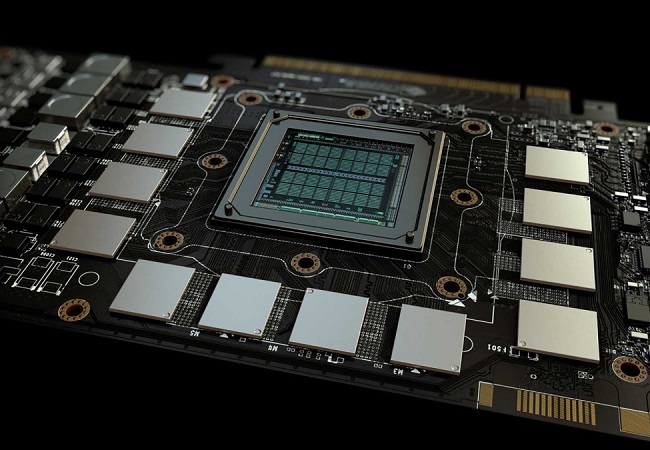
The INNO3D GeForce RTX 5070 X3 OC graphics card is built on NVIDIA’s Blackwell architecture and comes with updated graphics processing engines. The chip includes 192 fifth‑generation Tensor Cores that accelerate DLSS 4, boost FPS, and deliver stability in 4K gaming. Fourth‑generation RT Cores handle realistic ray tracing with improved shadow and object detail. The adapter makes extensive use of AI algorithms, giving you advantages not only in games but also in professional rendering, graphic design, and video calls. Built‑in real‑time systems enhance camera image quality, remove microphone noise, and improve clarity and color when watching movies. On top of that, you get NVIDIA’s signature technologies that traditionally come with new releases.
Structural minimalism
The board measures just 300 mm, making it compatible with most midi and mini‑tower cases while taking up only 2 slots. This compact size lets you use the model in high‑performance builds with limited space. Efficient cooling is provided by an aluminum heatsink, six nickel‑plated composite heat pipes, and three Scythe fans with a continuous rim. A perforated metal backplate further improves heat dissipation and protects the PCB from flex.