Microlab Solo 6C
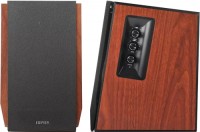
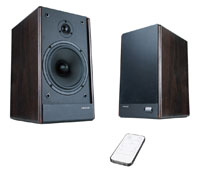 | Outdated Product High-end class 2.0 bookshelf speakers with clear and detailed sound in the high and mid frequency ranges. The kit belongs to the middle price category and is the best option for users who prioritize sound quality over wireless connection, built-in lighting and other optional things. Each Solo 6C has one 6.5" bass driver and one 1" tweeter. The speakers are capable of reproducing a frequency range from 55 to 20,000 Hz and stand out with powerful, spacious and clear sound throughout the spectrum. At the peak of the Microlab Solo 6C, you can "squeeze out" up to 100 watts of sound power. Wood (MDF) is used to finish the speaker cabinets. The controls for the acoustic set and the connectors for connecting to sound sources are concentrated on the back side of the head speaker housing. In additio...n to the standard volume, there are separate bass and treble controls. The system provides a fairly wide range of volume from 0 to 60 units. Bass and treble can also be tweaked using the included remote control. For visual control of the playback volume, a special indication is displayed on the front panel of the active speaker. The dimensions of the columns are 210x361x272 mm, and their total weight almost reaches 14 kg. |


Microlab Solo 6C | ||||||||||||||||||||||||||||||||||||||||||||||
|
| |||||||||||||||||||||||||||||||||||||||||||||


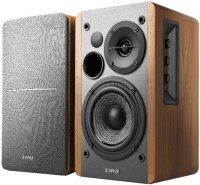
High-end class 2.0 bookshelf speakers with clear and detailed sound in the high and mid frequency ranges. The kit belongs to the middle price category and is the best option for users who prioritize sound quality over wireless connection, built-in lighting and other optional things. Each Solo 6C has one 6.5" bass driver and one 1" tweeter. The speakers are capable of reproducing a frequency range from 55 to 20,000 Hz and stand out with powerful, spacious and clear sound throughout the spectrum.
At the peak of the Microlab Solo 6C, you can "squeeze out" up to 100 watts of sound power. Wood (MDF) is used to finish the speaker cabinets. The controls for the acoustic set and the connectors for connecting to sound sources are concentrated on the back side of the head speaker housing. In addition to the standard volume, there are separate bass and treble controls. The system provides a fairly wide range of volume from 0 to 60 units. Bass and treble can also be tweaked using the included remote control. For visual control of the playback volume, a special indication is displayed on the front panel of the active speaker. The dimensions of the columns are 210x361x272 mm, and their total weight almost reaches 14 kg.

Always clarify the specifications and configuration of the product with the online store manager before purchasing.
Catalog Microlab 2026 - new arrivals, bestsellers, and the most relevant models Microlab.
0 1 2 4 |
The best value for money, the sound is excellent, and there's no lack of bass! Perfect. like everything else, it gets old..  Mikhael: use Microlab Solo 6C more than year i recommend it should buy Mikhael: use Microlab Solo 6C more than year i recommend it should buy |
The sound is excellent, reproduces a very wide range of frequencies, and the spaciousness of the sound is pleasantly impressive. They can be made VERY loud; I couldn't stand it for a second and immediately turned it down LOL. Conclusion: The speakers are great, I recommend them. Huge power for a 2.0 system, good and clear sound without hissing, 55—31000 Hz frequency range, remote control. Expensive for a 2.0 system Gorec: use Microlab Solo 6C month or more i recommend it should buy |
I ordered both the Microlab SOLO 6C and the Edifier R2700 at the same time. I ordered both because after reading reviews and forums and watching a lot of YouTube, I couldn't decide. There's nowhere to listen in my city. Only online shopping. I decided that I'd keep the better ones in my room and send the others to the living room with the TV. I paid around €126 for the Microlab SOLO 6C and approximately €172 for the Edifiers R2700. The difference is about €45. So, after listening to both for two days, I kept the Microlab 6C for my room. They sound nicer, more saturated, and musical. It's hard to describe in words. Also, the highs are better with Microlab—you don’t even need to listen closely to notice this. The mids and bass quality are comparable—the difference is only about 3-5% depending on the song. The listening was done only in FLAC format. The Microlabs are also louder. But the Edifiers have one significant advantage for me—the bass reflex port is in the front. But this doesn’t affect the sound, only adds some difficulties when setting up the speakers (Microlab SOLO 6C) in the room. As a result, I kept the Microlab 6C in the room. Additionally, I'll have them connected in parallel with the Logitech Z-2300 (because of 120 W subwoofer). Although that's sometimes. It depends on the music I'm going to listen to. The listening was done using an external USB sound card Creative X-FI 5.1. The Microlabs were connected through analog, and the Edifiers through both analog and digital. I didn't notice any major difference in sound quality between the analog and digital with the Edifiers. It just seemed like they played louder. Sound quality. Price. Bass reflex port is at the back. Settings are only on the remote (though, that's a plus. As long as the remote works well and for a long time. But everything can also be set up by software). Settings reset when unplugged from the network (although this doesn't matter much to me, as all settings are through the sound card + player). Goliaf: use Microlab Solo 6C week |




For those who value sound quality the most
The Solo series is at least a timeless classic. And as a maximum — a measure of the quality of multimedia speakers. If you google old reviews of this series, you will see nothing but rave reviews and headlines like "crystal sound", "10 out of 10" and "I want to marry them".
All this is due to the fact that they were developed by a talented Danish specialist Peter Larsen, known for his work in Vifa, Scan-Speak and Dynaudio. He probably brought with him a little hi-fi philosophy — to release new models rarely, but accurately, and not to shoot back once a year, like Apple with the iPhone. Otherwise, how else to explain their popularity after so much time?
The Solo 6C model is the golden mean in this line — more powerful than the 5C, but not as bulky as the three-speaker 7C. Outwardly, these are quite large and not the prettiest two-way speakers. They are not friendly with USB, Bluetooth, and generally do not know how to do anything except play music and voice games. But when they turn on, they work out every penny by 110%.
Their feature is the natural transmission of timbres with extremely scrupulous attention to detail. And, most importantly, versatility. Have you ever seen wording in reviews like “the speakers play aggressively and will suit rock lovers”? So, Solo will suit everyone, regardless of musical tastes, ear sensitivity and party affiliation. Another big plus is the deep and rounded bass at any volume, which eliminates the spontaneous desire to buy a subwoofer for the speakers.
- Microlab Solo 6C differs from Microlab Solo 6 in the presence of a remote control