
Sennheiser GSX 1000
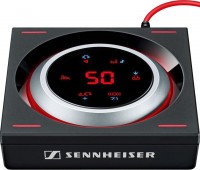 |


Sennheiser GSX 1000 | ||||||||||||||||||||||||||||||||||||||||||||||||||
|
| |||||||||||||||||||||||||||||||||||||||||||||||||

Always clarify the specifications and configuration of the product with the online store manager before purchasing.
Catalog Sennheiser 2026 - new arrivals, bestsellers, and the most relevant models Sennheiser.
Unprecedented 3D sound in gaming for headphones. In terms of immersion in the happenings, this card outperforms even veterans like Creative SBX G6 and Asus Xonar Phoebus, but I repeat, you won't gain an advantage in positioning. In this regard, it is similar to the competitors. Ease of use (very conditionally, but the absence of software does simplify working with the card). Almost all of the card's features are accessible via a touch display, and you instantly get access to them without software. Magnificent design, although it might not fit perfectly into every setup. I have a slight miss, as I don't like colored lighting, only white, and my entire setup is white, making the card look a bit like an "odd bird." Excellent build quality. There's really nothing to complain about here. The rubber on the body is extremely grippy, and the volume adjustment wheel is so smooth that it feels like it's touch-sensitive, thanks to a very cool bearing. The display is also informative, though it gets a bit smudged over time. It's very convenient to have a separate volume adjustment wheel for the microphone. Separate outputs for speakers and headphones. It switches with a single press and doesn't require cable changing. The card is stated to support 16-150 Ohms. I used [censored] SR70 headphones with this card at 150 Ohms, and there's no volume reserve. For me, the 100% volume level is just comfortable, but I think it would clearly be insufficient for most users. It's best to pair it with headphones having an impedance below 120 Ohms. Taking this card, you accept a bunch of compromises like the inability to use a resolution greater than 16/48 in 3D, the absence of an equalizer, and the lack of software for fine-tuning, but in exchange, you get an incredible level of immersion in games. Audiophiles will clearly not be satisfied with this card, as its quality and detailing of ordinary stereo sound still fall short compared to competitors like Asus and Creative in the same price range, especially when using very high-quality recordings. The simplicity of this card is both a plus and more so a minus. It's not particularly feasible to customize the card to your liking. The microphone input is rather mediocre. It only allows recording sound in mono and at 16bit/16KHz, which is enough for speech in TeamSpeak or Discord but categorically inadequate for anything else. All connectors are on the back panel of the card, which, for me, is more of a drawback. If your headphone cable is short and non-replaceable, definitely keep this in mind.  Vladimir: use Sennheiser GSX 1000 less than month Vladimir: use Sennheiser GSX 1000 less than month |
Gaming hybrid
The German company Sennheiser, which has long enjoyed the respect of audiophiles, has recently taken up the video game market. Following a pack of gaming headphones, Sennheiser showed a rather interesting device GSX 1000, which is positioned not so much as a sound card, but as an amplifier for gaming headphones with USB power supply.
Plug-n-play and frequency range from 2 to 48,000 Hz
GSX 1000 is notable for several things: plug-n-play mode with no drivers (all settings are embedded in the card, so they are called directly from it), a large number of different gaming modes, and an excellent multi-channel mode. The company does not disclose information about the DAC and the amplifier circuit. It is only known that the DAC operates according to the 96 kHz + 24 bit scheme, the frequency range is impressive (2 - 48,000 Hz), and the amplifier is compatible with headphones with an impedance of 16 to 150 Ohms. That is, it is not suitable for high-impedance music lovers' headphones.
Honest sound and excellent virtualization
In terms of sound, the GSX 1000 delivers the most honest reproduction without noticeable coloring and protruding its own character. Everything is okay here, but without enthusiasm. We saved them for the virtual 7.1 mode of Sennheiser's own design. It competently "squeezes" part of the lows, middle and part of the highs, highlighting the most important spectrum in games from 2 to 15 kHz, allowing you to clearly hear where steps and shots come from. Judging by the words of the company's engineers, this was the purpose of creating this device, because the simulation of multi-channel sound in conventional sound cards and even fairly expensive gaming headphones in 99% of cases leaves much to be desired.
Memorable design
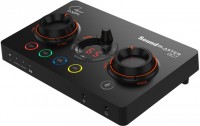
Finally, let's note the design of the GSX 1000. This futuristic geometrically verified box with a large round display looks like it belongs on any table. It can safely be called a gaming gadget, but it is alien to their kitsch. The huge aluminum volume control ring that encircles the large information display is a separate song. It has a very soft, simply airy stroke, thanks to which it is pleasant to turn it just like that, even if the device is turned off. Plus, the amplifier has a built-in proximity sensor, thanks to which the display lights up as soon as you bring your hand to it. After a few seconds, it smoothly fades out, all additional settings such as equalization and sound profiles disappear, and only the volume indicator remains. The only downside of this visual feast is the easily soiled case, which actively collects fingerprints.
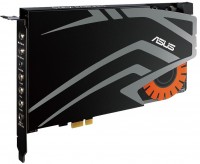
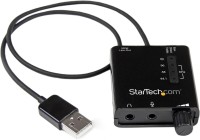
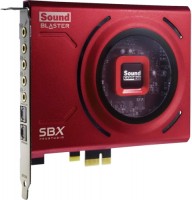
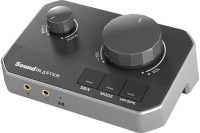
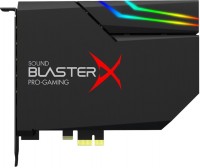
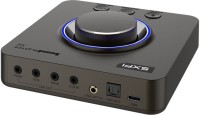
I only use my PC for work and gaming; I don't watch movies or listen to music on it. I used to use a combination of Creative SBX G6 and Beyerdynamic DT880 600Ohm, and it's really great, but something was still missing in games. I decided to try switching to this card. Here's what happened:
The card is advertised to work without drivers, but this is more of a minus than a plus, because to make it work properly and use all its capabilities, you'll have to tinker with the sound settings in Windows. This is a problem many encounter, as the manufacturer even made a special video on their website on how to set it up correctly. Moreover, the protocols for its driverless operation bind the manufacturer hand and foot. For example, the card can work in stereo mode at 24/96, but to do this, you'll have to go into Windows settings and manually change this mode, after which the card completely loses all its abilities to quickly switch to surround sound. In 7.1 mode, the card only supports 16/48 and needs to use this mode to function all its capabilities.
What about sound in games? Compared to Creative, you don't get higher detail. More accurate positioning is also missed. But in 3D, the card somehow has a more harmonious and spatial presentation. The sound kind of envelops you and offers a more natural sound of all sources together. For gamers, this is a real find!