
Tenda N301
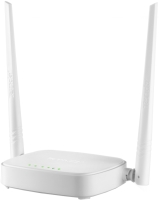 | Outdated Product Device: router; WAN port: Ethernet (RJ45); Wi-Fi; Wi-Fi standards: Wi-Fi 3 (802.11g); Wi-Fi 4 (802.11n); 2.4GHz; WAN: WAN ports: 1 port; WAN port speed: 100 Mbps; LAN: LAN ports: 3 ports; LAN port speed: 100 Mbps; Antenna: external; Transmitter power (dBm): 20; NAT; bridge mode; repeater |


|
| ||||||||||||||||||||||||||||||||||||||||||||||||||||||||||||||||||||||


Always clarify the specifications and configuration of the product with the online store manager before purchasing.
Catalog Tenda 2026 - new arrivals, bestsellers, and the most relevant models Tenda.
5 2 3 27 |
Beautiful, not expensive, good signal and download speed No disadvantages.  Viktor Skrypai: use Tenda N301 few months Viktor Skrypai: use Tenda N301 few months |
A pretty good router for those who are concerned about security. There is a special WPS button on the back panel, which makes life easier and means you don't have to mess with the settings. The design is quite classic, nothing unnecessary. easy to set up, design, price, high signal level. not found. use Tenda N301 week |
A small sturdy box with big ears, and even with such big ears, it remains stable and doesn't fall over. The number of ports for an apartment is more than enough. Plus, there is Wi-Fi signal throughout the entire apartment without "dead zones", so you can walk wherever you want with your laptop and still have a signal. So, the router is excellent, works without interruptions, and I'm satisfied. compact, signal level is always 5 out of 5. price hasn't been noticed yet use Tenda N301 month or more |


For the most economical
A cheap dual-antenna 300-megabit Tenda N301 router is a mandatory minimum for building a home wireless Internet network. Buying an even more primitive single-antenna router at 150 Mbps does not make sense, because the difference in price is negligible. Moreover, now even low-cost laptops, smartphones and tablets support Wi-Fi data transfer at a theoretical speed of 300 Mbps (in fact, 80-90 Mbps with a direct line of sight to the router).
Theory and practice
But even if all your mobile devices support only the very old Wi-Fi standard 802.11g (theoretical 54 Mbps), then Tenda N301 will still be a justified purchase, since its bandwidth will be shared between all connected clients. But they will all have to settle for a common 2.4 GHz frequency, since the 5 GHz band of the Tenda N301 is not supported.
No cable anywhere
The Tenda N301 has only three output 100-Mbit Ethernet ports (here, in fact, honest 100 Mbit / s), while most other routers have four. However, even this amount should be enough. Using patch cords, instead of Wi-Fi, it is most reasonable to connect a desktop PC (to quickly download games that now weigh 50-75 GB each), a smart TV (their wireless connection is usually unstable) and NAS storage (these devices often without wireless interfaces).
It won't be enough
As a result, Tenda N301 is well suited for building only the simplest Internet networks - less than three to five active Wi-Fi clients. For more simultaneous connections, a 300 MHz MIPS processor and 16 MB of RAM will most likely not be enough for the router, which may cause it to slow down and freeze.


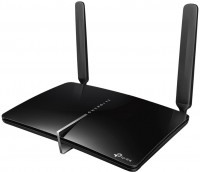

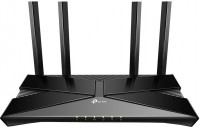
The first thing I liked about it was its appearance - small, compact, with two little antennas. Then I saw that there is a Reset and WPS button, and I realized this is exactly what I need.
It arrived in a decent box, and included with the router were a LAN cable and a power adapter. The setup menu was pleasing, much simpler than on TP-Link routers, which seem more on a professional level, while here the interface is friendly, everything is explained, no questions at all.
I set up the network, distributed Wi-Fi, and connected one cable to the computer; it took me 15 minutes. For a one-room apartment, it is more than sufficient, and by the way, the download speed on the PC via LAN has increased, I'm satisfied.
By the way, it's been about two months since the purchase, and there hasn’t been a single disruption or failure in Wi-Fi operation.