
Microlab Solo 11
 | Outdated Product Speakers: kit 2.0; Lines: 2; Signal-to-noise ratio (dB): 80; Frequency range (Hz): 20 – 20000; Impedance (Ohm): 6; Speaker output (W): 100; Speaker port tube; Bluetooth: Bluetooth v 4.0; mini-Jack (3.5 mm); RCA; optical input; coaxial input; subwoofer output; LCD screen; Remote control: wireless |


We recommend products in stockPC Speakers Microlab →
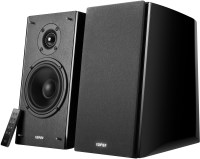
music, 2.0, 120 W, 50 – 20000 Hz, Bluetooth, optical, remote control, speaker 174x289x252 mm
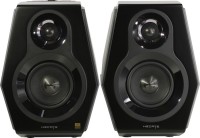
music, 2.0, 88 W, 70 – 40000 Hz, Bluetooth v 5.0, USB-A, optical, coaxial, backlight, speaker 190x270x220 mm
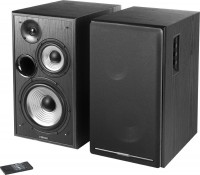
music, 2.0, 136 W, 45 – 20000 Hz, Bluetooth, optical, coaxial, remote control, speaker 217x390x275 mm
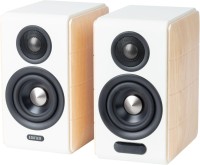
music, 2.0, 88 W, 50 – 40000 Hz, Bluetooth, optical, coaxial, remote control, speaker 145x237x207 mm
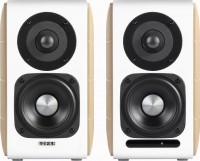
music, 2.0, 88 W, 55 – 20000 Hz, Bluetooth, aptX, optical, coaxial, remote control, speaker 138x230x168 mm
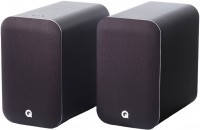
music, 2.0, 130 W, 55 – 22000 Hz, Bluetooth v 5.0, optical, USB to flash drive, remote control, speaker 170x279x296 mm
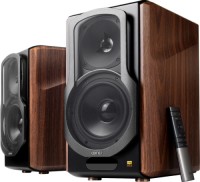
music, 2.0, 130 W, 45 – 40000 Hz, Bluetooth v 5.0, optical, coaxial, remote control, speaker 198×342×276 mm
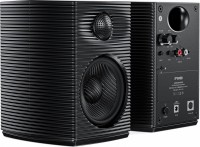
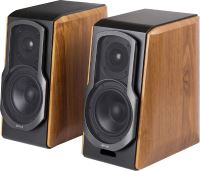
music, 2.0, 120 W, 45 – 20000 Hz, Bluetooth, aptX, optical, coaxial, remote control, speaker 200x340x275 mm

music, 2.0, 100 W, 50 – 40000 Hz, Bluetooth v 6.0, USB-A, optical, remote control, speaker 133x212x225 mm
Microlab Solo 11 | |||||||||||||||||||||||||||||||||||||||||||||||||||||||
|
| ||||||||||||||||||||||||||||||||||||||||||||||||||||||


An LFE output is provided for connecting a subwoofer. On the back wall there is a USB port for powering portable devices up to 1 A.
The kit comes with cables: 2xRCA - 2xRCA, 2xRCA - mini-Jack 3.5 mm, optical S/PDIF, coaxial.

E-Catalog UK editor, PC Speakers
Olexandr Cherkashche…, edited 28.04.2026
The information in the model description is for reference purposes.
Always clarify the specifications and configuration of the product with the online store manager before purchasing.
Catalog Microlab 2026 - new arrivals, bestsellers, and the most relevant models Microlab.
Always clarify the specifications and configuration of the product with the online store manager before purchasing.
Catalog Microlab 2026 - new arrivals, bestsellers, and the most relevant models Microlab.
After just a couple of decades of Microlabs existing... They managed to get the power supply and amplifier up to standard - they bought OEM from the Chinese. The issue now is the quality of the speakers and crossover - and these questions are quietly being ignored. We might still wait another 20 years until Microlabs get the speakers, crossovers, and enclosures to an ACCEPTABLE level. I recommend not expecting an acceptable price from them - ever. Because the prices they put on these products are simply NOT competitive. They don't even reach beginner hi-fi standards. Yet they cost as much as beginner hi-fi. Waste of money. You might consider them for a summer house, if only they had a proper USB port for flash drives, for a computer, and FM radio. But they don't. Just like some old-school vintage stuff, six times older than the target audience of Microlab. And the first question is always relevant: WHY DO YOU PUT AN AMPLIFIER IN THE SPEAKER? I understand this is a cost-saving measure on the case, but just as well you could replace the cases with cardboard boxes, and sound quality wouldn't suffer - there's nothing to suffer. How this product is allowed for sale is another question, since an amplifier in a speaker is a fire hazard. And Microlab doesn't have a certificate that their speakers are made from fire-resistant materials, and they likely never will. use Microlab Solo 11 less than month |
Add Review
The frequency of the crossover, the parts and circuit of the crossover, internal wiring cables, the internal volume of the enclosure, the geometry of the bass reflex, and symmetry in everything are also important... And all of this is indecently poor as well.
In model 16, there's an old, shabby midrange driver. As for model 19, no one needs it because it's meant for spaces ranging from 35 to 60 square meters... And there are problems too, problems with the humming of the bass reflex and the different sizes of the midrange and low-frequency drivers, meaning the bass is boosted while the mids are suppressed, already at the level of driver sizes.
There’s sometimes a motto, "everything for the people." But Microlab is all for the reptiles. From the category of curved monitors with 60 hertz – only curved for the fish people. Acoustic systems and monitors for people are a rarity, and even having money, they're sometimes hard to buy and find.