
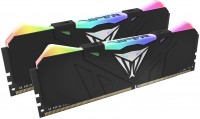
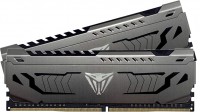
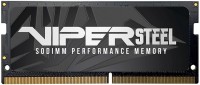
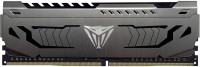
Patriot Memory Viper RGB DDR4 2x8GB PVR416G413C9K
 |


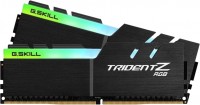
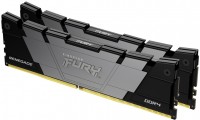
Patriot Memory PVR416G413C9K | |||||||||||||||||||||||||||||
| |||||||||||||||||||||||||||||
Always clarify the specifications and configuration of the product with the online store manager before purchasing.
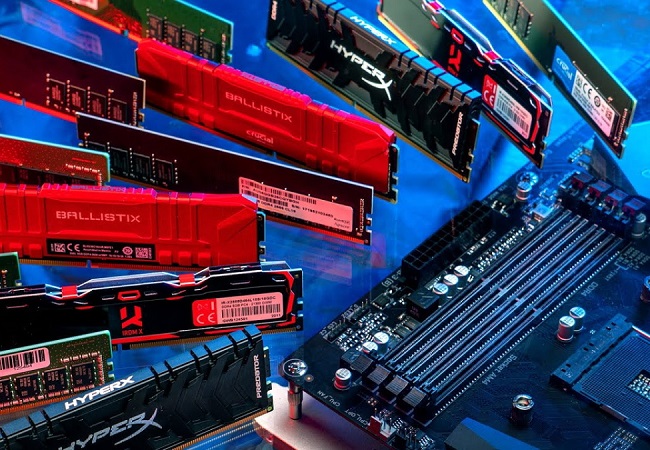
Catalog Patriot Memory 2026 - new arrivals, bestsellers, and the most relevant models Patriot Memory.
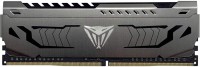
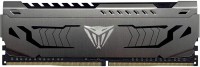

3 0 1 0 |
Overclocks without questions May need to reinstall Windows |

Design Price, the pulsing of the diodes, the smooth dimming effect does not work, does not respond at all.  Aleksandr: Aleksandr: |
Backlight XMP is not working use Patriot Memory PVR416G360C8K less than month |






Smooth Gameplay
Patriot Viper RGB is what's known as "gaming" RAM, meaning it has an optimal balance of frequency and timings along with the bonus of RGB lighting. Indeed, in certain PC configurations, such as budget builds with an integrated Radeon Vega 8 GPU or high-end systems with a discrete GeForce RTX 2070 Super and above, high-frequency RAM significantly boosts the average FPS in games and eliminates micro-stutters (abnormal frame time spikes).
Yin and Yang
Patriot Viper RGB is sold exclusively in paired kits with a total capacity of 16 GB, but the factory frequencies can vary widely. For instance, modifications with white metal heat sinks range from 2666 to 3200 MHz, while the black ones go up to a staggering 4133 MHz. By the way, Patriot also offers other models of high-frequency memory 4000+ MHz for those who prefer classic designs without RGB lighting: Viper Steel and Viper 4 Blackout.
All the Colors of the Rainbow
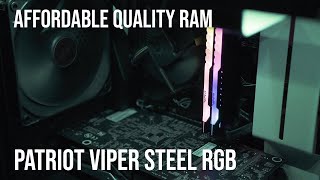
And if you happen to be a fan of glowing computer components, each Patriot Viper RGB module has five independent lighting zones, the color and blinking mode of which can be individually adjusted using the proprietary Viper RGB App or motherboard manufacturer's software: ASUS Aura, MSI Mystic, Gigabyte Fusion, ASRock Polychrome, or Biostar Vivid.
Overclocking Details
Right from the factory, the top version of Patriot Viper RGB comes with two automatic overclocking XMP profiles: the primary at 4133 MHz with timings of CL19 and a power voltage of 1.4V, and a backup at 4000 MHz in case a particular Intel Core processor or Z370/Z390 motherboard cannot operate at the primary frequency. Owners of AMD platforms (Ryzen + X570) will most likely have to settle for a slightly lower frequency — up to 3866 MHz, which is still very respectable.
PC configuration -
Ryzen 5 3600
Gigabyte B450 DS3H V2
In the end, I was able to get the memory to run only after increasing the voltage to 1.38V and setting the primary and secondary timings.