
Comparison Author Rival 29 2023 frame 21 vs Trek Marlin 4 Gen 2 29 2023 frame XL
Add to comparison | 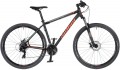 | 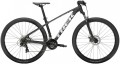 |
|---|---|---|
| Author Rival 29 2023 frame 21 | Trek Marlin 4 Gen 2 29 2023 frame XL | |
| Outdated Product | Compare prices 1 | |
| TOP sellers | ||
| Model year | 2023 | 2023 |
| Type | mountain (MTB) | mountain (MTB) |
| Max weight | 136 kg | |
Frame and suspension | ||
| Frame size | 21" | XL |
| Recommended height | 188 – 202 cm | 188 – 195 cm |
| Frame material | aluminium | aluminium |
| Suspension | hardtail | hardtail |
| Suspension type (fork) | spring-elastomer | spring-elastomer |
| Fork travel | 100 mm | 100 mm |
| Fork lockout |  |  |
| Seatpost | Bontrager | |
Wheels and brakes | ||
| Wheel size | 29 " | 29 " |
| Tyre | Author Speed Master | Bontrager XR2 Comp |
| Rim material | aluminium | aluminium |
| Rim | double wall | double wall |
| Front brake | mechanical disc | mechanical disc |
| Front brake model | Tektro | Tektro M280 |
| Front rotor | 160 mm | 160 mm |
| Rear brake | mechanical disc | mechanical disc |
| Rear brake model | Tektro | Tektro M280 |
| Rear rotor | 160 mm | 160 mm |
| Front hub model | Quando Disc | Formula DC20 |
| Rear hub model | Quando Disc | Formula DC31 |
Handlebar and transmission | ||
| Speeds | 24 | 21 |
| Chainrings | 3 | 3 |
| Freewheel cogs | 8 | 7 |
| Freewheel/cassette model | Shimano HG200 | Shimano Tourney TZ500, 14-28T |
| Crank model | Shimano Tourney TY301, 42-34-24T | |
| Bottom bracket model | VP Comp | VP BC73 |
| Front derailleur | Shimano Tourney TY700 | Shimano Tourney TY300 |
| Rear derailleur | Shimano Tourney TX800 | Shimano Tourney TY300 |
| Shifter type | trigger | trigger |
| Shifter model | Shimano Tourney TX800 | Shimano Altus EF500 |
| Chain model | KMC Z8.3 | KMC Z7 |
| Handlebar type | straight | straight |
| Stem | Bontrager | |
| Handlebar model | Bontrager | |
| Headset | Prestine | |
General | ||
| Equipment | chain guard | |
| Saddle model | Author Courier | Bontrager Arvada |
| Pedal model | VP-536 | |
| Weight | 14.9 kg | 14.4 kg |
| Color | ||
| Added to E-Catalog | april 2023 | september 2022 |



Compare Author Rival 29 2023 frame 21 and Trek Marlin 4 Gen 2 29 2023 frame XL
You may be interested in
My comparisons
Author Rival 29 2023 frame 21 often compared

Glossary
Max weight
The maximum load allowed for a bicycle is, in other words, the maximum weight that it can normally carry in normal use. Of course, when calculating the load, the weight of both the cyclist himself and the additional load that he carries with him is taken into account.
The permissible load must definitely not be exceeded: even if the bike does not break down immediately, off-design loads can weaken the structure, and an accident can occur at any time. Also note that it is desirable to have a certain weight margin — at least 15 – 20 kg: this can be useful in case of transporting heavy loads and will give an additional guarantee in emergency situations (for example, when a wheel gets into a pit). Considering that the average weight of an adult is about 70 – 80 kg, bicycles with a permissible load of up to 100 kg can be classified as "lightweights", from 100 to 120 kg — to the middle category, more than 120 kg — to "heavy trucks".
The permissible load must definitely not be exceeded: even if the bike does not break down immediately, off-design loads can weaken the structure, and an accident can occur at any time. Also note that it is desirable to have a certain weight margin — at least 15 – 20 kg: this can be useful in case of transporting heavy loads and will give an additional guarantee in emergency situations (for example, when a wheel gets into a pit). Considering that the average weight of an adult is about 70 – 80 kg, bicycles with a permissible load of up to 100 kg can be classified as "lightweights", from 100 to 120 kg — to the middle category, more than 120 kg — to "heavy trucks".
Frame size
Frame size refers to the distance from the saddle attachment point to the bottom bracket attachment point (axles with gears and pedals). The main parameters that determine the choice of a bike for frame size are the height of the user, the purpose of the bike and the intended riding style.It is also worth considering the female frame, which is lowered, which allows you to ride comfortably even in a skirt or dress.
User height is the most significant factor. In general, the taller the user, the larger the frame should be. The universal formula that allows you to calculate a specific size is as follows: the length of the leg from the groin to the heel in centimeters must be multiplied by 0.6, and then divided by 2.5 — you get the approximate size of the frame in inches. But in the characteristics of brands, the frame can also be indicated in the usual form for measuring size XXS, XS, S, M, L, XL and XXL.
However, note that this value is very arbitrary and approximate, it can only be used for simple bicycles not intended for extreme driving (for example, city bikes, see "Destination"). If you choose a more specialized model (mountain, road, BMX) — it is better to refer to the tables for th...e appropriate type, because. sizes for one height can vary significantly depending on the destination. In addition, different manufacturers have different frame geometry and measurement methods, and therefore, for the most accurate selection, it is recommended to use the manufacturers' own tables.
Note that the optimal frame size is not absolute — in most cases, for the same height, “neighboring” sizes are quite suitable. And here it is worth paying attention to the intended driving style. It is believed that small, well-controlled frames are better suited for extreme variant, and larger and more stable ones are better suited for long-term calm movement.
User height is the most significant factor. In general, the taller the user, the larger the frame should be. The universal formula that allows you to calculate a specific size is as follows: the length of the leg from the groin to the heel in centimeters must be multiplied by 0.6, and then divided by 2.5 — you get the approximate size of the frame in inches. But in the characteristics of brands, the frame can also be indicated in the usual form for measuring size XXS, XS, S, M, L, XL and XXL.
However, note that this value is very arbitrary and approximate, it can only be used for simple bicycles not intended for extreme driving (for example, city bikes, see "Destination"). If you choose a more specialized model (mountain, road, BMX) — it is better to refer to the tables for th...e appropriate type, because. sizes for one height can vary significantly depending on the destination. In addition, different manufacturers have different frame geometry and measurement methods, and therefore, for the most accurate selection, it is recommended to use the manufacturers' own tables.
Note that the optimal frame size is not absolute — in most cases, for the same height, “neighboring” sizes are quite suitable. And here it is worth paying attention to the intended driving style. It is believed that small, well-controlled frames are better suited for extreme variant, and larger and more stable ones are better suited for long-term calm movement.
Recommended height
The user's height recommended by the manufacturer is calculated according to several parameters. One is the wheel diameter, and the second and more important is the frame size. If everything is simple with the wheel size — it is round and always the same, then the frame size complicates the choice. Different types of bicycles have their own frame shape, so even the same size can be suitable for different heights. And this is not to mention the features of the manufacturer, who like to do everything for themselves, and not in a general manner. Therefore, the size of the frame of each bicycle has its own size and it is still better to choose a bicycle by personally “saddling” it. If this is not possible, then our point will tell you what height, according to the manufacturer, this configuration (frame + wheel) of the bike is designed for.
Fork lockout
Possibility to disable the shock-absorbing system of the front fork (if available, see "Suspension"). Although shock absorption dampens shock, providing ride comfort, it also has a rather serious drawback — it reduces the efficiency of transferring energy from the pedals to the wheel. By disabling damping, you can significantly increase efficiency in conditions where vibration dampening is less important than good pedaling efficiency — for example, when driving on a flat road, or when driving uphill.
Seatpost
The model of the seatpost used in the bicycle.
Usually, this information is indicated if a high-quality part is used as a seat post. Knowing the name, you can find its detailed characteristics and descriptions; this is unlikely to be needed for light everyday driving, but may be useful for professional use.
Usually, this information is indicated if a high-quality part is used as a seat post. Knowing the name, you can find its detailed characteristics and descriptions; this is unlikely to be needed for light everyday driving, but may be useful for professional use.
Tyre
Tyre model supplied with the bike as standard. Different tyres have different purposes and characteristics; knowing the tyre model, you can clarify these points and check how they correspond to your wishes. This is especially important when choosing a machine for serious cycling.
Front brake model
Model of the brake used on the front wheel of a bicycle.
Knowing a specific brand of brake system components, you can find technical documentation for it or, for example, study brake reviews on the Internet. For more information about the types of brakes on the front wheel, see "Front brake".
Knowing a specific brand of brake system components, you can find technical documentation for it or, for example, study brake reviews on the Internet. For more information about the types of brakes on the front wheel, see "Front brake".
Rear brake model
Model of the brake used on the rear wheel of a bicycle.
Knowing a specific brand of brake system components, you can find technical documentation for it or, for example, study brake reviews on the Internet. For more information about the types of brakes on the rear wheel, see "Rear brake".
Knowing a specific brand of brake system components, you can find technical documentation for it or, for example, study brake reviews on the Internet. For more information about the types of brakes on the rear wheel, see "Rear brake".
Front hub model
The model of the hub used in the front wheel of a bicycle.
The hub is the central part in the wheel through which the axis of rotation passes. Features of the behavior of a bicycle depend on its characteristics, in particular, “rolling” (the ability to move by inertia, without pedaling). Knowing the model of the front hub, you can clarify its characteristics according to the manufacturer's documentation, find reviews from other users, etc., in order to determine how this model suits you.
The hub is the central part in the wheel through which the axis of rotation passes. Features of the behavior of a bicycle depend on its characteristics, in particular, “rolling” (the ability to move by inertia, without pedaling). Knowing the model of the front hub, you can clarify its characteristics according to the manufacturer's documentation, find reviews from other users, etc., in order to determine how this model suits you.