
Comparison DYU C6 vs Maxxter City
Add to comparison | 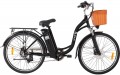 | 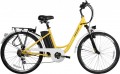 |
|---|---|---|
| DYU C6 | Maxxter City | |
| Compare prices 4 | Outdated Product | |
| TOP sellers | ||
| Type | road | road |
| Maximum load | 120 kg | 110 kg |
Performance specification | ||
| Motor operating mode | electric drive + pedal assist | electric drive + pedal assist |
| Range | 60 km | 35 km |
| Motor power | 250 W | 250 W |
| Maximum speed | 25 km/h | 25 km/h |
| Speed modes | 3 | |
| Drive | rear | rear |
| Wheel diameter | 26 " | 26 " |
| Depreciation | front | front |
| Front fork | spring-elastomer | spring-elastomer |
| Front brake | disk mechanical | rim |
| Rear brake | disc mechanical | drum-like |
Features | ||
| Speeds | 7 no. | 6 no. |
| Rear derailleur | Shimano | Shimano |
| Shifter type | triggered | triggered |
| Shifter model | Shimano | Shimano |
Battery | ||
| Battery capacity | 12.5 Ah | 10 Ah |
| Battery capacity | 450 Wh | |
| Supply voltage | 36 В | |
| Full charging time | 8 h | 8 h |
| Battery location | under the seat | under the seat |
General | ||
| In box | fenders spring saddle chain guard kickstand carrier front basket / basket signal / ring headlight and parking lights | fenders spring saddle chain guard kickstand carrier headlight and parking lights |
| Frame material | aluminum | steel |
| Weight | 27 kg | 27 kg |
| Color | ||
| Added to E-Catalog | may 2023 | june 2018 |




Compare DYU C6 and Maxxter City
Price comparison
You may be interested in
My comparisons
DYU C6 often compared


Maxxter City often compared


Glossary
Maximum load
The maximum weight for which the frame, wheels, suspension, brakes, and other components of the electric bike are designed. This usually implies the weight of the rider along with baggage and accessories: for example, a backpack, basket, child seat, or load on the luggage rack. It is not advisable to exceed this limit, as the additional weight reduces maneuverability, increases braking distance, and accelerates wear on the wheels, spokes, hubs, and frame.
Range
Approximate distance that an electric bike can travel on a single battery charge. Specifications usually indicate an estimated value, as the actual range depends on the chosen level of assistance, rider's weight, terrain, speed, temperature, and tire pressure. For example, in economy mode, an e-bike can travel significantly further than when constantly riding with maximum support and speed downhill.
Speed modes
Preset levels of electric drive operation that change speed limits, acceleration intensity, and motor assistance degree. Simple models may have 2–3 modes for relaxed, normal, and dynamic riding, while more advanced ones offer multiple assistance levels with more precise settings for city, suburban, uphill, or long-distance routes.
Do not confuse this feature with mechanical gears: speed mode controls the motor's operation, while gears change the effort on the pedals.
Do not confuse this feature with mechanical gears: speed mode controls the motor's operation, while gears change the effort on the pedals.
Front brake
Brake mechanism on the front wheel, responsible for a significant part of the bicycle’s deceleration. This component is especially important for an e-bike due to its greater weight and higher speed: on descents, wet asphalt, dirt roads, and during sudden stops, the type of brake affects not only comfort but also safety.
— Rim. The pads press against the wheel rim and slow the bicycle through friction. This type of brake is simple, lightweight, and inexpensive to maintain, but performs worse in rain, mud, and under heavy loads, so it is better suited for relaxed city riding and budget models.
— Mechanical disc. The brake pads clamp a disc on the wheel hub, with force from the lever transmitted via a cable. Compared with a rim disc brake, it performs more consistently on wet roads and is better suited for a heavy e-bike, but requires periodic adjustment of the cable and pads.
— Hydraulic disc. Force from the lever is transmitted to the brake caliper through hydraulic fluid. This type of brake usually provides the most powerful and precise stopping performance, making it well suited for electric mountain bikes, fat bikes, descents, high speeds, and riding with loads, but it costs more and is more difficult to maintain.
— Roller. An enclosed hub brake in which deceleration takes place inside a special mechanism with rollers. It is well protected from dirt and rain, does not require frequent adjustment,...and is convenient for city bicycles, but is less powerful than disc brakes during active riding and long descents.
— Drum. The brake mechanism is located inside the hub, where the pads press against the inner surface of the drum. This design is protected from moisture and dirt, durable, and low-maintenance, but is usually heavier and less effective during sudden braking than disc systems.
— Rim. The pads press against the wheel rim and slow the bicycle through friction. This type of brake is simple, lightweight, and inexpensive to maintain, but performs worse in rain, mud, and under heavy loads, so it is better suited for relaxed city riding and budget models.
— Mechanical disc. The brake pads clamp a disc on the wheel hub, with force from the lever transmitted via a cable. Compared with a rim disc brake, it performs more consistently on wet roads and is better suited for a heavy e-bike, but requires periodic adjustment of the cable and pads.
— Hydraulic disc. Force from the lever is transmitted to the brake caliper through hydraulic fluid. This type of brake usually provides the most powerful and precise stopping performance, making it well suited for electric mountain bikes, fat bikes, descents, high speeds, and riding with loads, but it costs more and is more difficult to maintain.
— Roller. An enclosed hub brake in which deceleration takes place inside a special mechanism with rollers. It is well protected from dirt and rain, does not require frequent adjustment,...and is convenient for city bicycles, but is less powerful than disc brakes during active riding and long descents.
— Drum. The brake mechanism is located inside the hub, where the pads press against the inner surface of the drum. This design is protected from moisture and dirt, durable, and low-maintenance, but is usually heavier and less effective during sudden braking than disc systems.
Rear brake
The braking mechanism on the rear wheel, which helps control speed, stabilize the bicycle, and safely modulate deceleration. On an electric bike, it is especially important when riding downhill, on rough terrain, wet roads, and with additional load, although the main braking force is usually on the front wheel.
— Rim. Pads press against the rim of the rear wheel and slow the bike down through friction. This brake is simple, lightweight, and inexpensive to maintain, but performs worse in rain, mud, and when the rim is worn, so it is better suited for calm city rides.
— Mechanical disc. Pads clamp the brake disc on the rear wheel, and the force from the handle is transmitted by a cable. This is a more stable option for an electric bike than a rim brake: it handles moisture and dirt better but requires periodic adjustment of the cable and pad position.
— Hydraulic disc. The brake disc is clamped by a caliper, and the force is transferred through hydraulic fluid. This rear brake is well-modulated, requires less effort on the handle, and is suitable for heavy e-bikes, mountain routes, fat bikes, descents, and active riding.
— Roller. A closed hub brake, with a mechanism containing rollers located inside the housing. It is protected from dirt and rain, requires almost no attention in daily use, and is convenient for city models, but is less powerful than disc brakes during sharp deceleration and extended descents.
— Drum. Pads work inside a drum in the hub of the rear wheel. T...his design is durable, protected from the environment, and suitable for leisurely rides, but usually heavier and less effective at intensive braking than the disc system.
— Coaster. Braking is activated by pedaling backward, and the mechanism is usually located in the rear hub. This is a simple and dirt-protected solution for city and leisure bikes, but it is less suitable for high-speed electric bikes, steep descents, and situations requiring precise modulation of braking force.
Speeds
The number of gears indicates how many mechanical shifts are available to the rider for changing the pedaling effort. Simple transmissions with a small number of gears may suffice for city e-bikes, while a wider range of gears is more convenient for hills, long routes, off-road terrain, and riding without active motor assistance. However, a large number of gears does not always mean a faster e-bike: it primarily affects the convenience of riding in different conditions, not the maximum speed of the electric motor.
This point should not be confused with the motor speed modes: gears change the operation of the chain and sprockets, while modes change the level of assistance from the electric drive.
This point should not be confused with the motor speed modes: gears change the operation of the chain and sprockets, while modes change the level of assistance from the electric drive.
Battery capacity
Ampere-hours indicate the electric charge that an e-bike battery can deliver during operation. This value helps roughly estimate how long the motor can be powered, but on its own it does not provide an accurate understanding of the range, because it does not take the battery voltage into account. For example, 10 Ah batteries at 36 V and 48 V will have different energy reserves, even though their ampere-hour rating is the same. Therefore, it is useful to consider Ah together with voltage and capacity in Wh.
Battery capacity
Watt-hours indicate the total energy reserve of the battery and are more suitable for comparing the range of different electric bicycles. This measure takes into account both the capacity in amp-hours and the system voltage: for example, a 36V battery with 10Ah has about 360Wh, while a 48V battery with 10Ah has about 480Wh. The higher the Wh value, the greater the potential range, but the actual distance still depends on the rider's weight, motor power, terrain, speed, assistance mode, and temperature.
Supply voltage
The operating voltage of the battery system for which the motor, controller, charger, and electronics of the electric bicycle are designed. 36 V systems are more common in urban, leisure, and moderately powered models, while 48 V systems are typically used where stronger uphill traction, dynamic acceleration, or riding with a load is required. When replacing the battery, the voltage must match the bicycle’s original system; otherwise, the electronics may function incorrectly or fail.