
Comparison WELLION Calla Light vs Gamma Diamond
Add to comparison | 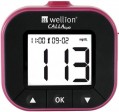 | 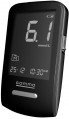 |
|---|---|---|
| WELLION Calla Light | Gamma Diamond | |
from $8.00 up to $17.88 | from $15.00 up to $25.68 | |
| TOP sellers | ||
| Type | electrochemical | electrochemical |
| Measuring duration | 6 с | 5 с |
| Memory capacity | 500 measurements | 450 measurements |
Measurements | ||
| Measurements | glucose | glucose |
| Additional modes | test | test without eating after eating |
| Averaging | in a day in 3 days in a week in 14 days in a month in 2 months per quarter | in a day in 3 days in a week in 14 days in a month in 2 months per quarter |
Specs | ||
| Measurement range | 1.1 - 33.3 mmol/l | 1.1 - 33.3 mmol/l |
| Sample volume | 0.6 µl | 0.5 µl |
| Hematocrit | 30 - 55 % | 20 - 60 % |
| Encoding | codeless | codeless |
| Blood sample | capillary | capillary |
| Features | food note date and time alarm clock synchronization with PC backlight alert auto switch-off | food note date and time alarm clock synchronization with PC backlight alert auto switch-off |
In box | ||
| Test strips | 10 pcs | 10 pcs |
| Test strip model | WELLION Calla | Gamma DM |
| Lancets | 10 pcs | 10 pcs |
| Lancet device |  | |
| Cover/case | | |
General | ||
| Calibration | plasma | plasma |
| Display | monochrome | monochrome |
| Power source | 2xAAA | 2xAAA |
| Dimensions | 69.6x62.6x23 mm | 104.4x58x23 mm |
| Weight | 68 g | 71 g |
| Added to E-Catalog | february 2017 | february 2017 |


Compare WELLION Calla Light and Gamma Diamond
You may be interested in
WELLION Calla Light often compared


Gamma Diamond often compared


Glossary
Measuring duration
The measurement time of a blood glucose monitor is the duration from inserting a test strip with a blood sample into the device to receiving the result. While a shorter measurement duration theoretically enhances convenience by reducing the time spent on measurements, most modern blood glucose monitors complete this process in under 20 seconds, causing minimal inconvenience. Therefore, seeking the fastest model may not be particularly meaningful in practical terms.
Memory capacity
The maximum number of test results that a blood glucose monitor can store at once is crucial for monitoring changes in blood composition. The built-in memory of blood glucose monitors is highly convenient, automatically saving data without requiring extra steps from the user. Additionally, many devices can enhance measurement results with supplementary information, including date, time, and food markers.
Knowing the frequency of measurements and the amount of memory, you can determine how long this memory will last before overflowing. For example, if the device is designed for 500 results, and measurements are taken 4 times a day, then measurements can be stored in the built-in memory for 500/4 — 125 days, that is, about 4 months.
Knowing the frequency of measurements and the amount of memory, you can determine how long this memory will last before overflowing. For example, if the device is designed for 500 results, and measurements are taken 4 times a day, then measurements can be stored in the built-in memory for 500/4 — 125 days, that is, about 4 months.
Additional modes
— Test. To verify the functionality and accuracy of a blood glucose monitor, a control solution test is typically performed. This involves applying two control solutions with known glucose concentrations to the strips instead of blood. If the blood glucose monitor readings align with the expected values of the solutions, it indicates proper functionality. Periodic performance tests, ideally conducted weekly, are recommended, especially in cases of doubt about measurement results, such as discrepancies with one's health status.
— No food intake. The mode of measuring blood counts on an empty stomach, before meals. It is used, in particular, to diagnose diabetes in the early stages, as well as to evaluate the effectiveness of drug-free (with the help of a diet) treatment of type 1 diabetes. Analysis data is stored in memory marked "on an empty stomach"; this allows you to track the trend over time.
— After eating. The mode of measuring blood parameters "on a full stomach", after eating. It is used, in particular, in insulin-dependent diabetes — to evaluate the effectiveness and correct the current dosage of insulin. The measurement results are stored in memory marked "after eating" in order to make it easier to track changes over a certain period of time.
— No food intake. The mode of measuring blood counts on an empty stomach, before meals. It is used, in particular, to diagnose diabetes in the early stages, as well as to evaluate the effectiveness of drug-free (with the help of a diet) treatment of type 1 diabetes. Analysis data is stored in memory marked "on an empty stomach"; this allows you to track the trend over time.
— After eating. The mode of measuring blood parameters "on a full stomach", after eating. It is used, in particular, in insulin-dependent diabetes — to evaluate the effectiveness and correct the current dosage of insulin. The measurement results are stored in memory marked "after eating" in order to make it easier to track changes over a certain period of time.
Sample volume
The minimum amount of blood required for testing. The average volume of a drop of blood released when pricked with a lancet is 1 µl; that is, if the sample volume is larger, a little more blood will need to be squeezed out.
Note that in fact, the volume can be taken with a margin — most blood glucose monitors work normally even with more blood than necessary. But too little material leads to serious inaccuracies in the readings, so this parameter should not be neglected.
Note that in fact, the volume can be taken with a margin — most blood glucose monitors work normally even with more blood than necessary. But too little material leads to serious inaccuracies in the readings, so this parameter should not be neglected.
Hematocrit
The hematocrit values for which the device is designed.
Hematocrit reflects the overall red blood cell count in the blood, influencing blood viscosity and electrochemical properties. Glucometers are calibrated for specific hematocrit ranges. When these limits are surpassed, inaccuracies arise — low hematocrit levels can lead to device overestimation, while high levels can result in underestimation.
Modern blood glucose monitors typically have a hematocrit range of 30 – 50%, which effectively encompasses normal adult blood viscosity values (36 – 48%). Issues may only arise in cases of significant deviations from the norm. Some devices offer an even broader operating range.
Hematocrit reflects the overall red blood cell count in the blood, influencing blood viscosity and electrochemical properties. Glucometers are calibrated for specific hematocrit ranges. When these limits are surpassed, inaccuracies arise — low hematocrit levels can lead to device overestimation, while high levels can result in underestimation.
Modern blood glucose monitors typically have a hematocrit range of 30 – 50%, which effectively encompasses normal adult blood viscosity values (36 – 48%). Issues may only arise in cases of significant deviations from the norm. Some devices offer an even broader operating range.
Test strip model
The test strip models that the blood glucose monitor is compatible with. This information is especially important in light of the fact that consumables must be purchased separately for continuous use (complete test strips are usually only enough for familiarization and initial testing). For normal operation of the device and reliable results, use only consumables recommended by the manufacturer.