
Comparison Kobo Libra 2 vs Kobo Libra H2O
Add to comparison | 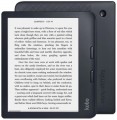 | 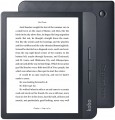 |
|---|---|---|
| Kobo Libra 2 | Kobo Libra H2O | |
from £249.64 | from £299.99 | |
| TOP sellers | ||
High pixel density screen. Backlight with adjustable color temperature. Touch and button controls. IPX8 waterproof housing. | Water protection according to the IPX8 standard. | |
| Type | e-reader | e-reader |
| Screen | 7 " 1680х1264 px paper-like (E Ink Carta) monochrome touchscreen lighting | 7 " 1680х1264 px paper-like (E Ink Carta) monochrome touchscreen lighting |
| Button control |  | |
Formats and multimedia | ||
| E-book formats | EPUB, EPUB3, PDF, MOBI, TXT, HTML, RTF, CBZ, CBR | EPUB, EPUB3, PDF, MOBI, TXT, HTML, RTF, CBZ, CBR |
| Photo/video formats | JPEG, GIF, PNG, TIFF | JPEG, GIF, PNG, TIFF |
| Multimedia | dictionary browser | dictionary browser |
Hardware | ||
| Operating system | Linux | Linux |
| RAM | 1 GB | |
| Storage capacity | 32 GB | 8 GB |
Data transfer | ||
| Data transfer | Wi-Fi 4 (802.11n) Bluetooth v 5.0 USB-C | Wi-Fi 4 (802.11n) microUSB |
General | ||
| Battery capacity | 1500 mAh | 1200 mAh |
| Dust-, waterproof | IPX8 | IPX8 |
| Material | plastic | plastic |
| Size (HxWxD) | 161.6x144.6x9 mm | 144x159x5 mm |
| Weight | 215 g | 192 g |
| Color | ||
| Added to E-Catalog | march 2022 | september 2019 |


Compare Kobo Libra 2 and Libra H2O
You may be interested in
Kobo Libra 2 often compared


Kobo Libra H2O often compared


Glossary
RAM
The amount of the reader's own RAM, that is, the memory used for temporary data storage during operation. The speed of the e-book directly depends on the amount of RAM, especially when working with large files. So the average value can be considered RAM 1 GB and 2 GB, and more advanced models have 3 GB, 4 GB and even 6 GB of memory.
Storage capacity
The amount of the reader's own built-in memory, i.e. the memory used for persistent data storage. The more memory, the more content can be stored at a time in the e-book. At the same time, note that even the largest text (TXT, FB2, HTML) files, usually, rarely exceed 2 – 3 MB, so relatively little memory is needed for storage. Graphic and audio files, in turn, are more voluminous, but most of the space is needed for video files. Therefore, depending on the use of the gadget, you will need a different volume, whether it be 4 GB, 8 GB or more. Many readers support the ability to expand their own memory through removable cards (see Memory card slot).
Data transfer
— Wi-Fi. A wireless communication module that allows you to connect the reader to wireless local (home or office) networks, as well as access the Internet through public access points (hot spots) installed in restaurants, hotels, railway stations, etc.
— Bluetooth. Direct wireless communication technology between various electronic devices. In e-readers, Bluetooth is primarily used for file transfer: with this function, you can connect the reader to another Bluetooth device, such as a laptop or tablet PC, and exchange files with it.
— microUSB. Connector for direct connection of the reader to the USB port of the computer using a special cable. In e-books, this connection is used primarily for file sharing. MicroUSB is a universal standard that allows you to connect various gadgets through it with one cable.
— miniUSB. Similar to the one described above, the connector, which differs only in the size and shape of the connector.
— USB-C. Symmetrical USB connector, which is gaining popularity and in the future is able to displace microUSB. At the same time, the connector has a high data transfer rate and is only a little larger in size.
— Bluetooth. Direct wireless communication technology between various electronic devices. In e-readers, Bluetooth is primarily used for file transfer: with this function, you can connect the reader to another Bluetooth device, such as a laptop or tablet PC, and exchange files with it.
— microUSB. Connector for direct connection of the reader to the USB port of the computer using a special cable. In e-books, this connection is used primarily for file sharing. MicroUSB is a universal standard that allows you to connect various gadgets through it with one cable.
— miniUSB. Similar to the one described above, the connector, which differs only in the size and shape of the connector.
— USB-C. Symmetrical USB connector, which is gaining popularity and in the future is able to displace microUSB. At the same time, the connector has a high data transfer rate and is only a little larger in size.