
Comparison Tenda CP6 vs Tenda CP3
Add to comparison | 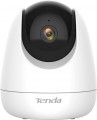 | 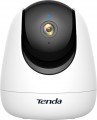 |
|---|---|---|
| Tenda CP6 | Tenda CP3 | |
| Compare prices 1 | Compare prices 1 | |
| TOP sellers | ||
Automatic tracking of the object in the frame. Ability to record and adjust 3 audio signals. Recognition of the silhouette of a person in the frame. | You can record your audio to play when motion is detected. Person detection function. | |
| Mount | indoor | indoor |
| Body type | portable (desktop) | portable (desktop) |
| Connection | LAN Wi-Fi 4 (2.4 GHz) | Wi-Fi 4 (2.4 GHz) |
Camera features | ||
| Design and features | PTZ (managed) area of interest setup (ROI) light sensor motion sensor microphone feedback speaker mobile app motion alert IR illumination card reader | PTZ (managed) area of interest setup (ROI) light sensor motion sensor microphone feedback speaker mobile app motion alert IR illumination card reader |
| Max. memory card size | 128 GB | 128 GB |
| Cloud storage | + | + |
| Active protection | light + sound | light + sound |
| Illumination range | 12 m | 12 m |
| Smart features | human detection | human detection |
| Voice assistant | Amazon Alexa | |
Matrix | ||
| Matrix type | CMOS | CMOS |
| Video resolution | 2304x1296 px | 1920x1080 px |
| Aperture | f/2.2 | f/2.2 |
| Backlight compensation | DWDR | DWDR |
Lens | ||
| Focal type | permanent | permanent |
| Focal length | 4 mm | 4 mm |
General | ||
| Video compression format | H.265 | H.264 |
| Power source | 9 В | 9 В |
| Operating temperature | -10 °C ~ +50 °С | -10 °C ~ +45 °С |
| Maximum humidity | 95 % | 95 % |
| Dimensions | 103x88x88 mm | 103x88x88 mm |
| Color | ||
| Added to E-Catalog | april 2023 | january 2023 |


Compare Tenda CP6 and CP3
Tenda CP6 and Tenda CP3 cameras have similar features such as PTZ control, motion detection, and app integration. However, CP6 offers a higher video resolution (2304x1296 px) compared to CP3 (1920x1080 px), which could be crucial for users requiring clearer images. Additionally, CP6 supports automatic object tracking and human silhouette recognition, whereas CP3 has the capability to record custom audio for alerts. Both cameras have the same maximum memory card capacity (128 GB) and IR illumination range (12 m), but CP3 supports integration with Amazon Alexa, which could be a plus for smart home users. Overall, the choice between them depends on preferences in video resolution and functionality.
You may be interested in
Tenda CP6 often compared


Tenda CP3 often compared


Glossary
Connection
— LAN. The LAN (Ethernet) interface was originally designed to build wired computer networks. Cameras with such a connector, as a rule, also work as network devices. The advantage of this option over the Wi-Fi described below is a higher actual throughput, over BNC — the ability to connect without additional equipment, directly to a standard network router used for a regular computer network. Of the disadvantages, one can note only the need to pull a wire, but this point is common to all wired connection options. In terms of other features, LAN is the most convenient, due to which it has become widespread in modern surveillance cameras.
— Wi-Fi. Wi-Fi connection was originally a wireless analogue of the LAN described above and was used to connect to computer networks. When working in such networks, this connection is similar to LAN in the sense that it allows the camera to work through a regular router (of course, supporting Wi-Fi). At the same time, Wi-Fi is more convenient due to the absence of wires, but with an abundance of other wireless devices connected to the router, the channel throughput and image quality can significantly deteriorate. Note that recently it has also been possible to use this connection in Direct mode - for direct connection of the camera to another device, for example, connecting the camera to a smartphone (see "Design and capabilities -...P2P"). However, this option is less common.
— BNC. Abbreviation for Bayonet Neill Concelman. A bayonet-type connector, usually used to transmit an analog video signal. Refers to professional video interfaces; special equipment is required to work with such a camera. However, cameras with this type of connector are usually in the lower price range. This is due to the limited connectivity options via BNC — it can only transmit a video signal, which limits the functionality of such cameras compared to models that work via LAN or Wi-Fi (see above).
— Aviation port. It is a round multi-pin connector designed for reliable connection of cameras. Such ports provide a stable connection even in conditions of vibration and high humidity, due to which it is used in car video surveillance systems. Power, video signal and control (for example, for PTZ cameras) can be transmitted through one aviation port, which simplifies installation and reduces the number of required cables.
— 3G / 4G. Connecting to the Internet via 3G / 4G mobile networks; as a rule, this requires installing a SIM card from a mobile operator in the camera. The speed of such networks allows, among other things, to broadcast video in fairly high resolution. So such a connection (of course, if there is coverage) is well suited not only as a backup option in case of Internet outages, but also as the main communication channel if there is no fixed Internet connection at all. A typical example of the second situation is monitoring a country house located “far from civilization”, but in an area with reliable mobile phone reception. In both cases, you can contact the camera via the Internet from anywhere on the planet.
— Wi-Fi. Wi-Fi connection was originally a wireless analogue of the LAN described above and was used to connect to computer networks. When working in such networks, this connection is similar to LAN in the sense that it allows the camera to work through a regular router (of course, supporting Wi-Fi). At the same time, Wi-Fi is more convenient due to the absence of wires, but with an abundance of other wireless devices connected to the router, the channel throughput and image quality can significantly deteriorate. Note that recently it has also been possible to use this connection in Direct mode - for direct connection of the camera to another device, for example, connecting the camera to a smartphone (see "Design and capabilities -...P2P"). However, this option is less common.
— BNC. Abbreviation for Bayonet Neill Concelman. A bayonet-type connector, usually used to transmit an analog video signal. Refers to professional video interfaces; special equipment is required to work with such a camera. However, cameras with this type of connector are usually in the lower price range. This is due to the limited connectivity options via BNC — it can only transmit a video signal, which limits the functionality of such cameras compared to models that work via LAN or Wi-Fi (see above).
— Aviation port. It is a round multi-pin connector designed for reliable connection of cameras. Such ports provide a stable connection even in conditions of vibration and high humidity, due to which it is used in car video surveillance systems. Power, video signal and control (for example, for PTZ cameras) can be transmitted through one aviation port, which simplifies installation and reduces the number of required cables.
— 3G / 4G. Connecting to the Internet via 3G / 4G mobile networks; as a rule, this requires installing a SIM card from a mobile operator in the camera. The speed of such networks allows, among other things, to broadcast video in fairly high resolution. So such a connection (of course, if there is coverage) is well suited not only as a backup option in case of Internet outages, but also as the main communication channel if there is no fixed Internet connection at all. A typical example of the second situation is monitoring a country house located “far from civilization”, but in an area with reliable mobile phone reception. In both cases, you can contact the camera via the Internet from anywhere on the planet.
Voice assistant
A software assistant that accepts natural phrases and controls the smart home, multimedia, and services via speakers, hubs, TVs, and smartphones. Its strength is context and routines: with a single command it can dim the lights, close the curtains, turn on the heater, and report sensor status, and in case of an alarm it will announce the event and send a notification. Unlike a simple voice remote, the assistant understands natural speech, works with multiple devices at once, and supports routines like “I’m leaving” or “Good morning.” The most popular voice assistants today are Amazon Alexa, Apple Siri, and Google Assistant.
Video resolution
The maximum video resolution that the camera can capture.
The higher the resolution of the video, the more details you can see on it, the less details will be blurry. On the other hand, high resolution means large volumes of video materials, which, accordingly, requires capacious media for their storage and fast communication channels for broadcasting video in real time. Yes, and this indicator significantly affects the cost of the camera.
The higher the resolution of the video, the more details you can see on it, the less details will be blurry. On the other hand, high resolution means large volumes of video materials, which, accordingly, requires capacious media for their storage and fast communication channels for broadcasting video in real time. Yes, and this indicator significantly affects the cost of the camera.
Video compression format
The video compression format used by the camera.
Compression is used to reduce the file sizes of captured video; different technologies can be used for this — the so-called codecs, their list is given in this paragraph. From a practical point of view, compatibility with external recording and playback devices primarily depends on the supported codecs. If you plan to use a computer as a recorder / player, you can ignore this list: modern PCs and laptops usually support a very extensive list of formats, and in extreme cases, the missing codecs can be installed separately. But if we are talking about specialized registrars, individual players (like home media centers), etc. — codec compatibility should be clarified further. So, if the advanced modern H.265 standard is very widely supported nowadays, then the more specific H.265+, originally created for surveillance systems, is much less common even in specialized equipment.
Compression is used to reduce the file sizes of captured video; different technologies can be used for this — the so-called codecs, their list is given in this paragraph. From a practical point of view, compatibility with external recording and playback devices primarily depends on the supported codecs. If you plan to use a computer as a recorder / player, you can ignore this list: modern PCs and laptops usually support a very extensive list of formats, and in extreme cases, the missing codecs can be installed separately. But if we are talking about specialized registrars, individual players (like home media centers), etc. — codec compatibility should be clarified further. So, if the advanced modern H.265 standard is very widely supported nowadays, then the more specific H.265+, originally created for surveillance systems, is much less common even in specialized equipment.
Operating temperature
The ambient temperature range in which the camera can be used normally.
All modern surveillance cameras normally tolerate temperatures typical for houses / apartments, offices and other premises with similar mild conditions. Therefore, it is worth paying attention to this parameter, first of all, if the device is planned to be used outdoors — or in a room where the temperature does not differ much from the street temperature or, for technical reasons, should be low (freezer warehouse, refrigerated car, etc. ). In such cases, the lower temperature threshold is especially important: for example, almost all outdoor cameras have the ability to work in cold temperatures below 0 °, but among indoor models such features are much less common. However, frost-resistant devices(with an allowable temperature of -40 °C and below) can also be found not only among outdoor cameras, but also among “internal” cameras.
As for the upper temperature limit, it is usually not lower than +40 °C, which is quite enough for using the camera in a temperate climate. In some models, this limit reaches +50 °C and even +60 °C, making them suitable even for hot countries. However, note that we are talking exclusively about use in the shade; the possibility of working under direct sunlight should be clarified separately.
All modern surveillance cameras normally tolerate temperatures typical for houses / apartments, offices and other premises with similar mild conditions. Therefore, it is worth paying attention to this parameter, first of all, if the device is planned to be used outdoors — or in a room where the temperature does not differ much from the street temperature or, for technical reasons, should be low (freezer warehouse, refrigerated car, etc. ). In such cases, the lower temperature threshold is especially important: for example, almost all outdoor cameras have the ability to work in cold temperatures below 0 °, but among indoor models such features are much less common. However, frost-resistant devices(with an allowable temperature of -40 °C and below) can also be found not only among outdoor cameras, but also among “internal” cameras.
As for the upper temperature limit, it is usually not lower than +40 °C, which is quite enough for using the camera in a temperate climate. In some models, this limit reaches +50 °C and even +60 °C, making them suitable even for hot countries. However, note that we are talking exclusively about use in the shade; the possibility of working under direct sunlight should be clarified separately.