
Comparison Philips TAB8907 vs Philips TAB8507
Add to comparison | 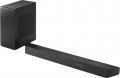 | 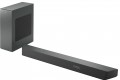 |
|---|---|---|
| Philips TAB8907 | Philips TAB8507 | |
from £408.94 | from £346.99 | |
| TOP sellers | ||
| Audio format | 3.1.2 | 3.1 |
| Mount type | shelf / wall | shelf / wall |
| Virtual surround sound |  |  |
| 3D | | |
| Ultra HD (4K) | | |
Tech specs | ||
| Rated power | 360 W | 300 W |
| Soundbar speaker power | 240 W | 180 W |
| Frequency range | 35 – 20000 Hz | 35 – 20000 Hz |
| Impedance | 8 Ohm | 8 Ohm |
Subwoofer | ||
| Wireless subwoofer | | |
| Acoustic design | bass-reflex type | bass-reflex type |
| Subwoofer power | 120 W | 120 W |
| Subwoofer speaker size | 165 mm | 165 mm |
| Subwoofer dimensions (WxHxD) | 190x410x309 mm | 150x410x309 mm |
| Subwoofer weight | 6 kg | 5.6 kg |
Interfaces | ||
| Interfaces | AirPlay 2 Google Cast (Chromecast) Wi-Fi Bluetooth wireless TV connection | AirPlay 2 Google Cast (Chromecast) Wi-Fi Bluetooth wireless TV connection |
| Streaming services | Spotify | Spotify |
| Audio decoders | DTS Dolby Digital Dolby Digital Plus Dolby TrueHD Dolby Atmos | DTS Dolby Digital Dolby Digital Plus Dolby TrueHD Dolby Atmos |
Connectors | ||
| Inputs | USB-A mini-Jack (3.5 mm) optical | USB-A mini-Jack (3.5 mm) optical |
| HDMI input | 1 pc | 1 pc |
| HDMI output | 1 pc | 1 pc |
Speakers | ||
| Number of speakers | 6 шт | 6 шт |
General | ||
| Display | | |
| Control | remote control TV remote control from smartphone Google Assistant / Amazon Alexa | remote control TV remote control from smartphone Google Assistant / Amazon Alexa / Siri |
| Power consumption | 80 W | 60 W |
| Dimensions (WxHxD) | 940x65x106 mm | 940x65x106 mm |
| Projector weight | 3 kg | 2.7 kg |
| Color | ||
| Added to E-Catalog | december 2022 | december 2022 |


Compare Philips TAB8907 and TAB8507
You may be interested in
Philips TAB8507 often compared


Glossary
Audio format
The audio format produced by a sound projector is actually the largest number of individual audio channels supported by the device. Note that in this case we are talking about the number of real channels, that is, channels for each of which at least one speaker is allocated; Models that support virtual surround sound can give the listener the impression of more channels than there actually are (see below for more details).
The sound format is indicated by two or three numbers separated by a dot. The first indicates the number of main channels, the second - the number of subwoofers, the third - the number of additional vertical radiators. For example, 2.1 format corresponds to stereo sound (2.0) supplemented by a subwoofer. And the conditional 3.1.2 format includes left, right and center channels, a subwoofer, left and right vertical speakers.
Sound projectors that support a more advanced sound format than 3.1 are designated in our catalog as multi-channel. The classic multichannel audio format is 5.1, but there are other options. In any case, a large number of real channels contributes to the fidelity of the reproduced sound and simplifies setup compared to virtual surround sound systems, but is also more expensive.
The most common sound formats are: 2.0, 2.1..., 3.0, 3.1, 4.1, 5.1, 5.1.2, 7.1.
The sound format is indicated by two or three numbers separated by a dot. The first indicates the number of main channels, the second - the number of subwoofers, the third - the number of additional vertical radiators. For example, 2.1 format corresponds to stereo sound (2.0) supplemented by a subwoofer. And the conditional 3.1.2 format includes left, right and center channels, a subwoofer, left and right vertical speakers.
Sound projectors that support a more advanced sound format than 3.1 are designated in our catalog as multi-channel. The classic multichannel audio format is 5.1, but there are other options. In any case, a large number of real channels contributes to the fidelity of the reproduced sound and simplifies setup compared to virtual surround sound systems, but is also more expensive.
The most common sound formats are: 2.0, 2.1..., 3.0, 3.1, 4.1, 5.1, 5.1.2, 7.1.
Virtual surround sound
The projector supports the virtual surround function.
The purpose of this feature is that due to special sound settings and the reflection of sound beams from the walls of the room, the listener hears more channels than are actually available in the projector (see "Audio Format"). For example, a 3.1 system with virtual surround sound can produce sound similar to 5.1 surround sound. This allows you to achieve the effect of "immersion" in sound without increasing the number of channels and the cost of the projector. On the other hand, the reliability of such sound is usually noticeably worse than that of real surround sound, and the overall quality is highly dependent on the characteristics of a particular room.
Note that the virtual surround function is specified for 2.0, 2.1, 3.0, 3.1 format systems. In more advanced multi-channel systems, there are a priori additional channels for reproducing surround sound.
The purpose of this feature is that due to special sound settings and the reflection of sound beams from the walls of the room, the listener hears more channels than are actually available in the projector (see "Audio Format"). For example, a 3.1 system with virtual surround sound can produce sound similar to 5.1 surround sound. This allows you to achieve the effect of "immersion" in sound without increasing the number of channels and the cost of the projector. On the other hand, the reliability of such sound is usually noticeably worse than that of real surround sound, and the overall quality is highly dependent on the characteristics of a particular room.
Note that the virtual surround function is specified for 2.0, 2.1, 3.0, 3.1 format systems. In more advanced multi-channel systems, there are a priori additional channels for reproducing surround sound.
Rated power
The total power rating of the sound projector speakers (including subwoofer, if present).
This parameter is often used to estimate the overall sound volume of the device, but this is not entirely true. The fact is that the actual sound volume is determined mainly by the power of the main speakers of the sound projector, and the total power is the sum of this power and the power of the subwoofer. Therefore, models with the same power rating can vary markedly in actual volume: for example, a 150-watt soundbar with a 50-watt subwoofer will be louder than a 100-watt projector with a subwoofer of the same power, although in both cases the rated power will be equal to 200 watts.
Summing up, we can say that it is possible to evaluate the volume by rated power only if the sound projector is not equipped with a subwoofer — in such models, the rated power is equal to the power of the main speakers. In other cases, it is worth focus on the power of the soundbar and the power of the subwoofer directly stated in the characteristics (see below for both).
This parameter is often used to estimate the overall sound volume of the device, but this is not entirely true. The fact is that the actual sound volume is determined mainly by the power of the main speakers of the sound projector, and the total power is the sum of this power and the power of the subwoofer. Therefore, models with the same power rating can vary markedly in actual volume: for example, a 150-watt soundbar with a 50-watt subwoofer will be louder than a 100-watt projector with a subwoofer of the same power, although in both cases the rated power will be equal to 200 watts.
Summing up, we can say that it is possible to evaluate the volume by rated power only if the sound projector is not equipped with a subwoofer — in such models, the rated power is equal to the power of the main speakers. In other cases, it is worth focus on the power of the soundbar and the power of the subwoofer directly stated in the characteristics (see below for both).
Soundbar speaker power
The nominal power of the speakers installed directly in the soundbar, excluding the subwoofer (in models with a built-in subwoofer, respectively, only the power of the main speakers is taken into account).
This indicator directly determines the overall volume of the sound projector; It is worth choosing according to this parameter taking into account the specifics of the room in which the projector is planned to be installed: the larger the room and the greater the distance to the viewer, the higher the power should be, otherwise the soundbar will not be able to effectively sound the scene. Detailed recommendations on the optimal power for different situations can be found in special sources.
This indicator directly determines the overall volume of the sound projector; It is worth choosing according to this parameter taking into account the specifics of the room in which the projector is planned to be installed: the larger the room and the greater the distance to the viewer, the higher the power should be, otherwise the soundbar will not be able to effectively sound the scene. Detailed recommendations on the optimal power for different situations can be found in special sources.
Control
The ability to control the soundbar, in addition to the standard push-button from the device case, also includes control from the remote control, the TV remote control to which the acoustics are connected, through the application from a smartphone or tablet, and in some cases using a voice assistant. More details about each of them:
— Remote control. The presence in the configuration of the classic remote control on IR sensors, like those used in TVs. It can contain much more settings functions than the controls on the body of the device and, of course, makes it easier to control the soundbar.
— TV remote control (HDMI-CEC). Connecting the soundbar via the HDMI port allows you to control it via the HDMI-CEC protocol via the TV remote control. This solution will reduce the number of remotes in the room and facilitate the comfort of the settings. However, the functionality of the "non-native" remote control may be limited. In this case, the compatibility of the TV and the soundbar can be achieved using other protocols (not necessarily HDMI-CEC).
— Smartphone control. The ability to control the soundbar through the application. This makes it easier to “search” for the remote control, because the phone is always at hand. The application also has extensive settings and such control is highly likely to be supported by t...he TV, which allows you to execute absolutely any commands from your smartphone for a comfortable pastime on the TV.
— Voice assistant. This is not about the assistant built into the soundbar itself, but about compatibility with external devices that have this function (for example, with a smartphone or tablet). But even such compatibility allows you to give commands to the voice projector by voice — this is often more convenient than more traditional control methods. The specific set of supported commands and languages may vary depending on the voice assistant and its specific version. And among the most popular at the moment are Google Assistant, Apple Siri, Amazon Alexa.
— Remote control. The presence in the configuration of the classic remote control on IR sensors, like those used in TVs. It can contain much more settings functions than the controls on the body of the device and, of course, makes it easier to control the soundbar.
— TV remote control (HDMI-CEC). Connecting the soundbar via the HDMI port allows you to control it via the HDMI-CEC protocol via the TV remote control. This solution will reduce the number of remotes in the room and facilitate the comfort of the settings. However, the functionality of the "non-native" remote control may be limited. In this case, the compatibility of the TV and the soundbar can be achieved using other protocols (not necessarily HDMI-CEC).
— Smartphone control. The ability to control the soundbar through the application. This makes it easier to “search” for the remote control, because the phone is always at hand. The application also has extensive settings and such control is highly likely to be supported by t...he TV, which allows you to execute absolutely any commands from your smartphone for a comfortable pastime on the TV.
— Voice assistant. This is not about the assistant built into the soundbar itself, but about compatibility with external devices that have this function (for example, with a smartphone or tablet). But even such compatibility allows you to give commands to the voice projector by voice — this is often more convenient than more traditional control methods. The specific set of supported commands and languages may vary depending on the voice assistant and its specific version. And among the most popular at the moment are Google Assistant, Apple Siri, Amazon Alexa.
Power consumption
The total power consumption of the entire system, both the sound projector itself and the external subwoofer (if present). Usually this indicator is indicated by the average power consumption at maximum volume. Note that on individual signal jumps, the actual power consumption may exceed the claimed one; in some cases (for example, when connected through a voltage stabilizer), this must be taken into account.