
Comparison Hankook Kinergy Eco 2 K435 185/65 R14 86H vs Matador MP 47 Hectorra 3 185/65 R14 86T
Add to comparison | 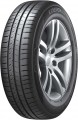 | 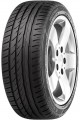 |
|---|---|---|
| Hankook Kinergy Eco 2 K435 185/65 R14 86H | Matador MP 47 Hectorra 3 185/65 R14 86T | |
| Compare prices 10 | from £59.00 | |
| User reviews | ||
| TOP sellers | ||
| Season | summer | summer |
| Product Type | passenger car / SUV | passenger car / SUV |
| Width | 185 mm | 185 mm |
| Aspect ratio | 65 % | 65 % |
| Tyre inner diameter | 14 " | 14 " |
| Load index | 86 | 86 |
| Speed rating | H | T |
| Orientation | non-directional | non-directional |
| Pattern Symmetry | asymmetric | asymmetric |
| Fuel efficiency | C | E |
| Wet Grip | A | B |
| Noise Level | 70 dB | 70 dB |
| Added to E-Catalog | january 2018 | january 2018 |





Compare Hankook Kinergy Eco 2 K435 185/65 R14 86H and Matador MP 47 Hectorra 3 185/65 R14 86T
You may be interested in
Hankook Kinergy Eco 2 K435 often compared


Matador MP 47 Hectorra 3 often compared


Glossary
Speed rating
The speed rating that the tyre corresponds to.
This indicator determines the maximum speed that tyre is allowed to operate. It is designated by the letters of the Latin alphabet, each of which corresponds to a certain speed limit:
F — 80 km/h; G — 90 km/h; J — 100 km/h; K — 110 km/h; L — 120 km/h; M — 130 km/h; N — 140 km/h; P — 150 km/h ; Q — 160 km/h ; R — 170 km/h ; S — 180 km/h ; T — 190 km/h ; U — 200 km/h ; H — 210 km/h ; V — 240 km/h ; W — 270 km/h ; Y — 300 km/h ;
The maximum permitted speed must not be exceeded — this creates the risk of an accident. However, there are other rules associated with choosing a tyre by this factor. So, ideally, the actual driving speed should be at least 10 – 15% lower than the speed rating of the installed tyres — this will give an additional guarantee in case of emergency situations. In addition, in some tyre models, as the speed approaches the maximum, the upper limit of allowable load is reduced; see “Load Index” for details.
This indicator determines the maximum speed that tyre is allowed to operate. It is designated by the letters of the Latin alphabet, each of which corresponds to a certain speed limit:
F — 80 km/h; G — 90 km/h; J — 100 km/h; K — 110 km/h; L — 120 km/h; M — 130 km/h; N — 140 km/h; P — 150 km/h ; Q — 160 km/h ; R — 170 km/h ; S — 180 km/h ; T — 190 km/h ; U — 200 km/h ; H — 210 km/h ; V — 240 km/h ; W — 270 km/h ; Y — 300 km/h ;
The maximum permitted speed must not be exceeded — this creates the risk of an accident. However, there are other rules associated with choosing a tyre by this factor. So, ideally, the actual driving speed should be at least 10 – 15% lower than the speed rating of the installed tyres — this will give an additional guarantee in case of emergency situations. In addition, in some tyre models, as the speed approaches the maximum, the upper limit of allowable load is reduced; see “Load Index” for details.
Fuel efficiency
The rolling resistance rating that the tyre corresponds to. The higher this figure, the lower the resistance, the less fuel is spent to overcome it and the more economical the tyre is. Efficiency indices are denoted by letters of the Latin alphabet in descending order of efficiency: A(highest efficiency), B, C, D, E, F, G(lowest efficiency).
With other things being equal, more economical tyres tend to cost more, but the difference is offset by fuel economy.
With other things being equal, more economical tyres tend to cost more, but the difference is offset by fuel economy.
Wet Grip
An index that determines the overall performance of a tyre on wet pavement. Lettered from A(highest) to G(lowest); intermediate options, respectively — B, C, D, E and F.
The higher this indicator, the stronger the tyre grips to the wet road, the more efficient and safer it will be in difficult weather conditions. At the same time, it is worth noting that a low grip index does not mean unsuitability for driving in rain or snow — you just need to be more careful using such tyres. Conversely, a high index does not relieve the driver of the need to be careful in difficult weather conditions.
The higher this indicator, the stronger the tyre grips to the wet road, the more efficient and safer it will be in difficult weather conditions. At the same time, it is worth noting that a low grip index does not mean unsuitability for driving in rain or snow — you just need to be more careful using such tyres. Conversely, a high index does not relieve the driver of the need to be careful in difficult weather conditions.