
Comparison Makita 9404 vs Makita 9920
Add to comparison | 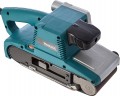 | 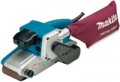 |
|---|---|---|
| Makita 9404 | Makita 9920 | |
| Compare prices 6 | from £13.75 | |
| User reviews | ||
| TOP sellers | ||
The 9404 comes without a case and the 9404J comes with a Makpac case. | ||
| Type | belt | belt |
| Power source | mains (230 V) | mains (230 V) |
Specs | ||
| Power consumption | 1010 W | 1010 W |
| Belt speed | 210 – 440 m/min | 210 – 440 m/min |
| Tape/sheet length | 610 mm | 610 mm |
| Belt / sheet width | 100 mm | 76 mm |
Additional features | ||
| Features | speed controller dust collector connection | speed controller dust collector connection |
| In box | additional handle dust collector | dust collector |
General | ||
| Noise level | 96 dB | 96 dB |
| Power cord length | 5 m | |
| Dimensions | 334x157x143 mm | |
| Weight | 4.8 kg | 4.5 kg |
| Added to E-Catalog | april 2010 | april 2010 |





Compare Makita 9404 and 9920
Price comparison
You may be interested in
Makita 9404 often compared


Glossary
Belt / sheet width
The width of the belt or sheet for which the grinder is designed.
Working nozzles in the form of sheets are used in units with a vibrational principle of operation, in the form of tapes — respectively, in tape ones (for more details on both, see "Type"). Anyway, this paragraph does not indicate the working width of the tape / sheet (that is, the width of the surface adjacent to the material being processed), but the total — that is, the size of the nozzle itself. This size in itself determines only the compatibility of the grinder with certain sheets / tapes. At the same time, clamp-like fasteners (see “Sheet fastening”), used in most classic vibrating instruments, usually fix the sheet only in front and behind, so that in such instruments the restrictions on width are not as strict as, for example, on length: the sheet may be somewhat wider, and somewhat narrower than the nominal size. However, such possibilities should be clarified separately, and for a full guarantee it is better to clarify whether a particular machine allows deviations in width. The situation is similar with delta sanders, where Hook-and-loop is traditionally used: a discrepancy in width technically does not prevent the installation of a nozzle, but not all models allow this. As for the band tools, they may allow the installation of a narrower band — but not a wider one.
As for the working width, it, usually, corresponds to the general one, or (in some vibration models) differs slightl...y from it. Anyway, the working width is given under Sole Size (see below).
Working nozzles in the form of sheets are used in units with a vibrational principle of operation, in the form of tapes — respectively, in tape ones (for more details on both, see "Type"). Anyway, this paragraph does not indicate the working width of the tape / sheet (that is, the width of the surface adjacent to the material being processed), but the total — that is, the size of the nozzle itself. This size in itself determines only the compatibility of the grinder with certain sheets / tapes. At the same time, clamp-like fasteners (see “Sheet fastening”), used in most classic vibrating instruments, usually fix the sheet only in front and behind, so that in such instruments the restrictions on width are not as strict as, for example, on length: the sheet may be somewhat wider, and somewhat narrower than the nominal size. However, such possibilities should be clarified separately, and for a full guarantee it is better to clarify whether a particular machine allows deviations in width. The situation is similar with delta sanders, where Hook-and-loop is traditionally used: a discrepancy in width technically does not prevent the installation of a nozzle, but not all models allow this. As for the band tools, they may allow the installation of a narrower band — but not a wider one.
As for the working width, it, usually, corresponds to the general one, or (in some vibration models) differs slightl...y from it. Anyway, the working width is given under Sole Size (see below).
In box
— Additional Handle. A separate handle for the second hand. In theory, such equipment may make the tool more comfortable to hold with both hands. However, in practice, the absence of an additional handle is often not critical: many tools without it are either designed for one-handed use (like some straight grinders, see "Type") or have other attachments for the second hand (such as a protrusion on the body). So, to answer whether you need an additional handle, you should consider the type and size of the grinder, as well as the specifics of the intended projects. Note also that by default, such a handle is designed for right-handed use, and the possibility of using it in left-handed operation needs to be clarified separately.
— 3-Position Additional Handle. An additional handle installed on a detachable mount and having three installation options: on the left (traditional option for right-handed use), on the right (for left-handed use), and on top (for specific cases — situations when you need to periodically change grip, work in hard-to-reach places, etc.). This function provides extended possibilities for tool customization according to personal preferences. It is mainly found in angular models (see "Type").
— Charger (C). A device for charging the battery in a grinder with the appropriate power type (see "Power Source"). This section usually specifies...the specific model of the charger. Having a "charger" included relieves you from the need to search and purchase it separately; moreover, such a charger is optimally suited at least to the "native" battery, and often to other compatible batteries. The details on the model will be useful primarily in case the included charger is lost or fails, and you have to buy the same or a similar one instead. Moreover, knowing the model of the charger allows you to find detailed data about it and assess the characteristics and features (compatibility with various batteries, additional functions, etc.). At the same time, the configuration "without charger" is also quite popular — see below.
— Without Charger. This feature is indicated exclusively for battery models (machines with other power types — see "Power Source" — by definition do not have a charger, so this point does not need to be clarified for them). The meaning of such a configuration is that modern grinders most often use standard batteries, which also fit other power tools of the same brand and are thus designed for standard "chargers." Thus, if there is already a battery tool "in the household" — the charger for it may turn out to be suitable for the grinder, and you will not need to pay extra for a second copy of the charger. And even if there is no charger available — it can usually be purchased separately without much difficulty (and some tools even allow you to choose the most suitable model of such a device from several options).
— Case / Bag included. The presence of a case or bag for storing and transporting the tool in the supply kit. The case is a suitcase made of durable material and usually has space not only for the grinder itself but also for working tips and other additional accessories. The bag is soft, allowing it to be compactly folded when not needed. Check the availability of a case or bag directly before purchase.
— Dust Collector. A container for collecting dust and other contaminants generated during work. See "Additional — Dust Collector Connection" for more details.
— Extension Pole. A long pole significantly expands the "radius of operation" of the tool: with such equipment, you can reach greater heights, process a large area without moving the platform or other stand, etc. Such capabilities are mainly relevant when processing walls, so the vast majority of grinders with extension poles included pertain to wall sanders (see "Type").
— 3-Position Additional Handle. An additional handle installed on a detachable mount and having three installation options: on the left (traditional option for right-handed use), on the right (for left-handed use), and on top (for specific cases — situations when you need to periodically change grip, work in hard-to-reach places, etc.). This function provides extended possibilities for tool customization according to personal preferences. It is mainly found in angular models (see "Type").
— Charger (C). A device for charging the battery in a grinder with the appropriate power type (see "Power Source"). This section usually specifies...the specific model of the charger. Having a "charger" included relieves you from the need to search and purchase it separately; moreover, such a charger is optimally suited at least to the "native" battery, and often to other compatible batteries. The details on the model will be useful primarily in case the included charger is lost or fails, and you have to buy the same or a similar one instead. Moreover, knowing the model of the charger allows you to find detailed data about it and assess the characteristics and features (compatibility with various batteries, additional functions, etc.). At the same time, the configuration "without charger" is also quite popular — see below.
— Without Charger. This feature is indicated exclusively for battery models (machines with other power types — see "Power Source" — by definition do not have a charger, so this point does not need to be clarified for them). The meaning of such a configuration is that modern grinders most often use standard batteries, which also fit other power tools of the same brand and are thus designed for standard "chargers." Thus, if there is already a battery tool "in the household" — the charger for it may turn out to be suitable for the grinder, and you will not need to pay extra for a second copy of the charger. And even if there is no charger available — it can usually be purchased separately without much difficulty (and some tools even allow you to choose the most suitable model of such a device from several options).
— Case / Bag included. The presence of a case or bag for storing and transporting the tool in the supply kit. The case is a suitcase made of durable material and usually has space not only for the grinder itself but also for working tips and other additional accessories. The bag is soft, allowing it to be compactly folded when not needed. Check the availability of a case or bag directly before purchase.
— Dust Collector. A container for collecting dust and other contaminants generated during work. See "Additional — Dust Collector Connection" for more details.
— Extension Pole. A long pole significantly expands the "radius of operation" of the tool: with such equipment, you can reach greater heights, process a large area without moving the platform or other stand, etc. Such capabilities are mainly relevant when processing walls, so the vast majority of grinders with extension poles included pertain to wall sanders (see "Type").
Power cord length
The length of the network cable can tell you how far from the outlet you can operate the device. Therefore, for domestic use, it is more relevant to choose models with a short cord, for construction work or use in production, in the garage a longer cable is better.
Weight
The total weight of the grinder; for battery models (see "Power Source"), usually, it is indicated without taking into account the battery.
This indicator has two meanings. On the one hand, light weight has a positive effect on manoeuvrability and reduces fatigue during work — especially when processing vertical surfaces and ceilings, as well as in other situations where the tool has to be held on weight. On the other hand, for grinders with a vibrational principle of operation (see "Type"), used for processing horizontal surfaces, a significant weight is considered optimal: it allows the tool to fit closer to the material being processed, and also contributes to stability and retention. So when choosing such a model by weight, it is worth considering the features of its intended application.
This indicator has two meanings. On the one hand, light weight has a positive effect on manoeuvrability and reduces fatigue during work — especially when processing vertical surfaces and ceilings, as well as in other situations where the tool has to be held on weight. On the other hand, for grinders with a vibrational principle of operation (see "Type"), used for processing horizontal surfaces, a significant weight is considered optimal: it allows the tool to fit closer to the material being processed, and also contributes to stability and retention. So when choosing such a model by weight, it is worth considering the features of its intended application.