
Comparison DEX DFD-165S vs WetAir WFD-K650S
Add to comparison | 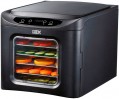 | 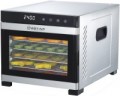 |
|---|---|---|
| DEX DFD-165S | WetAir WFD-K650S | |
| Outdated Product | Outdated Product | |
| User reviews | ||
| TOP sellers | ||
| Type | dehydrator (horizontal dryer) | dehydrator (horizontal dryer) |
| Drying levels | 6 pcs | 6 pcs |
| Tray size | 305x330 mm | 305x330 mm |
| Power consumption | 500 W | 650 W |
Specs | ||
| Thermostat |  | |
| Pastila tray | 1 pcs | 1 pcs |
| Mesh for herbs and spices | 1 | |
| Temperature range | 35 – 70 °C | 35 – 75 °C |
| Location of the fan (heater) | rear | rear |
| Control | touch controls | touch controls |
| Shutdown timer | | |
| Overheat protection | | |
| Tray material | stainless steel | stainless steel |
| Dimensions | 315x345x450 mm | 340x450x311 mm |
| Weight | 4.9 kg | 8.3 kg |
| Added to E-Catalog | april 2023 | may 2021 |


Compare DEX DFD-165S and WetAir WFD-K650S
You may be interested in
My comparisons
DEX DFD-165S often compared


WetAir WFD-K650S often compared


Glossary
Power consumption
Rated power consumed by the dryer during operation.
This parameter is usually selected by manufacturers depending on the volume of the dryer: the larger the device, the more power is needed to effectively heat the working chamber. At the same time, models with the same volume may differ in power consumption. In such cases, it is worth considering that a higher power reduces the heating time, but affects the price of the device.
This parameter is usually selected by manufacturers depending on the volume of the dryer: the larger the device, the more power is needed to effectively heat the working chamber. At the same time, models with the same volume may differ in power consumption. In such cases, it is worth considering that a higher power reduces the heating time, but affects the price of the device.
Mesh for herbs and spices
A mesh for herbs and spices is included in the delivery set of the food dehydrator.
These meshes are characterized by a finely porous structure to prevent herbs and spices from falling through the mesh holes. They are made of silicone or stainless steel, and more rarely of bamboo. There are also variants with non-stick coating, which prevents food from sticking to the surface of the mesh.
These meshes are characterized by a finely porous structure to prevent herbs and spices from falling through the mesh holes. They are made of silicone or stainless steel, and more rarely of bamboo. There are also variants with non-stick coating, which prevents food from sticking to the surface of the mesh.
Temperature range
The temperature range that the dryer can provide in the working chamber.
The simplest models provide only one operating temperature option, usually from 50 °C to 60 °C. More advanced devices equipped with thermostats (see above) and can have a wide range of adjustment — this is very useful, because different temperature regimes are recommended for different products. To assess the general capabilities of a particular dryer, you can use the following table of temperatures recommended for drying:
— 35...40 °C — plant stems, greens;
— 40...45 °C — bread;
— 38...42 °C (in some cases up to 45 °C) — yoghurt;
— 50...55 °C — vegetables;
— 55...60 °C — fruits;
— 65...75 °C — meat, fish.
We emphasize that these are the most general, conditional data. The specific temperature may differ from the recommended one — depending on the thickness of the slices, the specific type of food, the desired result, etc. Detailed recommendations on this matter can be found in special sources.
The simplest models provide only one operating temperature option, usually from 50 °C to 60 °C. More advanced devices equipped with thermostats (see above) and can have a wide range of adjustment — this is very useful, because different temperature regimes are recommended for different products. To assess the general capabilities of a particular dryer, you can use the following table of temperatures recommended for drying:
— 35...40 °C — plant stems, greens;
— 40...45 °C — bread;
— 38...42 °C (in some cases up to 45 °C) — yoghurt;
— 50...55 °C — vegetables;
— 55...60 °C — fruits;
— 65...75 °C — meat, fish.
We emphasize that these are the most general, conditional data. The specific temperature may differ from the recommended one — depending on the thickness of the slices, the specific type of food, the desired result, etc. Detailed recommendations on this matter can be found in special sources.