
Comparison HOBOT 2S vs Hutt W66
Add to comparison | 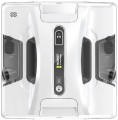 | 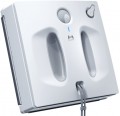 |
|---|---|---|
| HOBOT 2S | Hutt W66 | |
from £296.00 | from $223.66 | |
| TOP sellers | ||
Voice notifications. 2 tanks for spraying detergent. Drop protection for 20 minutes when unplugged. | Storage case. Drop protection for 20 minutes when unplugged. | |
| Type | window robot | window robot |
Specs | ||
| Performance | 2.4 min/m² | |
| Power | 90 W | |
| Detergent solution tank | 150 ml | |
| Power source | mains | mains |
| Backup power | 20 min | 20 min |
General | ||
| Noise level | 62 dB | |
| Control via smartphone | + | |
| In box | remote control | remote control |
| Cable length | 6 m | 7.5 m |
| Dimensions (H×W×D) | 8.6x24x24 cm | 7.6x23.2x23.2 cm |
| Weight | 1.3 kg | 1.6 kg |
| Added to E-Catalog | november 2021 | april 2021 |


Compare HOBOT 2S and Hutt W66
You may be interested in
My comparisons
HOBOT 2S often compared


Glossary
Performance
The nominal processing time for 1 m² of glass helps assess the operating speed of a window-cleaning robot: the lower the value in min/m², the faster the pass. For example, at 2.5 min/m², a surface measuring 4 m² will require about 10 minutes, excluding a repeat cycle, repositioning the device, and preparing the cleaning cloths. Models are best compared in identical modes, since the result is affected by the route, degree of contamination, and number of passes.
Power
Power consumption characterizes the load on the motor, suction fan, drives, and electronics, but it does not directly measure cleaning quality. It is more appropriate to compare this value within the same type of equipment: a more powerful device may provide greater operating headroom, but streaks and residual water are influenced more by the nozzle design, the condition of the cloths, and the movement algorithm. For corded models, this value also helps assess the requirements for the adapter or external power source.
Detergent solution tank
Noise level
The noise level indicates how loud the window cleaner operates: the lower the value, the more comfortable the device is to use indoors. Models quieter than 60 dB are comparable in volume to a calm conversation, the 60 – 65 dB range is already clearly audible, while devices above 65 dB may interfere with work or relaxation nearby. A robot produces sound throughout the entire cycle, whereas a handheld vacuum makes noise only while directly collecting water.
Control via smartphone
Smartphone control allows you to control the window-cleaning robot through the dedicated mobile app. From your phone, you can start and stop cleaning, select a mode, change the direction of movement, and monitor the device status—the exact set of commands depends on the model. The smartphone connection can be established via Bluetooth—for direct control nearby without a router—or via Wi‑Fi, which provides a greater connection range and may support remote access over the internet.
Cable length
The cable length determines whether the corded window-cleaning robot can reach the farthest part of the glass without straining the wire. When calculating, account for the route from the outlet and adapter to the window, and arrange any excess cable so that it does not interfere with movement or the safety rope.