
Comparison Ajax MotionCam (PhOD) vs Ajax MotionCam
Add to comparison | 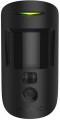 | 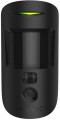 |
|---|---|---|
| Ajax MotionCam (PhOD) | Ajax MotionCam | |
| Compare prices 2 | Compare prices 1 | |
| TOP sellers | ||
Photo recording when motion is detected. Photo delivery time at default settings (320 × 240 pixels): up to 9 s (from 7 to 20 s, depending on resolution). Max. photo size 640x480 pixels. Pictures in a series: 1-5 pieces. The main difference from the regular version Ajax MotionCam is the ability to receive data from the camera on request. Protection against forgery. Jamming alert. Tamper for opening and attempting to detach from the fastening. | Alarm delivery time 0.15 s. Possibility of photofixation when motion is detected. Photo delivery time at default settings (320 × 240 pixels): up to 9 s. Maximum photo size 640x480 pixels. Pictures in a series: 1-5 pcs. Works only with Hub 2. Protection against forgery. Jamming alert. Tamper for opening and attempting to detach from the fastening. There is a version with the ability to make manual requests to the camera MotionCam (PhOD). | |
| Sensor | movements infrared (PIR) | movements infrared (PIR) |
| Mount | indoor | indoor |
| Installation | wall-mounted | wall-mounted |
| Connecting sensors (protocol) | Jeweller | Jeweller |
| Features | sensitivity adjustment animal immunity tamper-evident / tear-off protection jamming alert | sensitivity adjustment animal immunity tamper-evident / tear-off protection jamming alert |
General | ||
| Horizontal angle of coverage | 88.5 ° | 88.5 ° |
| Vertical angle of coverage | 80 ° | 80 ° |
| Range | 12 m | 12 m |
| Response time | 0.15 с | |
| Communication range | 1700 m | 1700 m |
| Power source | batteries | batteries |
| Working hours | 36 months | 48 months |
| Protection class | IP50 | IP50 |
| Operating temperature | -10 °C ~ +40 °C | 0 °C ~ +40 °C |
| Maximum humidity | 75 % | 75 % |
| Dimensions | 135x70x60 mm | 135x70x60 mm |
| Weight | 167 g | 167 g |
| Color | ||
| Added to E-Catalog | june 2023 | october 2018 |

Compare Ajax MotionCam (PhOD) and MotionCam
Price comparison
You may be interested in
Ajax MotionCam (PhOD) often compared


Ajax MotionCam often compared

Glossary
Response time
The response time of the sensor is, relatively speaking, the “speed of reaction” to the monitored event. Indicated by the time that elapses between the event being recorded and sending a signal to the control panel and/or turning on its own siren.
Theoretically, the shorter the response time of the sensor, the higher the overall reliability of the system, the faster it is able to respond to an event. At the same time, it is worth noting that in most models this time is measured in hundredths of a second — on average, from 0.03 to 0.15 s. Such a difference is fundamental only in very specific situations, when the count really goes to fractions of a second — for example, if a sensor is used to stop an industrial mechanism when a person appears in a dangerous area. In simpler cases, this parameter can be ignored.
Theoretically, the shorter the response time of the sensor, the higher the overall reliability of the system, the faster it is able to respond to an event. At the same time, it is worth noting that in most models this time is measured in hundredths of a second — on average, from 0.03 to 0.15 s. Such a difference is fundamental only in very specific situations, when the count really goes to fractions of a second — for example, if a sensor is used to stop an industrial mechanism when a person appears in a dangerous area. In simpler cases, this parameter can be ignored.
Working hours
Operating time of the self-powered sensor on one set of batteries or battery charge (see "Power"). Note that this indicator is quite approximate — it is usually indicated either for an perfect or for a certain “average” mode of operation. The real battery life also depends on a number of practical nuances: the frequency of operations, the communication range, the level of interference, etc., up to the air temperature. So in fact, the operating time may differ from the claimed one, and in the other direction. Nevertheless, according to this characteristic, it is quite possible to both evaluate the overall battery life of the sensor and compare different models with each other: the difference in the indicated operating time usually fully corresponds to the difference in real battery life.
Note that modern sensors have very low power consumption, so their operating time is calculated in months.
Note that modern sensors have very low power consumption, so their operating time is calculated in months.
Operating temperature
Ambient temperature range in which the sensor is guaranteed to remain operational.
All modern sensors are able to transfer the temperatures typical for residential and office premises without consequences. Therefore, it makes sense to pay attention to this parameter mainly in those cases when the sensor is planned to be used in more unfavorable conditions — for example, on the street, in an unheated room, in a “hot” industrial workshop, etc. At the same time, we emphasize that even for the most "Heat-resistant" models are undesirable exposure to direct sunlight — they can heat the case to temperatures that are much higher than permissible.
All modern sensors are able to transfer the temperatures typical for residential and office premises without consequences. Therefore, it makes sense to pay attention to this parameter mainly in those cases when the sensor is planned to be used in more unfavorable conditions — for example, on the street, in an unheated room, in a “hot” industrial workshop, etc. At the same time, we emphasize that even for the most "Heat-resistant" models are undesirable exposure to direct sunlight — they can heat the case to temperatures that are much higher than permissible.