
Comparison Ruixin RX-009 vs Ruixin RX-008
Add to comparison | 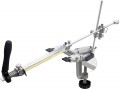 | 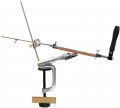 |
|---|---|---|
| Ruixin RX-009 | Ruixin RX-008 | |
| Outdated Product | from £33.92 | |
| User reviews | ||
| TOP sellers | ||
The reversible design allows the blade to be flipped and sharpened within +/- 2°. Supplied unassembled complete with 4 abrasive stones (120, 320, 600, 1500 grit). | ||
| Type | professional sharpening machine | professional sharpening machine |
Specs | ||
| Abrasive material | diamond and stone | synthetic stone |
| Min. grain | 120 grit | 120 grit |
| Max. grain | 1500 grit | 1500 grit |
| Sharpening scissors |  |  |
In box | ||
| Cover/case | | |
| Added to E-Catalog | september 2023 | june 2021 |


Compare Ruixin RX-009 and RX-008
The Ruixin RX-009 and RX-008 sharpeners are professional machines with similar characteristics, but they have some key differences. The RX-009 uses diamond and stone as the abrasive, while the RX-008 is equipped with a synthetic stone. Both devices have a min. grit of 120 grit and a max. grit of 1500 grit, but the RX-008 supports scissors sharpening, which the RX-009 does not. Both models include a case, but do not come with a stand and angle guide. The choice between them depends on the necessity of scissors sharpening: if this is important, it's better to choose the RX-008.
You may be interested in
My comparisons
Ruixin RX-009 often compared

Ruixin RX-008 often compared


Glossary
Abrasive material
The main working material of the sharpener is the material that makes up the abrasive surface that provides processing.
— Diamond (diamond coating). Diamond is the hardest of the well-known substances, which determined its key features — durability and high intensity of sharpening. At the same time, such an abrasive is not cheap, and the processing is rougher than that of many other materials. However, diamond surfaces are mainly used for roughing and semi-finishing, where the latter is not a disadvantage.
— Ceramics. Ceramic materials, usually based on corundum — aluminium oxide. This material is softer than diamond, but still has a very high hardness (9 on the Mohs scale, only 10 higher for the same diamond). The performance of ceramic abrasives is slightly lower than that of diamond, but they provide cleaner processing and can be used at all stages of work — from rough sharpening to finishing — and are much cheaper.
— Natural stone. Natural stone has been used to sharpen blades since prehistoric times, but has not lost its relevance to this day. The most popular varieties of this material are "Arkansas" and Japanese water stone (both named after their place of origin). At the same time, "Arkansas" is an extremely fine-grained and very pure quartz, and Japanese stone is silicon in connection with clay. All such materials are used only in...stone sharpeners (see above). In general, they are able to provide a fairly high quality of sharpening, however, natural stone is rather “capricious” — in particular, the composition of even a very high-quality bar can be uneven, which can affect the quality of sharpening. And Japanese stones are also very demanding both for the procedure itself and for additional maintenance. However, natural stone sharpeners have their fans; many use such products not only because of their practical advantages, but also as a tribute to tradition or an element of a certain “knife culture”.
— Synthetic stone. A variety of abrasives obtained artificially and to some extent imitating the properties of natural stone. The composition and properties of such materials can be very different; usually, their quality is directly related to the price category of the sharpener. Anyway, synthetic stones (especially high-quality ones) often surpass natural counterparts in practical properties, but at the same time they are much cheaper. This is one of the most popular abrasives used in sharpeners of various levels and purposes. Note that in some cases, ceramics (see above) are also classified by manufacturers as synthetic stones; in such models, the abrasive material is indicated precisely according to the manufacturer's official data.
— Stainless steel. Steel, even with special additives to increase hardness, is a fairly soft material and has very low abrasive properties. Therefore, it is usually used for dressing knives, and most models of this material are musat (see "Type") or manual sharpeners operating on the same principle (the latter are actually two musat, fixed at an angle to each other).
There are quite a few models that combine different types of abrasives in their design — for example, diamond for rough processing and ceramic for fine grinding and finishing. Note that if the list of these materials includes a stone (for example, “diamond and stone”), then we are talking exclusively about synthetic stone, because. natural for a number of reasons is not combined with other materials.
— Diamond (diamond coating). Diamond is the hardest of the well-known substances, which determined its key features — durability and high intensity of sharpening. At the same time, such an abrasive is not cheap, and the processing is rougher than that of many other materials. However, diamond surfaces are mainly used for roughing and semi-finishing, where the latter is not a disadvantage.
— Ceramics. Ceramic materials, usually based on corundum — aluminium oxide. This material is softer than diamond, but still has a very high hardness (9 on the Mohs scale, only 10 higher for the same diamond). The performance of ceramic abrasives is slightly lower than that of diamond, but they provide cleaner processing and can be used at all stages of work — from rough sharpening to finishing — and are much cheaper.
— Natural stone. Natural stone has been used to sharpen blades since prehistoric times, but has not lost its relevance to this day. The most popular varieties of this material are "Arkansas" and Japanese water stone (both named after their place of origin). At the same time, "Arkansas" is an extremely fine-grained and very pure quartz, and Japanese stone is silicon in connection with clay. All such materials are used only in...stone sharpeners (see above). In general, they are able to provide a fairly high quality of sharpening, however, natural stone is rather “capricious” — in particular, the composition of even a very high-quality bar can be uneven, which can affect the quality of sharpening. And Japanese stones are also very demanding both for the procedure itself and for additional maintenance. However, natural stone sharpeners have their fans; many use such products not only because of their practical advantages, but also as a tribute to tradition or an element of a certain “knife culture”.
— Synthetic stone. A variety of abrasives obtained artificially and to some extent imitating the properties of natural stone. The composition and properties of such materials can be very different; usually, their quality is directly related to the price category of the sharpener. Anyway, synthetic stones (especially high-quality ones) often surpass natural counterparts in practical properties, but at the same time they are much cheaper. This is one of the most popular abrasives used in sharpeners of various levels and purposes. Note that in some cases, ceramics (see above) are also classified by manufacturers as synthetic stones; in such models, the abrasive material is indicated precisely according to the manufacturer's official data.
— Stainless steel. Steel, even with special additives to increase hardness, is a fairly soft material and has very low abrasive properties. Therefore, it is usually used for dressing knives, and most models of this material are musat (see "Type") or manual sharpeners operating on the same principle (the latter are actually two musat, fixed at an angle to each other).
There are quite a few models that combine different types of abrasives in their design — for example, diamond for rough processing and ceramic for fine grinding and finishing. Note that if the list of these materials includes a stone (for example, “diamond and stone”), then we are talking exclusively about synthetic stone, because. natural for a number of reasons is not combined with other materials.
Sharpening scissors
Possibility of using a sharpener for sharpening scissors.
Technically, you can sharpen scissors on almost any sharpener — the design of their blades is not very different from knife ones. However, individual sharpeners may provide various design solutions that make it easier to work with scissors — for example, the ability to set the optimal sharpening angle or special mounts for such a tool. Therefore, for maximum convenience when working with scissors, you should still choose models where this function is directly stated.
Technically, you can sharpen scissors on almost any sharpener — the design of their blades is not very different from knife ones. However, individual sharpeners may provide various design solutions that make it easier to work with scissors — for example, the ability to set the optimal sharpening angle or special mounts for such a tool. Therefore, for maximum convenience when working with scissors, you should still choose models where this function is directly stated.