
Comparison XO PR201 vs Remax Dinba RPP-310
Add to comparison | 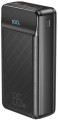 | 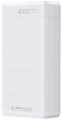 |
|---|---|---|
| XO PR201 | Remax Dinba RPP-310 | |
from £37.99 | Outdated Product | |
| User reviews | ||
| TOP sellers | ||
| Battery capacity | 30000 mAh 111 W*h | 40000 mAh 148 W*h |
| Real capacity | 18900 mAh | 25200 mAh |
| Battery type | Li-Pol | Li-Pol |
Charging gadgets / outputs | ||
| USB-C | 1 pcs | 2 pcs |
| USB-A | 2 pcs | 1 pcs |
| USB-C1 | 65 W | 65 W |
| USB-C2 | 18 W | |
| USB-A1 | 22.5 W | 22.5 W |
| USB-A2 | 22.5 W | |
Power bank charging | ||
| Power bank charging inputs | USB-C Apple Lightning microUSB | USB-C |
| Power bank charge power | 65 W | 65 W |
Features | ||
| Fast charge | Quick Charge 3.0 Power Delivery 3.0 | Quick Charge 4.0+ Power Delivery 3.0 |
| Features | info display | info display |
General | ||
| Body material | plastic | plastic |
| Dimensions | 152x76x42 mm | 160x84x48 mm |
| Weight | 650 g | 920 g |
| Color | ||
| Added to E-Catalog | august 2023 | january 2023 |


Compare XO PR201 and Remax Dinba RPP-310
You may be interested in
XO PR201 often compared


Remax Dinba RPP-310 often compared


Glossary
Battery capacity
The capacity of a powerbank indicates the amount of energy it can store and is usually specified in two formats in the specifications — mAh and Wh. The mAh value is more familiar to most buyers and helps quickly understand the class of the model, while Wh more accurately reflects the total energy reserve and is more convenient for a more accurate comparison of devices.
For example, a powerbank with 10000 mAh usually has about 37 Wh, a model with 20000 mAh — approximately 74 Wh, and a version with 30000 mAh — about 111 Wh. The higher these values, the more charges for a smartphone, headphones, watch, or other devices can be expected, but the larger, heavier, and usually more expensive the device becomes.
At the same time, it is important to remember that the actual output is always lower than the nominal figures due to energy conversion losses. Therefore, capacity is one of the main parameters that immediately shows whether the powerbank is suitable for a day's backup or for more serious autonomous use.
Real capacity
The real capacity of the power bank.
Real capacity is the amount of energy that a power bank is able to transfer to rechargeable gadgets. This amount is inevitably lower than the nominal capacity (see above) — most often by about 1.6 times (due to the fact that part of the energy goes to additional features and transmission losses). However, it is by real capacity that it is easiest to evaluate the actual capabilities of an external battery: for example, if this figure is 6500 mAh, this model is guaranteed to be enough for two full charges of a smartphone with a 3000 mAh battery and smartwatches for 250 mAh.
The capacity in this case is indicated for 5 V — the standard USB charging voltage. At the same time, the features of milliamp-hours as a unit of capacity are such that the actual amount of energy in the battery depends not only on the number of mAh, but also on the operating voltage. In fact, this means that when using fast charging technologies (see below) that involve increased voltage, the actual value of the actual capacity will differ from the claimed one (it will be lower). There are formulas and methods for calculating this value, they can be found in special sources.
Real capacity is the amount of energy that a power bank is able to transfer to rechargeable gadgets. This amount is inevitably lower than the nominal capacity (see above) — most often by about 1.6 times (due to the fact that part of the energy goes to additional features and transmission losses). However, it is by real capacity that it is easiest to evaluate the actual capabilities of an external battery: for example, if this figure is 6500 mAh, this model is guaranteed to be enough for two full charges of a smartphone with a 3000 mAh battery and smartwatches for 250 mAh.
The capacity in this case is indicated for 5 V — the standard USB charging voltage. At the same time, the features of milliamp-hours as a unit of capacity are such that the actual amount of energy in the battery depends not only on the number of mAh, but also on the operating voltage. In fact, this means that when using fast charging technologies (see below) that involve increased voltage, the actual value of the actual capacity will differ from the claimed one (it will be lower). There are formulas and methods for calculating this value, they can be found in special sources.
USB-C
The number of modern ports USB-C and built-in USB-C cables that can be used to charge smartphones, tablets, headphones, consoles, and other current devices. This format is particularly convenient today because USB-C has become the main connector for most new devices and usually supports higher charging power than USB-A. One USB-C output is usually enough for everyday use, while two and three are convenient if you need to connect several gadgets at the same time.
USB-A
The number of USB-A ports available for charging smartphones, headphones, accessories, and other devices. This format is still in demand because USB-A is widely used and fits a large number of existing cables and devices, although it usually falls behind USB-C in terms of relevance and power. A single USB-A output is typically sufficient for basic everyday use, while two, three, four, or more are convenient for connecting multiple gadgets simultaneously.
USB-C2
Maximum output power of the second USB-C port, which usually lags behind USB-C1, but can still be suitable for fast charging smartphones, portable consoles, and other modern devices.
USB-A2
The maximum power of the second USB-A output, which is usually slightly less than USB-A1, but is still suitable for charging smartphones, accessories, and other everyday devices.
Power bank charging inputs
The type of input used to charge the power bank's own battery. Simply put, this paragraph indicates which connector on the cable you need to charge the power bank. At the same time, some models provide several inputs for charging at once, which simplifies the search for a cable. Also note that for models with a built-in power bank charging connector (see below), the type of this connector is specified separately.
Most often in modern power banks there are standard connectors microUSB, USB type C and/or Apple Lightning. A lot of accessories are produced for such connectors — cables, network and car chargers, adapters, etc.; so there is usually no difficulty in finding a source of energy. Less common are models with DC input, they are usually equipped with their own power supply (or at least a cable under such a connector). Here is a more detailed description of the different types of inputs:
— microUSB. A smaller version of the USB connector, still very popular in portable tech, despite the active spread of the more advanced USB type C. It has relatively modest capabilities — in particular, it does not allow the implementation of some advanced fast charging technologies. On the other hand, it is very easy to find a source of energy for such a connector: both modern and many of the frankly outdated cables and chargers are...suitable for it.
— USB type C. A miniature type of USB connector, positioned, among other things, as the successor to microUSB. The most noticeable improvement is the reversible design, which allows you not to worry about which side of the plug is inserted into the connector. However, in the case of power banks, this is not the only or even the main advantage: USB type C has more extensive capabilities, allows more powerful currents and use a wider range of fast charging technologies (and Power Delivery was originally created specifically for this connector). Note that in some models the same connector of this type can be used both as an input for charging the battery and as an output for charging external devices — moreover, with automatic switching between these modes.
— Apple Lightning. Initially, this connector is designed for portable gadgets made by Apple. However, in the case of power banks, it can also be found in third-party devices: the idea is that the presence of Lightning allows you to charge an external battery using a cable from an iPhone or iPad and eliminates the need to look for a separate wire. For a number of reasons, this charging input is rarely used as the only one, more often it is provided in addition to microUSB or USB type C (see above).
— DC input. DC is a standard covering several types of connectors at once. Their common feature is a signature round shape, but the diameter, rated voltage and power can be different. In this sense, such connectors are not as convenient as USB type C, Lightning and other generally accepted standards — with a DC socket, it is best to use a native power supply (usually it comes bundled right away), and finding a third-party power source can be a problem. On the other hand, inputs of this type have practically no power limitations, it is easier to achieve high power supply with them than with the connectors described above. Therefore, DC inputs are used mainly in high-capacity power banks, where charging through a "weaker" interface would take an unreasonably long time. However, such models can also be equipped with standard microUSB or USB type C connectors "just in case".
Most often in modern power banks there are standard connectors microUSB, USB type C and/or Apple Lightning. A lot of accessories are produced for such connectors — cables, network and car chargers, adapters, etc.; so there is usually no difficulty in finding a source of energy. Less common are models with DC input, they are usually equipped with their own power supply (or at least a cable under such a connector). Here is a more detailed description of the different types of inputs:
— microUSB. A smaller version of the USB connector, still very popular in portable tech, despite the active spread of the more advanced USB type C. It has relatively modest capabilities — in particular, it does not allow the implementation of some advanced fast charging technologies. On the other hand, it is very easy to find a source of energy for such a connector: both modern and many of the frankly outdated cables and chargers are...suitable for it.
— USB type C. A miniature type of USB connector, positioned, among other things, as the successor to microUSB. The most noticeable improvement is the reversible design, which allows you not to worry about which side of the plug is inserted into the connector. However, in the case of power banks, this is not the only or even the main advantage: USB type C has more extensive capabilities, allows more powerful currents and use a wider range of fast charging technologies (and Power Delivery was originally created specifically for this connector). Note that in some models the same connector of this type can be used both as an input for charging the battery and as an output for charging external devices — moreover, with automatic switching between these modes.
— Apple Lightning. Initially, this connector is designed for portable gadgets made by Apple. However, in the case of power banks, it can also be found in third-party devices: the idea is that the presence of Lightning allows you to charge an external battery using a cable from an iPhone or iPad and eliminates the need to look for a separate wire. For a number of reasons, this charging input is rarely used as the only one, more often it is provided in addition to microUSB or USB type C (see above).
— DC input. DC is a standard covering several types of connectors at once. Their common feature is a signature round shape, but the diameter, rated voltage and power can be different. In this sense, such connectors are not as convenient as USB type C, Lightning and other generally accepted standards — with a DC socket, it is best to use a native power supply (usually it comes bundled right away), and finding a third-party power source can be a problem. On the other hand, inputs of this type have practically no power limitations, it is easier to achieve high power supply with them than with the connectors described above. Therefore, DC inputs are used mainly in high-capacity power banks, where charging through a "weaker" interface would take an unreasonably long time. However, such models can also be equipped with standard microUSB or USB type C connectors "just in case".
Fast charge
Fast charging technologies supported by the power bank. This is primarily about charging external gadgets, but the same technology can also be used when replenishing the power bank itself.
The fast charging feature, hence the name, can significantly reduce the time spent on the procedure. This is achieved through increased current and/or voltage, as well as smart process control (at each stage, the current and voltage correspond to the optimal parameters).
Fast charging is especially important for devices with high-capacity batteries that take a long time to charge normally. However, to fully use this feature, the power source and the gadget being charged must support the same charging technology; at the same time, different technologies are not compatible with each other, although occasionally there are exceptions. The most popular fast charging formats these days are QuickCharge (versions 3.0, 4.0 and 4.0+), Power Delivery (Power Delivery 3.0 and Power Delivery 3.1), Pump Express, Samsung Adaptive Fast Charging, Huawei Fast Charge Protocol, Huawei SuperCharge Protocol..., OPPO VOOC, OnePlus Dash Charge ; Here are the specific features of these, as well as some other options:
— Quick Charge (1.0, 2.0, 3.0, 4.0, 5.0). Technology created by Qualcomm and used in gadgets with Qualcomm CPUs. The later the version, the more advanced the technology: for example, Quick Charge 2.0 has 3 fixed voltage options, and version 3.0 has a smooth adjustment in the range from 3.6 to 20 V. Most often, gadgets with a newer version of Quick Charge are also compatible with older devices for charging, but for full use, an exact match in versions is desirable.
Also note that certain versions of Quick Charge have become the basis for some other technologies. However, again, the mutual compatibility of chargers/power banks and gadgets supporting these technologies needs to be clarified separately.
— Pump Express. Own development of MediaTek, used in portable devices with CPUs of this brand. Also available in several versions, with improvements and additions as it develops.
— Power delivery. Native fast charging technology for the USB type C connector. Used by many brands, found mainly in chargers (including power banks) and gadgets using this type of connector. Presented in several versions.
— Samsung Adaptive Fast Charging. Samsung's proprietary fast charging technology. It has been used without any changes since 2015, in light of which it looks quite modest compared to newer standards. Nevertheless, it is able to provide good speed, especially in the first 50% of the charge.
— Huawei FastCharge Protocol. One of Huawei's proprietary technologies. Formally similar to Quick Charge 2.0, but used with both Qualcomm and other brands of mobile processors, so compatibility is not guaranteed. In general, it is considered obsolete, gradually being replaced by more advanced standards like the SuperCharge Protocol.
— Huawei SuperCharge Protocol. Another proprietary technology from Huawei introduced in 2016; for 2021 is available in several versions. In some devices, the power of such charging exceeds 60 V — not a record, but quite an indicator.
— Oppo VOOC. OPPO technology, used both in branded smartphones and in equipment from other brands. Available in several versions; The latest (for 2021) version of SuperVOOC is for 2-cell batteries and is sometimes listed as a separate technology called Oppo SuperVOOC Flash Charge.
— OnePlus Dash Charge. A relatively old proprietary standard from OnePlus. An interesting feature is that in some gadgets, the effectiveness of Dash Charge is practically independent of the use of the screen: when the display is on, the battery charges at almost the same rate as when it is off. Technically a licensed version of OPPO's VOOC, however, these technologies are not compatible. Since 2018, Dash Charge has been phased out by Warp Charge, but this newer technology is still rare in separately sold chargers and power banks.
— PowerIQ. Technology developed by the Anker brand. The key feature of PowerIQ is that it is not a standalone standard, but a combined format of operation that combines a wide range of popular fast charging formats. In particular, version 3.0 claims the ability to work with Quick Charge, Power Delivery, Apple Fast Charging, Samsung Adaptive Fast Charging and others.
The fast charging feature, hence the name, can significantly reduce the time spent on the procedure. This is achieved through increased current and/or voltage, as well as smart process control (at each stage, the current and voltage correspond to the optimal parameters).
Fast charging is especially important for devices with high-capacity batteries that take a long time to charge normally. However, to fully use this feature, the power source and the gadget being charged must support the same charging technology; at the same time, different technologies are not compatible with each other, although occasionally there are exceptions. The most popular fast charging formats these days are QuickCharge (versions 3.0, 4.0 and 4.0+), Power Delivery (Power Delivery 3.0 and Power Delivery 3.1), Pump Express, Samsung Adaptive Fast Charging, Huawei Fast Charge Protocol, Huawei SuperCharge Protocol..., OPPO VOOC, OnePlus Dash Charge ; Here are the specific features of these, as well as some other options:
— Quick Charge (1.0, 2.0, 3.0, 4.0, 5.0). Technology created by Qualcomm and used in gadgets with Qualcomm CPUs. The later the version, the more advanced the technology: for example, Quick Charge 2.0 has 3 fixed voltage options, and version 3.0 has a smooth adjustment in the range from 3.6 to 20 V. Most often, gadgets with a newer version of Quick Charge are also compatible with older devices for charging, but for full use, an exact match in versions is desirable.
Also note that certain versions of Quick Charge have become the basis for some other technologies. However, again, the mutual compatibility of chargers/power banks and gadgets supporting these technologies needs to be clarified separately.
— Pump Express. Own development of MediaTek, used in portable devices with CPUs of this brand. Also available in several versions, with improvements and additions as it develops.
— Power delivery. Native fast charging technology for the USB type C connector. Used by many brands, found mainly in chargers (including power banks) and gadgets using this type of connector. Presented in several versions.
— Samsung Adaptive Fast Charging. Samsung's proprietary fast charging technology. It has been used without any changes since 2015, in light of which it looks quite modest compared to newer standards. Nevertheless, it is able to provide good speed, especially in the first 50% of the charge.
— Huawei FastCharge Protocol. One of Huawei's proprietary technologies. Formally similar to Quick Charge 2.0, but used with both Qualcomm and other brands of mobile processors, so compatibility is not guaranteed. In general, it is considered obsolete, gradually being replaced by more advanced standards like the SuperCharge Protocol.
— Huawei SuperCharge Protocol. Another proprietary technology from Huawei introduced in 2016; for 2021 is available in several versions. In some devices, the power of such charging exceeds 60 V — not a record, but quite an indicator.
— Oppo VOOC. OPPO technology, used both in branded smartphones and in equipment from other brands. Available in several versions; The latest (for 2021) version of SuperVOOC is for 2-cell batteries and is sometimes listed as a separate technology called Oppo SuperVOOC Flash Charge.
— OnePlus Dash Charge. A relatively old proprietary standard from OnePlus. An interesting feature is that in some gadgets, the effectiveness of Dash Charge is practically independent of the use of the screen: when the display is on, the battery charges at almost the same rate as when it is off. Technically a licensed version of OPPO's VOOC, however, these technologies are not compatible. Since 2018, Dash Charge has been phased out by Warp Charge, but this newer technology is still rare in separately sold chargers and power banks.
— PowerIQ. Technology developed by the Anker brand. The key feature of PowerIQ is that it is not a standalone standard, but a combined format of operation that combines a wide range of popular fast charging formats. In particular, version 3.0 claims the ability to work with Quick Charge, Power Delivery, Apple Fast Charging, Samsung Adaptive Fast Charging and others.