
Comparison Dewang 2 vs Myriwell RP100B
Add to comparison |  | 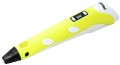 |
|---|---|---|
| Dewang 2 | Myriwell RP100B | |
| Outdated Product | from $54.00 | |
| TOP sellers | ||
Display for displaying parameters. Automatic plastic feed. Smooth speed control. Working with ABS and PLA plastic. Auto power off after 2 min. inaction. | ||
| Product Type | hot printing | hot printing |
| Filament Material | ABS + PLA | ABS + PLA |
| Min thread diameter | 1.75 mm | 1.75 mm |
| Nozzle Diameter | 0.7 mm | 0.7 mm |
| Print Speed | 40 mm/s | |
Features | ||
| Temperature Adjust |  | |
| Smooth Speed Adjust | | |
| Auto Power Off | | |
| Display |  | |
General | ||
| Tip Material | ceramics | |
| Country of brand origin | China | China |
| Dimensions | 170x30x30 mm | 180 mm |
| Thickness | 30 mm | |
| Weight | 60 g | |
| Added to E-Catalog | march 2017 | july 2015 |


Compare Dewang 2 and Myriwell RP100B
You may be interested in
Dewang 2 often compared

Myriwell RP100B often compared


Glossary
Print Speed
The material feed rate provided by the pen. The higher this speed, the faster you can work with this model; on the other hand, the rapid supply of material requires increased accuracy and serious skills. The maximum value of this parameter in modern 3D pens is about 40 mm/s. Models with adjusted speed is also available (see below); for them, usually, the highest speed of operation is given in the specs.
Display
The availability of a built-in display. Usually, these are the simplest single-colour screens that display the basic operating parameters — speed and/or temperature. However, even such a display makes the pen more convenient and allows you to get important information about its operation.
Tip Material
The material of the pen tip.
— Ceramics. Usually, high-durability varieties of ceramics are used in 3D pens, which also have low thermal conductivity. The latter has a positive effect on the quality of work, and also reduces the risk of getting burned. Theoretically, ceramic is a fairly brittle material, but practically, to damage such a tip, a very strong impact is needed, and the plastic body of the pen is more likely to crack than the ceramic nozzle. Thereby, most of the modern 3D pens use ceramics.
— Metal. Metal tips are considered more reliable and impact resistant than ceramic ones, and are somewhat cheaper. However, in fact, these differences are usually not noticeable. But the thermal conductivity of metal is significantly higher than that of ceramics, which is why such a tip heats up quite strongly during operation and requires additional care. Thereby, this material is much less common than ceramics.
— Ceramics. Usually, high-durability varieties of ceramics are used in 3D pens, which also have low thermal conductivity. The latter has a positive effect on the quality of work, and also reduces the risk of getting burned. Theoretically, ceramic is a fairly brittle material, but practically, to damage such a tip, a very strong impact is needed, and the plastic body of the pen is more likely to crack than the ceramic nozzle. Thereby, most of the modern 3D pens use ceramics.
— Metal. Metal tips are considered more reliable and impact resistant than ceramic ones, and are somewhat cheaper. However, in fact, these differences are usually not noticeable. But the thermal conductivity of metal is significantly higher than that of ceramics, which is why such a tip heats up quite strongly during operation and requires additional care. Thereby, this material is much less common than ceramics.