
Comparison Yamaha PSR-E473 vs Yamaha PSR-E463
Add to comparison | 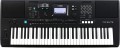 | 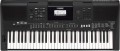 |
|---|---|---|
| Yamaha PSR-E473 | Yamaha PSR-E463 | |
from £260.00 | from £249.00 | |
| TOP sellers | ||
| Type | synthesizer (rompler) | synthesizer (rompler) |
Keys | ||
| Number of keys | 61 | 61 |
| Size | full size | full size |
| Mechanics | active | active |
| Rigidity | semi-weighted | semi-weighted |
Specs | ||
| Polyphony | 64 voices | 48 voices |
| Built-in timbres | 820 шт | 758 шт |
| Auto accompaniment |  | |
| Accompaniment styles | 290 шт | 235 шт |
| Learning mode | | |
| Tempo change | 11 – 280 | 11 – 280 |
| Metronome | | |
| Sequencer (recording) | | |
| Built-in compositions | | |
Effects and control | ||
| Timbres layering | | |
| Keyboard split | | |
| Arpeggiator | | |
| Reverberation | | |
| Chorus | | |
| Transposition | | |
| Pitch controller | | |
| Fine tuning | | |
Connectors | ||
| Inputs | mini-Jack (3.5 mm) USB to device (type A) | mini-Jack (3.5 mm) USB to device (type A) |
| Connectable pedals | 1 шт | 1 шт |
| Outputs | USB to host (type B) headphones | USB to host (type B) headphones |
| Linear outputs | 1 | 1 |
In box | ||
| In box | music stand | music stand |
General | ||
| Built-in acoustics | 12 W | 12 W |
| Number of bands | 2 | 2 |
| Display | monochrome | monochrome |
| Power consumption | 8 W | 8 W |
| Autonomous power supply | aA batteries | aA batteries |
| Dimensions (WxHxD) | 992x136x404 mm | 946x139x404 mm |
| Weight | 7 kg | 6.6 kg |
| Color | ||
| Added to E-Catalog | november 2022 | september 2018 |


Compare Yamaha PSR-E473 and PSR-E463
Comparing the Yamaha PSR-E473 and Yamaha PSR-E463, several key differences can be highlighted. The PSR-E473 offers 64 voices of polyphony compared to 48 voices on the PSR-E463, as well as 820 built-in tones compared to 758. In terms of accompaniment styles, the PSR-E473 has 290 styles, whereas the PSR-E463 has 235. Both synthesizers have the same number of keys and mechanics, but the PSR-E473 may be preferable for those seeking more options in sound diversity and accompaniment.
You may be interested in
Yamaha PSR-E473 often compared


Yamaha PSR-E463 often compared


Glossary
Polyphony
The polyphony supported by a synthesizer, in other words, is the number of “voices” (tone generators) that can simultaneously sound on it.
This parameter is often described as the number of notes that can be played simultaneously on the keyboard. However, this is not entirely true due to the fact that in many timbres one note can activate several tone generators. As a result, for example, to play a chord of 3 notes in a timbre with 4 tone generators per note, polyphony of at least 3 * 4=12 voices is required. In addition, Auto Accompaniment and Preset Songs (see related sections) also use tone generators, requiring even more voices to work effectively with these features.
The minimum value for a more or less functional modern synthesizer is polyphony for 32 voices — and even then such an instrument can be used mainly for initial training and simple melodies. For a more solid application, it is desirable to have at least 50 – 60 voices, and in professional models (in particular, workstations where you have to deal with several audio tracks at once), there are models with polyphony for 150 tone generators or more.
In general, a more advanced synthesizer is likely to have more extensive polyphony, however, it is only possible to evaluate the class of an instrument by this parameter very approximately — instruments with the same number of voices can differ greatly in level. The only exception to this rule are children's synthesizers (see "T...ype"), which support up to 20 voices.
This parameter is often described as the number of notes that can be played simultaneously on the keyboard. However, this is not entirely true due to the fact that in many timbres one note can activate several tone generators. As a result, for example, to play a chord of 3 notes in a timbre with 4 tone generators per note, polyphony of at least 3 * 4=12 voices is required. In addition, Auto Accompaniment and Preset Songs (see related sections) also use tone generators, requiring even more voices to work effectively with these features.
The minimum value for a more or less functional modern synthesizer is polyphony for 32 voices — and even then such an instrument can be used mainly for initial training and simple melodies. For a more solid application, it is desirable to have at least 50 – 60 voices, and in professional models (in particular, workstations where you have to deal with several audio tracks at once), there are models with polyphony for 150 tone generators or more.
In general, a more advanced synthesizer is likely to have more extensive polyphony, however, it is only possible to evaluate the class of an instrument by this parameter very approximately — instruments with the same number of voices can differ greatly in level. The only exception to this rule are children's synthesizers (see "T...ype"), which support up to 20 voices.
Built-in timbres
The number of built-in sounds provided in the synthesizer.
The number of timbres is often described as the number of instruments that a given model can imitate. However, this is not entirely true — rather, this parameter can be called "the number of instruments and sound effects." For example, the same instrument — an electric guitar — with different "gadgets" (distortion, overdrive) will sound differently, and in the synthesizer each such gadget will be considered a separate timbre. The “drums” timbre usually combines different types of drums and other percussion instruments — in other words, it allows you to portray both the “bass drum” and the cymbals without switching settings, just by pressing the desired keys. And some timbres may not have analogues among real instruments at all.
The more built-in timbres, the more extensive the possibilities of the synthesizer, the more diverse the sounds that can be extracted from it. At the same time, in high-end models like workstations (see "Type"), this number can reach 1000 or even more.
The number of timbres is often described as the number of instruments that a given model can imitate. However, this is not entirely true — rather, this parameter can be called "the number of instruments and sound effects." For example, the same instrument — an electric guitar — with different "gadgets" (distortion, overdrive) will sound differently, and in the synthesizer each such gadget will be considered a separate timbre. The “drums” timbre usually combines different types of drums and other percussion instruments — in other words, it allows you to portray both the “bass drum” and the cymbals without switching settings, just by pressing the desired keys. And some timbres may not have analogues among real instruments at all.
The more built-in timbres, the more extensive the possibilities of the synthesizer, the more diverse the sounds that can be extracted from it. At the same time, in high-end models like workstations (see "Type"), this number can reach 1000 or even more.
Accompaniment styles
The number of auto accompaniment styles (see above) originally provided in the synthesizer, in other words, the number of accompaniment options available to the user.
The more extensive this set, the higher the probability of finding among these melodies suitable options for a particular case. At the same time, the abundance of styles in itself is not yet a 100% guarantee that among them there will be a suitable one, especially since different synthesizer models can differ markedly in a specific set of melodies. So the list does not hurt to clarify before buying. Also note that the situation can be corrected by user styles (see below) — many synthesizers with auto accompaniment support them.
The more extensive this set, the higher the probability of finding among these melodies suitable options for a particular case. At the same time, the abundance of styles in itself is not yet a 100% guarantee that among them there will be a suitable one, especially since different synthesizer models can differ markedly in a specific set of melodies. So the list does not hurt to clarify before buying. Also note that the situation can be corrected by user styles (see below) — many synthesizers with auto accompaniment support them.