
Comparison Kentavr MB-1010E-3 vs Kentavr MB-1012E-3
Add to comparison | 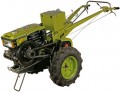 | 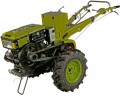 |
|---|---|---|
| Kentavr MB-1010E-3 | Kentavr MB-1012E-3 | |
from $1,039.00 up to $1,117.80 | from $1,059.96 up to $1,180.00 | |
| User reviews | ||
| TOP sellers | ||
| Motor type | diesel | diesel |
Soil cultivation | ||
| Working width | 100 cm | 100 cm |
| Working depth | 19 cm | 19 cm |
Design characteristics | ||
| Active rototiller |  | |
| Design | power take-off pulley handle height adjustment lights | power take-off pulley handle height adjustment lights |
| Gears | 6 forward / 2 backward | 6 forward / 2 backward |
Motor | ||
| ICE type | 4-stroke | 4-stroke |
| Engine size | 573 cm³ | 815 cm³ |
| Motor power | 10 hp | 12 hp |
| Motor power | 7410 W | 8890 W |
| Fuel consumption | 1.87 L/h | 2.22 L/h |
| Fuel tank volume | 5.5 L | 9 L |
| Start type | electric starter | electric starter |
| Engine-cooling system | liquid | liquid |
General | ||
| Dimensions | 217x90x115 cm | 217x98x115 cm |
| Weight | 282 kg | 296 kg |
| Added to E-Catalog | may 2014 | april 2014 |


Compare Kentavr MB-1010E-3 and MB-1012E-3
You may be interested in
My comparisons
Kentavr MB-1010E-3 often compared

Kentavr MB-1012E-3 often compared


Glossary
Engine size
The working volume of the gasoline or diesel engine of the cultivator / two-wheel tractor. For an internal combustion engine of the same type (see "Type of internal combustion engine"), power and fuel consumption usually directly depend on the volume. Also, the classification of a two-wheel tractor as a vehicle according to the traffic rules of a particular country may depend on the engine volume; you should pay attention to this if you plan to use the unit as a tractor and drive on roads.
Motor power
Horsepower of two-wheel tractor/cultivator motor. The basic unit of power nowadays is watt, however for petrol and diesel engines (see "Motor type") the more traditional designation in horsepower is often used. 1 hp is approximately equal to 735 watts.
More powerful motor allows achieving higher productivity, width and depth of processing. On the other hand, high power significantly affects the price, weight and dimensions of the unit, as well as the consumption of electricity/fuel. In light of this, the engine characteristics are selected by the manufacturer taking into account what "weight category" the walk-behind tractor belongs to. The most limited modern units have a power of up to 2 hp, in the heaviest and most advanced this figure can exceed 13 hp ; 4 - 7 hp can be called an average indicator, and 2 - 4 hp and 7 - 13 hp are below and above average, respectively.
Detailed recommendations on the optimal power for a given situation can be found in specialized sources.
More powerful motor allows achieving higher productivity, width and depth of processing. On the other hand, high power significantly affects the price, weight and dimensions of the unit, as well as the consumption of electricity/fuel. In light of this, the engine characteristics are selected by the manufacturer taking into account what "weight category" the walk-behind tractor belongs to. The most limited modern units have a power of up to 2 hp, in the heaviest and most advanced this figure can exceed 13 hp ; 4 - 7 hp can be called an average indicator, and 2 - 4 hp and 7 - 13 hp are below and above average, respectively.
Detailed recommendations on the optimal power for a given situation can be found in specialized sources.
Motor power
The power of the two-wheel tractor/cultivator engine in watts. This designation is usually used for electric engines, but can also be used for petrol/diesel engines, along with horsepower (for more information, see the "Motor power" section above).
More powerful motor allows achieving higher productivity, width and depth of processing. On the other hand, high power significantly affects the price, weight and dimensions of the unit, as well as the consumption of electricity / fuel. In light of this, the engine power is selected by the manufacturer taking into account what "weight category" the walk-behind tractor belongs to, what characteristics it should show. So, the lightest models have a power of up to 1.5 kW, this is the device that is best suited for a small area of 6 - 8 acres. Walk-behind tractors up to 3 kW can cope with 10 - 15 acres, a power of 3.5 - 5 kW is suitable for a plot of 50 acres to a couple of hectares. Units for 5 - 10 kW are already classified as professional level, they can "tame" spaces of 7 - 10 hectares; and the heaviest and most powerful modern walk-behind tractors have a power of more than 10 kW.
More powerful motor allows achieving higher productivity, width and depth of processing. On the other hand, high power significantly affects the price, weight and dimensions of the unit, as well as the consumption of electricity / fuel. In light of this, the engine power is selected by the manufacturer taking into account what "weight category" the walk-behind tractor belongs to, what characteristics it should show. So, the lightest models have a power of up to 1.5 kW, this is the device that is best suited for a small area of 6 - 8 acres. Walk-behind tractors up to 3 kW can cope with 10 - 15 acres, a power of 3.5 - 5 kW is suitable for a plot of 50 acres to a couple of hectares. Units for 5 - 10 kW are already classified as professional level, they can "tame" spaces of 7 - 10 hectares; and the heaviest and most powerful modern walk-behind tractors have a power of more than 10 kW.
Fuel consumption
The average amount of fuel consumed by the gasoline or diesel engine (see "Engine type") of the cultivator/two-wheel tractor per hour of operation. This value is rather conditional, because depending on the mode of operation, fuel consumption may vary in one direction or another; however, in general, it provides an estimate of the approximate amount of fuel required for a given operating time.
Fuel tank volume
The volume of the fuel tank of the cultivator / two-wheel tractor; knowing this parameter and fuel consumption (see above), it is possible to determine the maximum operating time of the unit on a single refill. If you plan to use the device in large areas or to work for a long time, it makes sense to look for a model with a large tank — it will not have to be filled often. On the other hand, for short-term work in small areas, a large tank is not required — in this case, it only increases the weight and dimensions of the unit.