
Comparison Rotex RHC175-C vs Enchen Boost
Add to comparison |  | 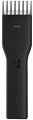 |
|---|---|---|
| Rotex RHC175-C | Enchen Boost | |
| Outdated Product | from £18.30 | |
| User reviews | ||
| TOP sellers | ||
| Main function | clipper | clipper |
In box | ||
| Functions of attachments/heads | clipper blade | clipper blade |
| Combs of variable length | 1 pc | |
| Fixed combs (straight) | 4 pcs | |
Specs | ||
| Haircut length | 0.7 – 21 mm | |
| Number of length settings | 7 | |
| Blade length adjustment |  |  |
| Number of revolutions of the motor | 4500 rpm | |
| Number of speeds | 2 pcs | |
| Blades material/coating | titanium ceramics | ceramic |
Power source | ||
| Power supply | battery and mains | built-in battery |
| Battery type | Li-Ion | |
| Battery capacity | 2000 mAh | |
| Operating time | 180 min | |
| Charging time | 3 h | 2 h |
| Charge level indicator | | |
| Charging port on the body | USB-C | |
| Mains 110 / 230 V | | |
General | ||
| Additionally included | comb | |
| Display | | |
| Material | plastic | plastic |
| Hanging loop | | |
| Cable length | 1.9 m | |
| Weight | 142 g | |
| Color | ||
| Added to E-Catalog | june 2024 | april 2020 |


Compare Rotex RHC175-C and Enchen Boost
You may be interested in
My comparisons
Enchen Boost often compared


Glossary
Combs of variable length
Universal guide comb is an adjustable-height comb attachment that lets you make haircuts with smooth transitions without needing to swap attachments. You can change the comb height on the fly by simply releasing the latch and sliding the comb. Height-adjustable combs are great because you can cut with a single attachment, which also helps keep your workspace tidy. Naturally, this type of attachment has a complex design. The comb itself can be moved relative to the base that’s rigidly fixed to the blade, and to lock the comb in the desired position, you just press the latch. Due to the complex design, the attachment’s reliability is reduced, which is why manufacturers may include several universal guide combs in the set.
Fixed combs (straight)
Clippers and trimmers are often equipped with fixed-height removable combs. The more combs in the kit, the smoother transitions the device can make. The standard set usually includes 3-5 combs, more advanced models may have 7-10 combs of a fixed height in a set.
Haircut length
The cutting height is influenced by the type of cutting element and the inclusion of detachable combs. Toothed blades can trim hair as short as 1 mm. By coupling a toothed blade with a detachable comb, the cutting height can range from 2-3 to 20, and even 30 mm – the precise height hinges on the provided comb attachments. There are defined minimum and maximum cutting heights. The minimum pertains to the blade's inherent capabilities, devoid of attachments. The maximum cutting height is determined by the detachable comb type.
Number of length settings
The number of haircut length options provided in the design of the clipper or the design of the nozzle. The more such options, the more versatile the clipper and the more cutting options it provides.
Blade length adjustment
Adjusting the length of the blade allows you to change the cutting length of the cutting unit. Accordingly, this parameter affects both the trimming length and a more accurate haircut using attachments.
Number of revolutions of the motor
The speed of rotation of the motor of the clipper. The speed of movement of the blades directly depends on this parameter, and the quality of the haircut, in turn, depends on it: the faster the blades move, the faster and more accurately the clipper cuts.
Number of speeds
The device's range of adjustable speeds is noteworthy. While most clippers typically operate at a single standard speed, there are models with dual speeds, often referred to as turbo. More advanced variations have been developed by certain manufacturers, featuring 3, 4, or even more speeds. Clippers equipped with variable speeds are designed to effectively manage denser hair by increasing the motor's revolutions.
Blades material/coating
— Stainless steel. The standout feature of stainless steel is its exceptional resistance to rusting. When the clipper or trimmer boasts a sealed casing, the stainless steel cutting head can be conveniently cleaned using water pressure. While stainless steel is common in lower-tier devices and its blades can endure high temperatures, they tend to lose sharpness relatively swiftly.
— Titanium. Titanium alloys showcase impressive durability against substantial mechanical strain. The titanium cutting edge adeptly manages hair of various thicknesses and densities, retaining its sharpness admirably. Tools equipped with a titanium blade are reliable for frequent usage, notably in beauty salons. However, the drawback lies in their notably steep expense.
— Ceramic. Ceramic offers remarkable strength; its blades remain cool and sharp over time. Machines or trimmers featuring ceramic blades effortlessly handle even the thickest hair, allowing for frequent and prolonged use. Interestingly, models with ceramic blades often come at a more affordable price compared to those with titanium blades. Nonetheless, fragility is a significant drawback of ceramics; these blades are susceptible to damage from impacts and falls. Clippers and trimmers that are equipped with a ceramic cutting part must be handled with extreme delicacy.
— Titanium ceramics.... Blades made of ceramic with a high titanium content. Ceramic in the context of the material used improves cutting performance, reduces friction and maintains a sharpness for a long time, and the titanium coating gives the blades strength, provides resistance to wear and corrosion. Titanium-ceramic blades are good for cutting coarse, thick hair, but they are quite expensive.
— Diamond. Diamond-coated blades have increased edge strength. Typically, these blades are based on steel, most often stainless, but thanks to diamond coating, the knife acquires higher reliability and durability. Of course, the presence of diamond coating on the blade significantly increases the cost of the device.
— Steel. Steel blades are the budget-friendly option. Steel performs effectively in devices used sporadically, mainly for home purposes. Although steel edges tend to lose sharpness relatively swiftly, their durability can be enhanced through the application of protective coatings like diamond, ceramic, or titanium. Clippers or trimmers with uncoated steel blades typically fall into the low-cost category.
— Graphite. Graphite coating is typical for stainless steel blades, it allows the blade to glide more easily through hair and skin and generally increases the efficiency and convenience of working with such a device. Most often, detachable trimmer blades are equipped with graphite coating.
— Titanium. Titanium alloys showcase impressive durability against substantial mechanical strain. The titanium cutting edge adeptly manages hair of various thicknesses and densities, retaining its sharpness admirably. Tools equipped with a titanium blade are reliable for frequent usage, notably in beauty salons. However, the drawback lies in their notably steep expense.
— Ceramic. Ceramic offers remarkable strength; its blades remain cool and sharp over time. Machines or trimmers featuring ceramic blades effortlessly handle even the thickest hair, allowing for frequent and prolonged use. Interestingly, models with ceramic blades often come at a more affordable price compared to those with titanium blades. Nonetheless, fragility is a significant drawback of ceramics; these blades are susceptible to damage from impacts and falls. Clippers and trimmers that are equipped with a ceramic cutting part must be handled with extreme delicacy.
— Titanium ceramics.... Blades made of ceramic with a high titanium content. Ceramic in the context of the material used improves cutting performance, reduces friction and maintains a sharpness for a long time, and the titanium coating gives the blades strength, provides resistance to wear and corrosion. Titanium-ceramic blades are good for cutting coarse, thick hair, but they are quite expensive.
— Diamond. Diamond-coated blades have increased edge strength. Typically, these blades are based on steel, most often stainless, but thanks to diamond coating, the knife acquires higher reliability and durability. Of course, the presence of diamond coating on the blade significantly increases the cost of the device.
— Steel. Steel blades are the budget-friendly option. Steel performs effectively in devices used sporadically, mainly for home purposes. Although steel edges tend to lose sharpness relatively swiftly, their durability can be enhanced through the application of protective coatings like diamond, ceramic, or titanium. Clippers or trimmers with uncoated steel blades typically fall into the low-cost category.
— Graphite. Graphite coating is typical for stainless steel blades, it allows the blade to glide more easily through hair and skin and generally increases the efficiency and convenience of working with such a device. Most often, detachable trimmer blades are equipped with graphite coating.
Power supply
— Mains. The clipper is powered by a 230 V electrical network. The benefit of this power source is the unrestricted operational duration (no need for periodic battery recharging). However, drawbacks include the necessity of an available electrical outlet and the limitation imposed by a power cord, which can impede movement and cause operational inconvenience.
— Battery. The clipper is powered by its own built-in battery. On the one hand, this gives maximum freedom of movement (since there is no power cord) and battery life — such devices can be used even where there is no electrical network. On the other hand, the battery life is limited, it must be constantly recharged — otherwise there is a risk that the charge is exhausted at the most inopportune moment (for example, during the haircut).
— Batteries. The clipper is powered by interchangeable batteries. In terms of its primary pros and cons, this power source resembles battery power (as mentioned earlier). However, in contrast to built-in batteries, replaceable batteries offer less capacity, making them suitable for low-power devices like nose trimmers (see Type) that don't demand prolonged usage. On the positive side, replaceable batteries allow for swift replacement when depleted, whereas a built-in battery would necessitate a lengthier recharging process in such instances.
— Battery. The clipper is powered by its own built-in battery. On the one hand, this gives maximum freedom of movement (since there is no power cord) and battery life — such devices can be used even where there is no electrical network. On the other hand, the battery life is limited, it must be constantly recharged — otherwise there is a risk that the charge is exhausted at the most inopportune moment (for example, during the haircut).
— Batteries. The clipper is powered by interchangeable batteries. In terms of its primary pros and cons, this power source resembles battery power (as mentioned earlier). However, in contrast to built-in batteries, replaceable batteries offer less capacity, making them suitable for low-power devices like nose trimmers (see Type) that don't demand prolonged usage. On the positive side, replaceable batteries allow for swift replacement when depleted, whereas a built-in battery would necessitate a lengthier recharging process in such instances.