
Comparison Maxxter Ranger vs HIMO C26
Add to comparison | 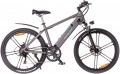 | 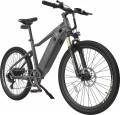 |
|---|---|---|
| Maxxter Ranger | HIMO C26 | |
| Outdated Product | from $1,321.03 up to $1,473.66 | |
| User reviews | ||
| TOP sellers | ||
| Type | mountain (MTB) | mountain (MTB) |
| Maximum load | 110 kg | 100 kg |
Performance specification | ||
| Motor operating mode | electric drive + pedal assist | electric drive + pedal assist |
| Range | 45 km | 100 km |
| Motor power | 350 W | 250 W |
| Maximum speed | 25 km/h | 25 km/h |
| Speed modes | 3 | |
| Drive | rear | rear |
| Wheel diameter | 26 " | 26 " |
| Depreciation | front | front |
| Front fork | spring-elastomer | spring-elastomer |
| Front brake | disk mechanical | disk mechanical |
| Rear brake | disc mechanical | disc mechanical |
Features | ||
| Speeds | 6 no. | 7 no. |
| Rear derailleur | Shimano Tourney | Shimano |
| Shifter type | triggered | triggered |
| Shifter model | Shimano | Shimano |
| Onboard computer |  | |
Battery | ||
| Battery capacity | 10 Ah | 10 Ah |
| Battery capacity | 480 Wh | 480 Wh |
| Supply voltage | 48 В | 48 В |
| Full charging time | 8 h | 6 h |
| Battery location | in the frame (hidden) | in the frame (hidden) |
General | ||
| In box | fenders chain guard kickstand signal / ring headlight and parking lights | chain guard kickstand signal / ring headlight and parking lights |
| Frame material | aluminum | aluminum |
| Dimensions | 1740x660x1050 mm | |
| Weight | 23 kg | 25 kg |
| Color | ||
| Added to E-Catalog | february 2023 | october 2020 |


Compare Maxxter Ranger and HIMO C26
You may be interested in
My comparisons
Maxxter Ranger often compared


HIMO C26 often compared


Glossary
Maximum load
The maximum weight for which the frame, wheels, suspension, brakes, and other components of the electric bike are designed. This usually implies the weight of the rider along with baggage and accessories: for example, a backpack, basket, child seat, or load on the luggage rack. It is not advisable to exceed this limit, as the additional weight reduces maneuverability, increases braking distance, and accelerates wear on the wheels, spokes, hubs, and frame.
Range
Approximate distance that an electric bike can travel on a single battery charge. Specifications usually indicate an estimated value, as the actual range depends on the chosen level of assistance, rider's weight, terrain, speed, temperature, and tire pressure. For example, in economy mode, an e-bike can travel significantly further than when constantly riding with maximum support and speed downhill.
Motor power
The electric motor rating in watts, which shows how actively it assists during acceleration, uphill riding, and riding with a load. For relaxed city trips and bike paths, a motor of around 250 W is often sufficient; for suburban routes, hills, and heavier riders, a reserve of 350–500 W is more convenient, while ratings of 750 W and above are more common on powerful fat bikes, cargo, and off-road models. When choosing, keep in mind that high power drains the battery faster and does not always mean higher speed: actual performance is also affected by torque, bike weight, battery capacity, and controller settings.
Speed modes
Preset levels of electric drive operation that change speed limits, acceleration intensity, and motor assistance degree. Simple models may have 2–3 modes for relaxed, normal, and dynamic riding, while more advanced ones offer multiple assistance levels with more precise settings for city, suburban, uphill, or long-distance routes.
Do not confuse this feature with mechanical gears: speed mode controls the motor's operation, while gears change the effort on the pedals.
Do not confuse this feature with mechanical gears: speed mode controls the motor's operation, while gears change the effort on the pedals.
Speeds
The number of gears indicates how many mechanical shifts are available to the rider for changing the pedaling effort. Simple transmissions with a small number of gears may suffice for city e-bikes, while a wider range of gears is more convenient for hills, long routes, off-road terrain, and riding without active motor assistance. However, a large number of gears does not always mean a faster e-bike: it primarily affects the convenience of riding in different conditions, not the maximum speed of the electric motor.
This point should not be confused with the motor speed modes: gears change the operation of the chain and sprockets, while modes change the level of assistance from the electric drive.
This point should not be confused with the motor speed modes: gears change the operation of the chain and sprockets, while modes change the level of assistance from the electric drive.
Rear derailleur
Bicycle drivetrain component that moves the chain between gears to select the desired gear. Specifications usually include the series or manufacturer name, such as Shimano, SRAM, Microshift, Shimano Tourney, Altus, Acera, Alivio, Deore, and other options. This helps to roughly understand the drivetrain class, shifting precision, compatibility with the number of speeds, and maintenance level.
Full charging time
The charging time indicates how long the e-bike battery must be connected to the charger for a full recharge. The greater the battery capacity in Wh or Ah, the longer it typically takes to charge with a standard adapter. For daily urban trips, it's important not only to consider the maximum range but also whether the battery can be fully charged overnight, between trips, or before heading out on a long ride.
In box
— Fenders. Protective guards above the wheels that reduce water, dirt, and sand splashing onto clothing, footwear, the frame, and the battery compartment. Especially useful for city rides, wet asphalt, dirt roads, and daily commuting, but they add a little weight and may rattle if loosely mounted.
— Chain guard. A protective cover that shields part of the chain and front sprockets, reducing the risk of getting clothing dirty or caught. It is especially suitable for city e-bikes used with regular clothing, but may hinder quick access to the chain for cleaning, lubrication, or repairs.
— Spring saddle. A saddle with a spring suspension mechanism softens impacts and vibrations transmitted from the rear wheel to the rider. This option is comfortable for recreational and city e-bikes, especially on tiles, cobblestones, and rough asphalt, but may be less precise and heavier than a regular saddle for a sporty riding position and active riding.
— Kickstand. A folding support that allows the e-bike to stand without a wall, stand, or bike rack. It is convenient near a store, home, office, or during a short stop along the route, but on heavy e-bikes, it is important that the kickstand is sturdy and does not fold under the weight of the loaded bike.
— Rear rack. A rear car...go platform for mounting bags, baskets, top cases, a child seat, or carrying small luggage. It is useful for city riding, delivery, shopping trips, and touring, but when loaded, it shifts weight backward and may worsen balance, especially if the battery is also mounted on the rear rack.
— Front rack / basket. A front platform or basket near the handlebars (above the front wheel) designed for carrying a bag, backpack, groceries, and small items. This option is convenient for short city rides, but a heavy load at the front may affect steering and make the bike less stable at low speed.
— Horn / bell. An audible signal helps warn pedestrians, other cyclists, and road users of your approach. It is a practical safety feature for the city, courtyards, bike paths, and parks, although a regular bell does not replace attentiveness and may be difficult to hear in heavy traffic.
— Headlight and position lights. The front headlight illuminates the road, while position lights make the e-bike more visible to other road users. This is important for evening rides, tunnels, overcast weather, and riding alongside roads.
— Chain guard. A protective cover that shields part of the chain and front sprockets, reducing the risk of getting clothing dirty or caught. It is especially suitable for city e-bikes used with regular clothing, but may hinder quick access to the chain for cleaning, lubrication, or repairs.
— Spring saddle. A saddle with a spring suspension mechanism softens impacts and vibrations transmitted from the rear wheel to the rider. This option is comfortable for recreational and city e-bikes, especially on tiles, cobblestones, and rough asphalt, but may be less precise and heavier than a regular saddle for a sporty riding position and active riding.
— Kickstand. A folding support that allows the e-bike to stand without a wall, stand, or bike rack. It is convenient near a store, home, office, or during a short stop along the route, but on heavy e-bikes, it is important that the kickstand is sturdy and does not fold under the weight of the loaded bike.
— Rear rack. A rear car...go platform for mounting bags, baskets, top cases, a child seat, or carrying small luggage. It is useful for city riding, delivery, shopping trips, and touring, but when loaded, it shifts weight backward and may worsen balance, especially if the battery is also mounted on the rear rack.
— Front rack / basket. A front platform or basket near the handlebars (above the front wheel) designed for carrying a bag, backpack, groceries, and small items. This option is convenient for short city rides, but a heavy load at the front may affect steering and make the bike less stable at low speed.
— Horn / bell. An audible signal helps warn pedestrians, other cyclists, and road users of your approach. It is a practical safety feature for the city, courtyards, bike paths, and parks, although a regular bell does not replace attentiveness and may be difficult to hear in heavy traffic.
— Headlight and position lights. The front headlight illuminates the road, while position lights make the e-bike more visible to other road users. This is important for evening rides, tunnels, overcast weather, and riding alongside roads.