
Comparison Maxxter Urban Max vs Maxxter Ruffer
Add to comparison |  | 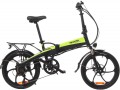 |
|---|---|---|
| Maxxter Urban Max | Maxxter Ruffer | |
| Outdated Product | Outdated Product | |
| TOP sellers | ||
Smartphone holder with USB charging. | ||
| Type | urban | urban |
| Maximum load | 110 kg | 110 kg |
| Foldable design |  | |
Performance specification | ||
| Motor operating mode | electric drive + pedal assist | electric drive + pedal assist |
| Range | 40 km | 40 km |
| Motor power | 350 W | 250 W |
| Maximum speed | 25 km/h | 25 km/h |
| Drive | rear | rear |
| Wheel diameter | 20 " | 20 " |
| Depreciation | front | front |
| Front fork | spring-elastomer | spring-elastomer |
| Front brake | disk mechanical | disk mechanical |
| Rear brake | disc mechanical | disc mechanical |
Features | ||
| Speeds | 6 no. | 7 no. |
| Rear derailleur | Shimano | Shimano |
| Shifter type | triggered | triggered |
| Shifter model | Shimano | Shimano |
| Onboard computer |  | |
Battery | ||
| Battery capacity | 8 Ah | 7.5 Ah |
| Battery capacity | 384 Wh | 360 Wh |
| Supply voltage | 48 В | 48 В |
| Full charging time | 8 h | 8 h |
| Battery location | under the seat | in the frame (hidden) |
General | ||
| In box | fenders chain guard kickstand carrier signal / ring headlight and parking lights | fenders spring saddle chain guard kickstand carrier signal / ring headlight and parking lights |
| Frame material | steel | aluminum |
| Weight | 29 kg | 23 kg |
| Color | ||
| Added to E-Catalog | july 2024 | august 2020 |


Compare Maxxter Urban Max and Ruffer
You may be interested in
Maxxter Urban Max often compared


Maxxter Ruffer often compared


Glossary
Motor power
The electric motor rating in watts, which shows how actively it assists during acceleration, uphill riding, and riding with a load. For relaxed city trips and bike paths, a motor of around 250 W is often sufficient; for suburban routes, hills, and heavier riders, a reserve of 350–500 W is more convenient, while ratings of 750 W and above are more common on powerful fat bikes, cargo, and off-road models. When choosing, keep in mind that high power drains the battery faster and does not always mean higher speed: actual performance is also affected by torque, bike weight, battery capacity, and controller settings.
Speeds
The number of gears indicates how many mechanical shifts are available to the rider for changing the pedaling effort. Simple transmissions with a small number of gears may suffice for city e-bikes, while a wider range of gears is more convenient for hills, long routes, off-road terrain, and riding without active motor assistance. However, a large number of gears does not always mean a faster e-bike: it primarily affects the convenience of riding in different conditions, not the maximum speed of the electric motor.
This point should not be confused with the motor speed modes: gears change the operation of the chain and sprockets, while modes change the level of assistance from the electric drive.
This point should not be confused with the motor speed modes: gears change the operation of the chain and sprockets, while modes change the level of assistance from the electric drive.
Onboard computer
Electronic unit with a display and controls that shows key data about the e-bike’s operation. It usually displays speed, mileage, battery charge level, selected motor assistance mode, ride time, and possible system errors. In more advanced models, the on-board computer can also control the backlight, electric drive settings, cruise control, or smartphone connection.
Battery capacity
Ampere-hours indicate the electric charge that an e-bike battery can deliver during operation. This value helps roughly estimate how long the motor can be powered, but on its own it does not provide an accurate understanding of the range, because it does not take the battery voltage into account. For example, 10 Ah batteries at 36 V and 48 V will have different energy reserves, even though their ampere-hour rating is the same. Therefore, it is useful to consider Ah together with voltage and capacity in Wh.
Battery capacity
Watt-hours indicate the total energy reserve of the battery and are more suitable for comparing the range of different electric bicycles. This measure takes into account both the capacity in amp-hours and the system voltage: for example, a 36V battery with 10Ah has about 360Wh, while a 48V battery with 10Ah has about 480Wh. The higher the Wh value, the greater the potential range, but the actual distance still depends on the rider's weight, motor power, terrain, speed, assistance mode, and temperature.
Battery location
The location of the battery on an electric bicycle affects the balance, appearance, charging convenience, and model behavior while riding.
— In the frame (hidden). The battery is integrated into the frame, most often in the down tube, and is almost not noticeable externally. This is a modern solution for city, mountain, and touring e-bikes: the battery is better protected, the bicycle looks neater, and the low central positioning improves balance. However, this design is usually more expensive, and removing, replacing, or servicing the battery can be more difficult than with external mounting.
— On the frame. The battery is mounted externally on the frame, most often on the down tube or in the central part of the bicycle. This positioning is convenient for everyday use: the battery is usually easy to remove and charge separately from the e-bike, and the weight distribution is better than with rack mounting. The downside is that the battery case is visible from the outside, can get dirtier on bad roads, and fits less seamlessly into the design compared to hidden installation.
— On the rack. The battery is placed above the rear wheel or in the construction of the rear rack. This option is often found in city, leisure models, and bicycles with a low frame, where it is important to keep the central part of the frame free and simplify mounting. Howeve...r, the weight shifts backward, so the bike may feel less stable when maneuvering, climbing stairs, and riding with additional cargo on the rack.
— Under the seat. The battery is installed in the area of the seat, under the seat tube, or behind it in a separate case. This scheme is suitable for compact, folding, and urban e-bikes, where small dimensions and neat arrangement are important. However, the size of the battery in this location is usually limited, so the range may be less than models with a large battery on or inside the frame.
— In the frame (hidden). The battery is integrated into the frame, most often in the down tube, and is almost not noticeable externally. This is a modern solution for city, mountain, and touring e-bikes: the battery is better protected, the bicycle looks neater, and the low central positioning improves balance. However, this design is usually more expensive, and removing, replacing, or servicing the battery can be more difficult than with external mounting.
— On the frame. The battery is mounted externally on the frame, most often on the down tube or in the central part of the bicycle. This positioning is convenient for everyday use: the battery is usually easy to remove and charge separately from the e-bike, and the weight distribution is better than with rack mounting. The downside is that the battery case is visible from the outside, can get dirtier on bad roads, and fits less seamlessly into the design compared to hidden installation.
— On the rack. The battery is placed above the rear wheel or in the construction of the rear rack. This option is often found in city, leisure models, and bicycles with a low frame, where it is important to keep the central part of the frame free and simplify mounting. Howeve...r, the weight shifts backward, so the bike may feel less stable when maneuvering, climbing stairs, and riding with additional cargo on the rack.
— Under the seat. The battery is installed in the area of the seat, under the seat tube, or behind it in a separate case. This scheme is suitable for compact, folding, and urban e-bikes, where small dimensions and neat arrangement are important. However, the size of the battery in this location is usually limited, so the range may be less than models with a large battery on or inside the frame.
In box
— Fenders. Protective guards above the wheels that reduce water, dirt, and sand splashing onto clothing, footwear, the frame, and the battery compartment. Especially useful for city rides, wet asphalt, dirt roads, and daily commuting, but they add a little weight and may rattle if loosely mounted.
— Chain guard. A protective cover that shields part of the chain and front sprockets, reducing the risk of getting clothing dirty or caught. It is especially suitable for city e-bikes used with regular clothing, but may hinder quick access to the chain for cleaning, lubrication, or repairs.
— Spring saddle. A saddle with a spring suspension mechanism softens impacts and vibrations transmitted from the rear wheel to the rider. This option is comfortable for recreational and city e-bikes, especially on tiles, cobblestones, and rough asphalt, but may be less precise and heavier than a regular saddle for a sporty riding position and active riding.
— Kickstand. A folding support that allows the e-bike to stand without a wall, stand, or bike rack. It is convenient near a store, home, office, or during a short stop along the route, but on heavy e-bikes, it is important that the kickstand is sturdy and does not fold under the weight of the loaded bike.
— Rear rack. A rear car...go platform for mounting bags, baskets, top cases, a child seat, or carrying small luggage. It is useful for city riding, delivery, shopping trips, and touring, but when loaded, it shifts weight backward and may worsen balance, especially if the battery is also mounted on the rear rack.
— Front rack / basket. A front platform or basket near the handlebars (above the front wheel) designed for carrying a bag, backpack, groceries, and small items. This option is convenient for short city rides, but a heavy load at the front may affect steering and make the bike less stable at low speed.
— Horn / bell. An audible signal helps warn pedestrians, other cyclists, and road users of your approach. It is a practical safety feature for the city, courtyards, bike paths, and parks, although a regular bell does not replace attentiveness and may be difficult to hear in heavy traffic.
— Headlight and position lights. The front headlight illuminates the road, while position lights make the e-bike more visible to other road users. This is important for evening rides, tunnels, overcast weather, and riding alongside roads.
— Chain guard. A protective cover that shields part of the chain and front sprockets, reducing the risk of getting clothing dirty or caught. It is especially suitable for city e-bikes used with regular clothing, but may hinder quick access to the chain for cleaning, lubrication, or repairs.
— Spring saddle. A saddle with a spring suspension mechanism softens impacts and vibrations transmitted from the rear wheel to the rider. This option is comfortable for recreational and city e-bikes, especially on tiles, cobblestones, and rough asphalt, but may be less precise and heavier than a regular saddle for a sporty riding position and active riding.
— Kickstand. A folding support that allows the e-bike to stand without a wall, stand, or bike rack. It is convenient near a store, home, office, or during a short stop along the route, but on heavy e-bikes, it is important that the kickstand is sturdy and does not fold under the weight of the loaded bike.
— Rear rack. A rear car...go platform for mounting bags, baskets, top cases, a child seat, or carrying small luggage. It is useful for city riding, delivery, shopping trips, and touring, but when loaded, it shifts weight backward and may worsen balance, especially if the battery is also mounted on the rear rack.
— Front rack / basket. A front platform or basket near the handlebars (above the front wheel) designed for carrying a bag, backpack, groceries, and small items. This option is convenient for short city rides, but a heavy load at the front may affect steering and make the bike less stable at low speed.
— Horn / bell. An audible signal helps warn pedestrians, other cyclists, and road users of your approach. It is a practical safety feature for the city, courtyards, bike paths, and parks, although a regular bell does not replace attentiveness and may be difficult to hear in heavy traffic.
— Headlight and position lights. The front headlight illuminates the road, while position lights make the e-bike more visible to other road users. This is important for evening rides, tunnels, overcast weather, and riding alongside roads.
Frame material
— Aluminum. An aluminum frame is lighter than a steel one, resistant to corrosion, and well-suited for most city, mountain, folding, and touring electric bicycles. It is the most versatile option in terms of weight, strength, and cost, though aluminum might feel harsher on rough roads, especially without good suspension.
— Steel. A steel frame is characterized by high strength, repairability, and a softer feel on bumps. It is suitable for city, leisure, cargo, and utility electric bicycles where reliability and load capacity are crucial. Drawbacks include heavier weight and the need for corrosion protection, especially when riding in rain, mud, or winter conditions.
— Magnesium alloy. A magnesium alloy frame is lighter than steel and can be lighter than some aluminum structures, and is often used in cast frames of folding and city e-bikes. This material allows for neat, solid shapes and reduces bike weight but is usually more expensive, less common, and requires high-quality corrosion protection coating.
— Carbon fiber. A carbon fiber frame is made from carbon composite and allows for reducing bike weight while maintaining high structural rigidity. This material is more often used in expensive sports, road, gravel, and advanced mountain e-bikes, where lightness and ride efficiency are essential. However, carbon is more costly, more sensitive to point impacts, and more challenging to repair after damage.
— Steel. A steel frame is characterized by high strength, repairability, and a softer feel on bumps. It is suitable for city, leisure, cargo, and utility electric bicycles where reliability and load capacity are crucial. Drawbacks include heavier weight and the need for corrosion protection, especially when riding in rain, mud, or winter conditions.
— Magnesium alloy. A magnesium alloy frame is lighter than steel and can be lighter than some aluminum structures, and is often used in cast frames of folding and city e-bikes. This material allows for neat, solid shapes and reduces bike weight but is usually more expensive, less common, and requires high-quality corrosion protection coating.
— Carbon fiber. A carbon fiber frame is made from carbon composite and allows for reducing bike weight while maintaining high structural rigidity. This material is more often used in expensive sports, road, gravel, and advanced mountain e-bikes, where lightness and ride efficiency are essential. However, carbon is more costly, more sensitive to point impacts, and more challenging to repair after damage.