
Comparison Liebherr CU 2811 white vs Liebherr CUsl 2811 silver
Add to comparison | 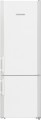 | 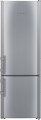 |
|---|---|---|
| Liebherr CU 2811 white | Liebherr CUsl 2811 silver | |
from $321.64 up to $467.84 | from $414.81 up to $602.64 | |
| User reviews | ||
| TOP sellers | ||
| Total capacity | 263 L | 263 L |
| Number of chambers | 2 | 2 |
| Number of cooling circuits | 1 | 1 |
| Number of compressors | 1 | 1 |
Features | ||
| Features | reversible door | reversible door |
Refrigeration chamber | ||
| Refrigerator capacity | 210 L | 210 L |
| Auto-defrost |  | |
Freezer chamber | ||
| Freezer compartment | bottom | bottom |
| Freezer capacity | 53 L | 53 L |
| Freezer temperature | -24 °C | -24 °C |
| Autonomy time | 25 h | 25 h |
| Freeze capacity | 4 kg/day | 4 kg/day |
More specs | ||
| Controls | rotary knobs | rotary knobs |
| Energy class | A++ | A++ |
| Energy consumption per year | 191 kWh | |
| Climate class | SN, N, ST (+10...+38 °С) | |
| Noise level | 39 dB | 39 dB |
| Dimensions (HxWxD) | 161x55x63 cm | 161x55x63 cm |
| Weight | 55 kg | |
| Color | ||
| Added to E-Catalog | march 2015 | february 2015 |


Compare Liebherr CU 2811 and CUsl 2811
You may be interested in
My comparisons
Liebherr CU 2811 often compared


Glossary
Energy consumption per year
The average amount of energy consumed by a refrigerator in a year of operation. Of course, these figures are not absolutely accurate; the actual power consumption may vary depending on the specific operating conditions. However, this parameter makes it possible to evaluate the power consumption of the refrigerator and compare different models with each other. At the same time, it often turns out to be more convenient and visual than the energy consumption class (see above) because in this paragraph we are talking about a specific figure (from which you can also calculate the cost of electricity consumed). For clarity, let's take the following example: a small two-chamber refrigerator with energy class A can consume less energy per year than a large side-by-side unit of class A+++, although formally, in terms of energy consumption classes, the second model will be more economical than the first.
Climate class
The climate class to which the refrigerator corresponds.
As the name implies, this parameter describes the environmental conditions for which the unit is designed. The warmer it is around — the more powerful the refrigerator should be and the better thermal insulation it should have. Specific classes are indicated by letters, here are the most popular options:
— SN (subnormal). Models for a temperate cool climate, have an operating range from +10 °C to + 32 °C. Such a unit can be useful in a poorly heated room where the temperature can drop below +16 °C — for example, on the veranda of a private house, in a garage, etc.
— N (normal). Refrigerators for temperate climates, with an operating temperature range of +16...+32 °C. Such a unit is suitable for most residential apartments and houses in mid-latitudes.
— ST (subtropical). Models for subtropical and humid tropical climates. Normally work at the range of external temperatures +18...+38 °C.
— T (tropical). Refrigerators for dry tropical climates. Designed for temperature range +18 °С to +43 °С.
There are many models on the market with an extended temperature range covering several classes. For example, a unit labelled N-ST will have a temperature range of +16...+38 °C. Such refrigerators are indispensable in complicated...climates, the conditions of which are not covered by one standard class — for example, during cold winters and hot summers.
As the name implies, this parameter describes the environmental conditions for which the unit is designed. The warmer it is around — the more powerful the refrigerator should be and the better thermal insulation it should have. Specific classes are indicated by letters, here are the most popular options:
— SN (subnormal). Models for a temperate cool climate, have an operating range from +10 °C to + 32 °C. Such a unit can be useful in a poorly heated room where the temperature can drop below +16 °C — for example, on the veranda of a private house, in a garage, etc.
— N (normal). Refrigerators for temperate climates, with an operating temperature range of +16...+32 °C. Such a unit is suitable for most residential apartments and houses in mid-latitudes.
— ST (subtropical). Models for subtropical and humid tropical climates. Normally work at the range of external temperatures +18...+38 °C.
— T (tropical). Refrigerators for dry tropical climates. Designed for temperature range +18 °С to +43 °С.
There are many models on the market with an extended temperature range covering several classes. For example, a unit labelled N-ST will have a temperature range of +16...+38 °C. Such refrigerators are indispensable in complicated...climates, the conditions of which are not covered by one standard class — for example, during cold winters and hot summers.