
Comparison Magio MG-784 vs Magio MG-785
Add to comparison | 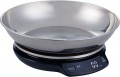 |  |
|---|---|---|
| Magio MG-784 | Magio MG-785 | |
| Outdated Product | Outdated Product | |
| TOP sellers | ||
| Type of scales | tabletop | tabletop |
| Mechanism | electronic | electronic |
| Maximum weight measurement | 5 kg | 5 kg |
| Division price | 0.1 g | 1 g |
| Units of measurement | g / oz / ml / lbs | g / oz / ml / lbs |
Features | ||
| Functions | tarocompensation volume measurement automatic shutdown | tarocompensation volume measurement automatic shutdown |
General | ||
| Bowl |  | |
| Bowl / jug volume | 0.8 L | 1.4 L |
| Platform material | metal | |
| Bowl material | metal | |
| Hidden display | | |
| Power source | 3xAAA | 3xAAA |
| Dimensions | 210x210x70 mm | 220x220x95 mm |
| Color | ||
| Added to E-Catalog | april 2024 | april 2024 |


Compare Magio MG-784 and MG-785
You may be interested in
Magio MG-784 often compared


Glossary
Division price
The minimum increment at which kitchen scales display a change in weight, such as 1 g, 5 g, or 10 g. The smaller this value, the more accurately you can measure small portions of ingredients: spices, yeast, coffee, tea, salt, or sugar.
For baking and everyday cooking, electronic scales with 1 g increments are usually the most convenient. Mechanical models typically have larger increments, so they are better suited for approximate weighing of vegetables, fruit, or bulk foods.
For baking and everyday cooking, electronic scales with 1 g increments are usually the most convenient. Mechanical models typically have larger increments, so they are better suited for approximate weighing of vegetables, fruit, or bulk foods.
Bowl / jug volume
Capacity indicates how much food or liquid can fit into the scale’s included container. This parameter is no less important than the maximum weight, because large or bulky ingredients may not fit even when the permitted weight limit is not exceeded.
The larger the capacity, the more convenient it is to weigh flour, grains, berries, vegetables, water, milk, or dough preparations. For example, a 1 L bowl is suitable for small portions, while a 2 L jug is more practical for baking, preserving, or preparing meals for the whole family.
The larger the capacity, the more convenient it is to weigh flour, grains, berries, vegetables, water, milk, or dough preparations. For example, a 1 L bowl is suitable for small portions, while a 2 L jug is more practical for baking, preserving, or preparing meals for the whole family.
Platform material
Platform material indicates what the working surface of the kitchen scales is made of—the surface on which products, dishes, or the included bowl are placed. It affects the appearance, durability, moisture resistance, ease of cleaning, and how well the scales retain their appearance with frequent use.
— Plastic. A plastic platform makes kitchen scales lightweight, affordable, and practical for everyday use. This material handles ordinary kitchen tasks well, but over time it may become scratched, dull, or absorb traces of colorants and grease.
— Glass. Tempered glass gives the scales a neat appearance and is easy to clean after flour, sugar, water, or juice. Compared with plastic, this surface looks more modern and hygienic, but requires caution in case of impacts or falls.
— Metal. A stainless steel surface is more commonly found in practical kitchen scales designed for frequent use. It is resistant to odors, stains, and moisture, making it well suited for working with meat, fish, dough, or liquid ingredients.
— Wood. A wooden working surface is less common and is more focused on design than maximum practicality. It looks good in kitchens with natural materials, but requires more careful maintenance and does not tolerate prolonged contact with water.
— Plastic. A plastic platform makes kitchen scales lightweight, affordable, and practical for everyday use. This material handles ordinary kitchen tasks well, but over time it may become scratched, dull, or absorb traces of colorants and grease.
— Glass. Tempered glass gives the scales a neat appearance and is easy to clean after flour, sugar, water, or juice. Compared with plastic, this surface looks more modern and hygienic, but requires caution in case of impacts or falls.
— Metal. A stainless steel surface is more commonly found in practical kitchen scales designed for frequent use. It is resistant to odors, stains, and moisture, making it well suited for working with meat, fish, dough, or liquid ingredients.
— Wood. A wooden working surface is less common and is more focused on design than maximum practicality. It looks good in kitchens with natural materials, but requires more careful maintenance and does not tolerate prolonged contact with water.
Bowl material
The material of the included bowl affects how convenient it is to weigh products, wash the container, and use it with different ingredients.
— Plastic. A lightweight plastic container is convenient for everyday weighing of flour, grains, sugar, berries, or vegetables. It makes the scales more accessible and easier to handle, but over time it can scratch, become cloudy, and absorb odors or colors from products more easily.
— Metal. Stainless steel is most commonly used, which is well-suited for frequent use, especially if the bowl is used to weigh wet products, dough, meat, fish, or sauces. This type of container is durable, easy to clean, and does not absorb odors, although it may be heavier than a plastic one.
— Glass. A transparent glass container looks tidy and allows you to see the contents during weighing. Compared to plastic, it better resists odors and staining, but requires more careful handling due to the risk of breaking if dropped.
— Plastic. A lightweight plastic container is convenient for everyday weighing of flour, grains, sugar, berries, or vegetables. It makes the scales more accessible and easier to handle, but over time it can scratch, become cloudy, and absorb odors or colors from products more easily.
— Metal. Stainless steel is most commonly used, which is well-suited for frequent use, especially if the bowl is used to weigh wet products, dough, meat, fish, or sauces. This type of container is durable, easy to clean, and does not absorb odors, although it may be heavier than a plastic one.
— Glass. A transparent glass container looks tidy and allows you to see the contents during weighing. Compared to plastic, it better resists odors and staining, but requires more careful handling due to the risk of breaking if dropped.