
Comparison Gemix GDX-500 0.5 kVA / 350 W vs Luxeon E-1000 1 kVA / 600 W
Add to comparison | 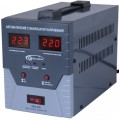 | 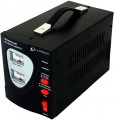 |
|---|---|---|
| Gemix GDX-500 0.5 kVA / 350 W | Luxeon E-1000 1 kVA / 600 W | |
from $21.52 up to $23.96 | from $25.80 | |
| TOP sellers | ||
| AVR type | relay | relay |
| Input voltage | 230V (1 phase) | 230V (1 phase) |
| Power | 350 W | 600 W |
| Power | 0.5 kVA | 1 kVA |
Specs | ||
| Input voltage range | 140-260 В | 140-260 В |
| Output voltage accuracy (±) | 6.8 % | 7 % |
| Voltmeter | digital | analogue |
Sockets | ||
| Grounded sockets | 1 | 1 |
Protection levels | ||
| Protection | overheating high frequency interference short circuit overload over / under voltage | short circuit overload over / under voltage |
General | ||
| Installation | floor | floor |
| Cooling | passive | passive |
| Carrying handle |  | |
| Dimensions | 115x160x235 mm | 140x187x250 mm |
| Weight | 2.7 kg | 5 kg |
| Added to E-Catalog | january 2016 | may 2015 |


Compare Gemix GDX-500 and Luxeon E-1000
You may be interested in
My comparisons
Glossary
Power
The maximum active power load permissible for this model.
Active power is the power consumed by AC devices for useful work or heat generation. Additionally, such devices consume reactive power — used for the function of specific components, primarily capacitors and inductive coils. The apparent power, measured in volt-amperes (kilovolt-amperes), is the sum of active and reactive power; see below for more on that. Here, we note that in simple household situations, active power data in watts is usually sufficient for calculations. This parameter is considered key when choosing voltage stabilizers for washing machines and for dishwashers: for the former, an optimal power range is from 2 to 5 kW, and for the latter, from 1.8 to 2.5 kW.
Regardless, the total active power of the connected load should not exceed the figures specified in the stabilizer's specifications. For full assurance, it's wise to have some reserve, though it shouldn't be too large — increasing permissible power significantly affects the size, weight, and price of the device. It's also worth mentioning that there are formulas to convert active power consumption to apparent power, considering the type of connected electrical appliance; these formulas can be found in specialized sources.
It should be noted that manufacturers don't always specify power in watts, sometimes only providing values in kVA. In such case...s, we apply an approximate conversion. Overall, while the value is approximate, it adequately describes the stabilizer's capabilities and helps match specific needs.
Active power is the power consumed by AC devices for useful work or heat generation. Additionally, such devices consume reactive power — used for the function of specific components, primarily capacitors and inductive coils. The apparent power, measured in volt-amperes (kilovolt-amperes), is the sum of active and reactive power; see below for more on that. Here, we note that in simple household situations, active power data in watts is usually sufficient for calculations. This parameter is considered key when choosing voltage stabilizers for washing machines and for dishwashers: for the former, an optimal power range is from 2 to 5 kW, and for the latter, from 1.8 to 2.5 kW.
Regardless, the total active power of the connected load should not exceed the figures specified in the stabilizer's specifications. For full assurance, it's wise to have some reserve, though it shouldn't be too large — increasing permissible power significantly affects the size, weight, and price of the device. It's also worth mentioning that there are formulas to convert active power consumption to apparent power, considering the type of connected electrical appliance; these formulas can be found in specialized sources.
It should be noted that manufacturers don't always specify power in watts, sometimes only providing values in kVA. In such case...s, we apply an approximate conversion. Overall, while the value is approximate, it adequately describes the stabilizer's capabilities and helps match specific needs.
Power
Maximum total load power allowed for this model
In electrical engineering, total power is referred to as the power that accounts for both active and reactive power; the former is discussed above, and the latter can be described as the influence of windings, inductors, and capacitors on the operation of AC networks. Total power is the main parameter for calculating equipment loads in professional electrical engineering and is denoted in volt-amperes (VA), and for stabilizers, in kilovolt-amperes (kVA). Note that for convenience, different types of powers in electrical engineering are designated with units of different names. That's why the power indicated for a stabilizer in watts usually does not equal its power in VA.
When choosing a stabilizer for some household appliances, data on active power is often sufficient, but if possible, it is better to use total power. In particular, this parameter is key when searching for a stabilizer for a refrigerator or a stabilizer for a boiler: in the first case, the optimal value is considered to be 0.4 – 1 kVA, and in the second — from 0.1 to 0.7 kVA. However, in any case, you should choose a specific model so that its total power is not lower than the total power of the entire connected load — and it's better to have a reserve (in case of unforeseen circumstances or connecting additional equipment). At the same time, it should be noted that powerf...ul models are characterized by large dimensions and weight, and above all — high cost; therefore, it is not always wise to chase maximum figures.
It should be noted that manufacturers do not always specify power in kVA, and there is only a value in watts. In such cases, we apply an approximate recalculation. While approximate, the value sufficiently describes the capabilities of the stabilizer and helps select according to specific needs.
We also note that there are formulas that allow deriving the optimal total power of the stabilizer based on data on active power and load type; these can be found in specialized sources.
In electrical engineering, total power is referred to as the power that accounts for both active and reactive power; the former is discussed above, and the latter can be described as the influence of windings, inductors, and capacitors on the operation of AC networks. Total power is the main parameter for calculating equipment loads in professional electrical engineering and is denoted in volt-amperes (VA), and for stabilizers, in kilovolt-amperes (kVA). Note that for convenience, different types of powers in electrical engineering are designated with units of different names. That's why the power indicated for a stabilizer in watts usually does not equal its power in VA.
When choosing a stabilizer for some household appliances, data on active power is often sufficient, but if possible, it is better to use total power. In particular, this parameter is key when searching for a stabilizer for a refrigerator or a stabilizer for a boiler: in the first case, the optimal value is considered to be 0.4 – 1 kVA, and in the second — from 0.1 to 0.7 kVA. However, in any case, you should choose a specific model so that its total power is not lower than the total power of the entire connected load — and it's better to have a reserve (in case of unforeseen circumstances or connecting additional equipment). At the same time, it should be noted that powerf...ul models are characterized by large dimensions and weight, and above all — high cost; therefore, it is not always wise to chase maximum figures.
It should be noted that manufacturers do not always specify power in kVA, and there is only a value in watts. In such cases, we apply an approximate recalculation. While approximate, the value sufficiently describes the capabilities of the stabilizer and helps select according to specific needs.
We also note that there are formulas that allow deriving the optimal total power of the stabilizer based on data on active power and load type; these can be found in specialized sources.
Output voltage accuracy (±)
The largest deviation from the nominal output voltage (230 V or 400 V, depending on the number of phases), which the regulator allows when operating in the normal input voltage range (see above). The smaller this deviation, the more efficiently the device works, the more accurately it adapts to “changes in the situation” and the less voltage fluctuations the connected load is exposed to.
When choosing for this parameter, it is worth considering first of all how demanding the connected devices are for voltage stability. On the one hand, high stability is good for any device, on the other hand, it usually means a high price. Accordingly, it usually does not make sense to buy an advanced stabilizer for an unpretentious load like light bulbs and heaters, but for sensitive devices like audio systems or computers, it can be very useful.
When choosing for this parameter, it is worth considering first of all how demanding the connected devices are for voltage stability. On the one hand, high stability is good for any device, on the other hand, it usually means a high price. Accordingly, it usually does not make sense to buy an advanced stabilizer for an unpretentious load like light bulbs and heaters, but for sensitive devices like audio systems or computers, it can be very useful.
Voltmeter
The type of voltmeter provided in the design of the stabilizer, or rather — the type of scale used by this device. This voltmeter itself allows monitoring of voltage — usually both at the input and output — which facilitates control over the stabilizer's operation. For this purpose, two separate scales are most often provided, but there are also "single" voltmeters with a switch to choose between input and output voltage. As for the type of scales, the following options are available:
— Analog. Analog voltmeters are equipped with a traditional type of scale — with divisions marked on it and a needle. They are simpler and cheaper than digital ones, but less accurate — even in the most precise devices, the error in readings can be 5-10 V just due to the peculiarities of reading information from such a scale. In some inexpensive models, analog voltmeters serve more as general indicators rather than precise instruments. At the same time, for most everyday tasks, such accuracy is quite sufficient.
— Digital. In such voltmeters, the role of the scale is played by a digital display, where voltage values can be displayed with an accuracy of up to a volt — this is the main advantage of this option over analog. The drawbacks include the complexity and relatively high cost of digital indicators. Moreover, such high accuracy may be critical in the professional field, but in everyday life, it is not...always necessary. Accordingly, in inexpensive low-power stabilizers, a digital voltmeter is often more of a marketing ploy than a real necessity.
— Analog. Analog voltmeters are equipped with a traditional type of scale — with divisions marked on it and a needle. They are simpler and cheaper than digital ones, but less accurate — even in the most precise devices, the error in readings can be 5-10 V just due to the peculiarities of reading information from such a scale. In some inexpensive models, analog voltmeters serve more as general indicators rather than precise instruments. At the same time, for most everyday tasks, such accuracy is quite sufficient.
— Digital. In such voltmeters, the role of the scale is played by a digital display, where voltage values can be displayed with an accuracy of up to a volt — this is the main advantage of this option over analog. The drawbacks include the complexity and relatively high cost of digital indicators. Moreover, such high accuracy may be critical in the professional field, but in everyday life, it is not...always necessary. Accordingly, in inexpensive low-power stabilizers, a digital voltmeter is often more of a marketing ploy than a real necessity.
Protection
- From overheating. Protection that prevents the critical temperature rise of individual components of the stabilizer - for example, in case of overload, short circuit or failure in the cooling system. When a certain temperature value is exceeded, it turns off the device in order to avoid breakdowns and fires. Such systems are especially important for semiconductor types of stabilizers - thyristor and triac(see above). And in some models, this function can be supplemented by a temperature increase signal - it works at a temperature close to critical.
- From high-frequency interference. This protection dampens incoming high-frequency interference, preventing them from affecting the operation of devices connected to the stabilizer. Such interference can occur, for example, from electric motors, welding machines, etc. So, in audio systems, high-frequency distortion causes an unpleasant background from the speakers. RFI protection filters out these distortions, providing a smooth sine wave output.
- Against short circuit. A system that protects the stabilizer in the event of short circuits in the connected load. A short circuit is a situation when the resistance in the circuit becomes close to zero; this leads to a sharp increase in current strength, overloads the power grid and the stabilizer itself, and also creates a ri...sk of breakdown or even fire. In order to avoid unpleasant consequences, appropriate protection is provided: it disconnects the load in case of a significant excess of the current in it. This feature is almost mandatory in modern stabilizers.
- From overload. Safety system in case of stabilizer overload - that is, a situation when the total power of the connected load becomes greater than the corresponding indicators of the device itself (see "Power"). The reason for this situation may be, for example, the inclusion of an additional consumer or a change in the operating mode of one of the existing ones. Unlike the short circuit described above, when overloaded, all electrical appliances work normally, the stabilizer itself is abnormal, which can lead to its failure or even fire. To avoid this, overload protection is applied. Its specific implementation may be different. In some models, the load is turned off immediately, in others - after a certain time after the warning signal, which gives the user the opportunity to reduce power consumption and avoid system tripping.
- From over / under voltage. A system that protects the device from too low or too high input voltage. A significant overshoot of the input voltage range (see above) is dangerous not only by the risk of damage to the stabilizer itself: under such conditions, the device’s capabilities are not enough to fully protect the connected load, which can result in trouble for it. And this function prevents such consequences: if the input voltage goes beyond the permissible values (they may be wider than the operating values, see “Input voltage range”), the stabilizer is disconnected from the network. At the same time, some of its functions may remain operational - for example, a voltmeter that allows you to assess the "state of affairs" in the network at the input. And in some models there is a function to automatically turn on when the voltage returns to operating limits.
- From high-frequency interference. This protection dampens incoming high-frequency interference, preventing them from affecting the operation of devices connected to the stabilizer. Such interference can occur, for example, from electric motors, welding machines, etc. So, in audio systems, high-frequency distortion causes an unpleasant background from the speakers. RFI protection filters out these distortions, providing a smooth sine wave output.
- Against short circuit. A system that protects the stabilizer in the event of short circuits in the connected load. A short circuit is a situation when the resistance in the circuit becomes close to zero; this leads to a sharp increase in current strength, overloads the power grid and the stabilizer itself, and also creates a ri...sk of breakdown or even fire. In order to avoid unpleasant consequences, appropriate protection is provided: it disconnects the load in case of a significant excess of the current in it. This feature is almost mandatory in modern stabilizers.
- From overload. Safety system in case of stabilizer overload - that is, a situation when the total power of the connected load becomes greater than the corresponding indicators of the device itself (see "Power"). The reason for this situation may be, for example, the inclusion of an additional consumer or a change in the operating mode of one of the existing ones. Unlike the short circuit described above, when overloaded, all electrical appliances work normally, the stabilizer itself is abnormal, which can lead to its failure or even fire. To avoid this, overload protection is applied. Its specific implementation may be different. In some models, the load is turned off immediately, in others - after a certain time after the warning signal, which gives the user the opportunity to reduce power consumption and avoid system tripping.
- From over / under voltage. A system that protects the device from too low or too high input voltage. A significant overshoot of the input voltage range (see above) is dangerous not only by the risk of damage to the stabilizer itself: under such conditions, the device’s capabilities are not enough to fully protect the connected load, which can result in trouble for it. And this function prevents such consequences: if the input voltage goes beyond the permissible values (they may be wider than the operating values, see “Input voltage range”), the stabilizer is disconnected from the network. At the same time, some of its functions may remain operational - for example, a voltmeter that allows you to assess the "state of affairs" in the network at the input. And in some models there is a function to automatically turn on when the voltage returns to operating limits.