
Comparison Xiaomi W8 vs ECOVACS WinBot X
Add to comparison |  | 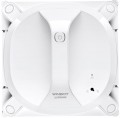 |
|---|---|---|
| Xiaomi W8 | ECOVACS WinBot X | |
from £217.56 | Outdated Product | |
| TOP sellers | ||
| Type | window robot | window robot |
Specs | ||
| Performance | 2 min/m² | |
| Power | 75 W | |
| Suction power | 3800 Pa | |
| Detergent solution tank | 80 ml | |
| Power source | mains | battery |
| Battery capacity | 3 Ah | |
| Operating time | 50 min | |
| Charging time | 2.5 h | |
| Backup power | 20 min | |
General | ||
| Noise level | 62 dB | |
| Control via smartphone | + | |
| In box | remote control | |
| Dimensions (H×W×D) | 8.3x24.1x24.1 cm | 12.3x27.3x27.3 cm |
| Weight | 1.4 kg | 1.8 kg |
| Added to E-Catalog | april 2024 | july 2019 |


Compare Xiaomi W8 and ECOVACS WinBot X
You may be interested in
My comparisons
Xiaomi W8 often compared

ECOVACS WinBot X often compared

Glossary
Performance
The nominal processing time for 1 m² of glass helps assess the operating speed of a window-cleaning robot: the lower the value in min/m², the faster the pass. For example, at 2.5 min/m², a surface measuring 4 m² will require about 10 minutes, excluding a repeat cycle, repositioning the device, and preparing the cleaning cloths. Models are best compared in identical modes, since the result is affected by the route, degree of contamination, and number of passes.
Power
Power consumption characterizes the load on the motor, suction fan, drives, and electronics, but it does not directly measure cleaning quality. It is more appropriate to compare this value within the same type of equipment: a more powerful device may provide greater operating headroom, but streaks and residual water are influenced more by the nozzle design, the condition of the cloths, and the movement algorithm. For corded models, this value also helps assess the requirements for the adapter or external power source.
Suction power
Suction power determines how securely the window-cleaning robot adheres to the glass. A higher value helps maintain adhesion when moving over joints, minor unevenness, or areas where the cleaning pad does not fit tightly. However, stronger suction does not guarantee better removal of stains and streaks—the result also depends on the cleaning pads, liquid dispensing, and route. Regardless of the specified pressure, the robot should be secured with a safety cable.
Detergent solution tank
Power source
— Mains power. Continuous power allows the window-cleaning robot to operate without runtime limitations and maintain stable fan power throughout the entire cycle. This is convenient for large windows, panoramic glazing, and sequential cleaning of several surfaces when interruptions for charging are undesirable. The operating radius depends on the cable length and the location of the power outlet.
It is worth noting that mains-powered robots are equipped with a battery for backup power in case of a power outage; however, it does not make the robot battery-powered, but only temporarily maintains adhesion to the glass.
— Battery. Cordless power frees the handheld window vacuum from the cable and allows it to be easily moved between windows, mirrors, shower screens, and smooth tiles. The cord does not interfere with movement and does not require a power outlet near the work area. Cleaning time is limited by the battery charge, so when choosing a model, it is important to consider the operating time and subsequent charging speed.
It is worth noting that mains-powered robots are equipped with a battery for backup power in case of a power outage; however, it does not make the robot battery-powered, but only temporarily maintains adhesion to the glass.
— Battery. Cordless power frees the handheld window vacuum from the cable and allows it to be easily moved between windows, mirrors, shower screens, and smooth tiles. The cord does not interfere with movement and does not require a power outlet near the work area. Cleaning time is limited by the battery charge, so when choosing a model, it is important to consider the operating time and subsequent charging speed.
Battery capacity
Battery capacity characterizes the battery’s stored electrical charge. However, the stated operating time provides a more accurate indication of the actual cleaning duration, as consumption depends on the motor and electronics power. Comparing capacity is relevant only for models with the same battery voltage.
Operating time
Runtime indicates how long a window vacuum can operate without recharging. The more windows or other glass surfaces you plan to clean in one session, the more runtime you will need; some charge should be reserved for re-cleaning dirty areas. As the battery wears and different modes are selected, actual runtime may decrease.
Charging time
The time required to fully recharge the battery-powered window vacuum. The shorter it is compared with the runtime, the easier it is to complete several cleaning cycles with a short break.
Backup power
The backup power system uses a built-in battery to keep the window-cleaning robot attached to the glass in an emergency after the mains power goes out. It does not allow full cleaning to continue, but keeps the device attached to the glass and gives you time to remove it in the event of a sudden power outage or accidental cable disconnection. The specified time indicates how many minutes the system can maintain the robot’s adhesion to the glass without mains power.