
Comparison Ritter E 16 vs Ritter E 18
Add to comparison |  | 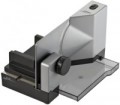 |
|---|---|---|
| Ritter E 16 | Ritter E 18 | |
| Compare prices 1 | from £434.09 | |
| TOP sellers | ||
| Power | 65 W | 65 W |
| Blade type | wavy | wavy |
Specs | ||
| Blade diameter | 170 mm | 170 mm |
| Max. thickness of slice | 20 mm | 14 mm |
| Pulse mode |  | |
| Holder with finger protector | | |
| Slicing tray | | |
| Compartment for cord | | |
| Material | metal | metal |
| Weight | 3 kg | |
| Color | ||
| Added to E-Catalog | february 2015 | february 2015 |


Compare Ritter E 16 and E 18
Price comparison
You may be interested in
My comparisons
Ritter E 16 often compared

Glossary
Max. thickness of slice
The greatest thickness of the slices that the slicer can separate from the cut product.
The modern slicers usually allow you to adjust the thickness of the slices — an important feature in light of the fact that for different situations and products, the optimal thickness will be different. The ability to separate thick slices can be useful, for example, when cutting bread, or when preparing fruit for jam or compote. Such situations are not uncommon, therefore, in most modern slicers, the maximum thickness is more than 10 mm.
The modern slicers usually allow you to adjust the thickness of the slices — an important feature in light of the fact that for different situations and products, the optimal thickness will be different. The ability to separate thick slices can be useful, for example, when cutting bread, or when preparing fruit for jam or compote. Such situations are not uncommon, therefore, in most modern slicers, the maximum thickness is more than 10 mm.