
Comparison Ultradesk Highlander vs Ultradesk Level V2
Add to comparison | 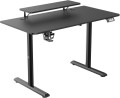 | 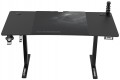 |
|---|---|---|
| Ultradesk Highlander | Ultradesk Level V2 | |
| Outdated Product | Outdated Product | |
| TOP sellers | ||
Size of the shelf for the monitor: width - 70 cm, depth - 22 cm, height - 10 cm. | ||
| Form factor | gaming | gaming |
Design | ||
| Dimensions | 1200x600x720 mm | 1400x680x720 mm |
| Max. height | 1170 mm | 1170 mm |
| Height adjustment | electric motor | electric motor |
| Table top shape | rectangular | rectangular |
| Leg design | T-shaped | T-shaped |
| Monitor stand |  |  |
| Cable management | | |
| Cable hole | | |
Features | ||
| Number of motors | 1 pcs | 1 pcs |
| Cup holder | | |
| Headphone holder | | |
| Game controller holder | | |
| Mouse Pad | | |
| Weight | 24.5 kg | |
| Color | ||
| Added to E-Catalog | november 2024 | september 2023 |


Compare Ultradesk Highlander and Level V2
You may be interested in
My comparisons
Ultradesk Highlander often compared

Ultradesk Level V2 often compared


Glossary
Dimensions
The size of an office desk directly affects how comfortable it is to work: a depth of 60–80 cm is considered optimal so there’s enough space for a laptop, a monitor, and stationery, while the width is chosen between 100 and 160 cm depending on how much equipment and how many accessories you have. For gaming desks, the standard is wider—70–80 cm and 120–180 cm respectively—since you need to fit multiple monitors, a PC tower, peripherals, and still have free space to move. Unlike compact office models, gaming versions often have a rounded front edge or a corner design, which boosts ergonomics. In reality, office options are more common in minimalist interiors for working with documents or a laptop, whereas gaming ones are used in setups with more devices, LED lighting, and accessories.
Monitor stand
The integrated riser or shelf, which raises the screen to eye level, eases neck strain and frees up useful space under the monitor for a keyboard, docking station, or notepad. In gaming desks, it's usually wider (to accommodate a soundbar and peripherals), sometimes with RGB lighting; in office desks, it features cable management and more austere materials like MDF/metal. Compared to a VESA mount, a stand does not require drilling and is suitable for monitors without mounting, sets up faster, and is more stable on thin desktops, but offers less height/angle adjustment and is limited by load and width. Experienced use shows its benefits in 8-hour office tasks, while streaming, and working with ultrawide monitors. When choosing a desk with a monitor stand, focus on the width and height of the riser, load capacity, materials, and stability — these are key to a comfortable seating and tidy desk.
Game controller holder
A wall mount or mini-dock under the edge of the countertop, which frees up the surface and protects the controller from falls and spills. The construction is usually metallic with a soft pad, sometimes with two slots for a pair of gamepads and a channel for a charging cable. Compared to a desktop stand, such a holder doesn't take up space on the mat and doesn't interfere with the mouse, while compared to sticky "universal" hooks, it wins with its sturdy attachment and resistance to heavy models (Xbox/PlayStation/Switch Pro). In practice, it offers quick access during a match, neat storage of two controllers in a family setup, and charging from the table hub.
Mouse Pad
An oversized desk mat in XL format that covers a significant portion of the tabletop, creating a smooth, predictable surface for sensor and mouse foot gliding. The top is made of woven microfiber for "speed" or "control", and the bottom is non-slip rubber with a thickness of 3–5 mm, with stitched edges and water-repellent treatment. There are versions tailored to specific table models or with cutouts for cup holders/mounts. This mat dampens vibrations, protects the table surface, and ensures stable tracking at low DPI, which is critical for shooters and broad "flick movements". Compared to a small mat, there is room for the keyboard and even friction throughout the area, and compared to a bare textured tabletop, there is less wear on the feet and higher movement repeatability. In everyday use, it's convenient for daily work, streams, and games: the mouse and keyboard are on the same level, the cable does not catch on edges, and maintenance is reduced to dry cleaning or hand washing.