
Comparison BLUETTI AC70 vs EcoFlow RIVER Pro
Add to comparison |  | 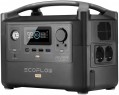 |
|---|---|---|
| BLUETTI AC70 | EcoFlow RIVER Pro | |
from £549.00 | from £829.99 | |
| User reviews | ||
| TOP sellers | ||
Pass-through charging. 2 USB A ports, 2 USB-C ports. Car cigarette lighter. Surges up to 2000 W are allowed. LiFePo4 battery. | 2 USB A ports, 1 USB A Fast Charge port, 1 USB-C port. Car cigarette lighter port DC5521. X-Stream port for fast charging (660 W). NCM – lithium-ion battery, capacity 720 Wh. Surges up to 1200 W are allowed. | |
| In box | charging station | charging station |
| Rated power | 1000 W | 600 W |
| Peak power | 2000 W | 1200 W |
| Output waveform | sinusoid (PSW) | sinusoid (PSW) |
| UPS function |  | |
| Switchover time to battery | 20 ms | 30 ms |
Outputs | ||
| Sockets (230 V) | 2 | 2 |
| USB-A | 2 pcs 5В/2.4А 12 W | 2 pcs 5В/2.4А 12 W |
| USB-A (quick charge) | 1 5В/2.4A, 9В/2A, 12В/1.5A 18 W | |
| USB-C | 2 pcs 3 A, 5 A 100 W | 1 pcs 5 A 100 W |
| Car cigarette lighter | | |
| DC output | 2x DC5521 (13.6 V / 3 A) | |
Inputs (station charging) | ||
| From solar panels | | |
| Input port XT60 | | |
Battery and charging time | ||
| Connecting an additional battery | | |
| Battery type | LiFePO4 | Li-Ion NMC |
| Battery capacity | 768 Wh | 720 Wh |
| Charging cycles | 3000 | 800 |
| Charging time (socket) ≈ | 45 min | 96 min |
| Charging time (solar panel) ≈ | 120 min | 216 min |
| Charging time (cigarette lighter) ≈ | 300 min | 480 min |
| Charging power (socket) | 850 W | 660 W |
| Charging power (solar panel) | 500 W | 200 W |
| Charging power (socket + solar panel) | 1000 W | |
General | ||
| Smartphone synchronization | Bluetooth | Wi-Fi |
| PSU | built into the body | built into the body |
| Display | | |
| Backlight |  | |
| Carrying handle | | |
| Operating temperature | 0 °C ~ +40 °C | 0 °C ~ +45 °C |
| Dimensions (LxWxH) | 314x210x256 mm | 289x180x235 mm |
| Weight | 10.2 kg | 7.6 kg |
| Warranty | 5 years | 2 years |
| Added to E-Catalog | june 2024 | september 2022 |


Compare BLUETTI AC70 and EcoFlow RIVER Pro
BLUETTI AC70 and EcoFlow RIVER Pro charging stations have their unique features that might influence a user's choice. The BLUETTI AC70 boasts a higher rated power of 1000W and peak values up to 2000W, making it more suitable for powering high-demand devices. Meanwhile, the RIVER Pro offers a lower rated power of 600W and a peak power of 1200W, but provides faster grid charging (96 minutes compared to AC70's 45 minutes). Users note that the AC70 has a longer battery lifespan (3000 cycles versus 800 for the RIVER Pro), which could be an important factor for long-term use. However, the RIVER Pro offers more USB outputs and an additional fast-charge port, making it more versatile for charging mobile devices. Overall, the choice between these models depends on the user's specific needs: the AC70 is better suited for powerful devices, while RIVER Pro is preferable for mobility and fast charging.
You may be interested in
BLUETTI AC70 often compared


EcoFlow RIVER Pro often compared


Glossary
Rated power
Power that a device can consistently produce for an indefinitely long time without any unpleasant consequences. For normal operation of the charging station, the rated power must be at least 15 - 20% higher than the total power of all devices simultaneously connected to it.
Peak power
Some electrical appliances (in particular, units with electric motors - refrigerators, air conditioners, etc.) consume significantly more energy at startup than after reaching the operating mode. For such a load, the peak power of the charging station must be taken into account - its indicator must be higher than the starting power of the load.
Switchover time to battery
The delay (usually in milliseconds) between the power going out from the outlet and the moment when the station starts feeding connected devices from its battery, maintaining "pass-through" power. The shorter this time, the higher the chance that devices won't notice the drop at all: for routers, cameras, NAS, and PCs, this is critical because a long pause can cause a reboot, loss of connection, or even filesystem errors. Essentially, this is the same parameter as in a classic UPS, but for charging stations, it greatly depends on implementation: models with a more "UPS-like" switching scheme switch considerably faster, while some stations formally have a UPS mode but actually create a noticeable break or activate the output only after "realizing" the network's loss. In practice, this point helps distinguish a charging station that is truly suitable as a UPS for sensitive electronics from an option "for lights and charging": for example, for home internet and video surveillance, minimal switching time is important, while for lamps, charging phones, or a heater, a brief pause is typically not critical.
USB-A (quick charge)
Full-sized USB-A ports with fast charging support. This feature allows you to charge your smartphone, tablet, or other connected devices much more quickly. The charging process occurs at increased power, with current and voltage regulated at each stage to stay within optimal values. However, keep in mind that there are many fast-charging technologies today, and not all of them are compatible with each other.
— Current strength. The current parameters delivered through USB-A fast charging ports. Note that different ports of the charging station may output different voltage and current parameters. This section specifies the current strength values at a certain voltage (for example, 5V / 3A, 9V / 2A, 12V / 1.5A).
— Power. The maximum power in watts (W) that the charging station can deliver through the USB-A fast charging port to a single charging gadget. High output power allows for faster charging. However, the charging device must support the corresponding power; otherwise, the speed will be limited by the gadget's characteristics.
— Current strength. The current parameters delivered through USB-A fast charging ports. Note that different ports of the charging station may output different voltage and current parameters. This section specifies the current strength values at a certain voltage (for example, 5V / 3A, 9V / 2A, 12V / 1.5A).
— Power. The maximum power in watts (W) that the charging station can deliver through the USB-A fast charging port to a single charging gadget. High output power allows for faster charging. However, the charging device must support the corresponding power; otherwise, the speed will be limited by the gadget's characteristics.
USB-C
USB type C ports are smaller compared to classic USB ports and have a convenient reversible design that allows connecting the plug either way. USB type C was initially created to implement various advanced features: increased power, fast charging technologies, etc.
Since the port is relatively new and quite powerful (you can find USB type C with 60W, even 100W and 140W), the total number of such connectors is often limited to one port, or sometimes two).
— Current. The maximum current delivered through the USB type C port to the device being charged. Note that different ports of a charging station may deliver different currents (for example, 1.5A and 2.1A). In such cases, the highest current is usually specified.
— Power. The maximum power in watts (W) that the charging station can deliver to one charging gadget. The high output power of the USB type C port allows for faster charging. However, the device being charged must support the corresponding power; otherwise, the speed of the process will be limited by the gadget's specifications.
Since the port is relatively new and quite powerful (you can find USB type C with 60W, even 100W and 140W), the total number of such connectors is often limited to one port, or sometimes two).
— Current. The maximum current delivered through the USB type C port to the device being charged. Note that different ports of a charging station may deliver different currents (for example, 1.5A and 2.1A). In such cases, the highest current is usually specified.
— Power. The maximum power in watts (W) that the charging station can deliver to one charging gadget. The high output power of the USB type C port allows for faster charging. However, the device being charged must support the corresponding power; otherwise, the speed of the process will be limited by the gadget's specifications.
DC output
The presence of a DC connector (or several such outputs) in the device to power external gadgets with direct current. The standard DC jack is round and has a pin in the center. However, its dimensions may differ in depth and diameter. The voltage output to the DC output may be different. The most popular options are 18 - 20 V for powering laptops, 12 V for various specialized devices and automotive electrical accessories.
Battery type
— Li-Ion. The key advantage of lithium-ion batteries is their high capacity with small dimensions and weight. Also, Li-Ion batteries are not subject to memory effect and can charge quite quickly. Of course, this option is not without its drawbacks - first of all, it is sensitivity to low or elevated temperatures, and if overloaded, the lithium-ion battery can catch fire or even explode. However, thanks to the use of built-in controllers, the likelihood of such “accidents” is extremely low and, in general, the advantages of this technology significantly outweigh the disadvantages.
— Li-Pol. An improved version of lithium-ion technology (see the corresponding paragraph): the liquid electrolyte in Li-Pol batteries is replaced with a solid polymer. At the same high capacity, the batteries have become more compact, there is practically no “memory effect” in them, and the likelihood of fires and explosions in the event of critical violations of operating conditions is minimized. The downside of these improvements was increased cost and increased sensitivity to frost. However, most often these shortcomings are not significant.
— LiFePO4. Lithium iron phosphate batteries are a modification of lithium ion batteries (see corresponding paragraph) designed to eliminate some of the shortcomings of the original technology. LiFePO4 batteries are characterized by a...large number of charge/discharge cycles, chemical and thermal stability, low temperature tolerance, short charging time (including high currents) and safety in operation. The likelihood of an “explosion” of a LiFePO4 battery when overloaded is reduced to almost zero, and in general, such batteries cope with high peak loads without problems and maintain the operating voltage almost until discharge.
— Li-Ion NMC. A type of lithium rechargeable battery using a complex alloy in the manufacture of the cathode. It contains nickel, manganese and cadmium. This “recipe” allows you to increase the power of a power source based on Li-Ion NMC elements. Batteries of this type have a high specific capacity and a stable discharge voltage, provide a long operating time of the charging station with high performance, are characterized by a complete absence of “memory effect”, maintain functionality over a wide temperature range and are fireproof.
— VRLA. Acid batteries with a regulating safety valve to release excess gas. The abbreviation VRLA stands for Valve Regulated Lead Acid. Batteries of this type have a sealed, non-separable design and come in two types: AGM VRLA (the battery plates are equipped with a layer of fiberglass absorbent) and GEL VRLA (with a gel electrolyte in a jelly-like state). Batteries with a control valve are resistant to deep discharges, do not require topping up with distillate throughout their entire service life, and do not emit hydrogen or oxygen.
- Semi-solid State. An advanced type of lithium-ion battery (see above), which combines some of the characteristics of liquid and solid batteries. It uses an electrolyte that is in a semi-soft or gel-like state, making the batteries more resistant to leakage than traditional wet batteries. Semi-solid state technology allows for a significant increase in the energy density of cells. As a result, it is possible to make compact batteries with high energy intensity.
— Li-Pol. An improved version of lithium-ion technology (see the corresponding paragraph): the liquid electrolyte in Li-Pol batteries is replaced with a solid polymer. At the same high capacity, the batteries have become more compact, there is practically no “memory effect” in them, and the likelihood of fires and explosions in the event of critical violations of operating conditions is minimized. The downside of these improvements was increased cost and increased sensitivity to frost. However, most often these shortcomings are not significant.
— LiFePO4. Lithium iron phosphate batteries are a modification of lithium ion batteries (see corresponding paragraph) designed to eliminate some of the shortcomings of the original technology. LiFePO4 batteries are characterized by a...large number of charge/discharge cycles, chemical and thermal stability, low temperature tolerance, short charging time (including high currents) and safety in operation. The likelihood of an “explosion” of a LiFePO4 battery when overloaded is reduced to almost zero, and in general, such batteries cope with high peak loads without problems and maintain the operating voltage almost until discharge.
— Li-Ion NMC. A type of lithium rechargeable battery using a complex alloy in the manufacture of the cathode. It contains nickel, manganese and cadmium. This “recipe” allows you to increase the power of a power source based on Li-Ion NMC elements. Batteries of this type have a high specific capacity and a stable discharge voltage, provide a long operating time of the charging station with high performance, are characterized by a complete absence of “memory effect”, maintain functionality over a wide temperature range and are fireproof.
— VRLA. Acid batteries with a regulating safety valve to release excess gas. The abbreviation VRLA stands for Valve Regulated Lead Acid. Batteries of this type have a sealed, non-separable design and come in two types: AGM VRLA (the battery plates are equipped with a layer of fiberglass absorbent) and GEL VRLA (with a gel electrolyte in a jelly-like state). Batteries with a control valve are resistant to deep discharges, do not require topping up with distillate throughout their entire service life, and do not emit hydrogen or oxygen.
- Semi-solid State. An advanced type of lithium-ion battery (see above), which combines some of the characteristics of liquid and solid batteries. It uses an electrolyte that is in a semi-soft or gel-like state, making the batteries more resistant to leakage than traditional wet batteries. Semi-solid state technology allows for a significant increase in the energy density of cells. As a result, it is possible to make compact batteries with high energy intensity.
Battery capacity
Nominal battery capacity, in fact - the amount of energy that is supposed to be stored. The larger it is, the longer the battery life of the charging station will be, all other things being equal. On the other hand, this parameter also affects the dimensions, weight and price of the battery, despite the fact that an energy-intensive battery is not always required. By the indicator of capacity in watt-hours, you can compare batteries with each other.
Charging cycles
The number of charge-discharge cycles that the battery can withstand without significant loss of performance.
In the process of operation, the batteries wear out, which causes their performance to suffer (in the first place, the capacity decreases). Battery life is usually measured in charge-discharge cycles. However, models with the same declared resource are not always equally durable in practice. Different manufacturers may interpret “significant loss of performance” in different ways: for example, one brand indicates the resource up to a 20% decrease in capacity (DOD > 80%), another - up to a 60% decrease (DOD > 40%) Behind the abbreviation DOD worth decoding Depth of Discharge, i.e. discharge depth. Therefore, when choosing, it makes sense to focus not only on pure numbers, but also on other sources - test results, reviews, etc. Also note that battery life can be noticeably reduced if the operating conditions are violated (for example, in case of overheating or hypothermia).
In the process of operation, the batteries wear out, which causes their performance to suffer (in the first place, the capacity decreases). Battery life is usually measured in charge-discharge cycles. However, models with the same declared resource are not always equally durable in practice. Different manufacturers may interpret “significant loss of performance” in different ways: for example, one brand indicates the resource up to a 20% decrease in capacity (DOD > 80%), another - up to a 60% decrease (DOD > 40%) Behind the abbreviation DOD worth decoding Depth of Discharge, i.e. discharge depth. Therefore, when choosing, it makes sense to focus not only on pure numbers, but also on other sources - test results, reviews, etc. Also note that battery life can be noticeably reduced if the operating conditions are violated (for example, in case of overheating or hypothermia).