
Comparison Asus Xonar DX vs Asus Xonar DSX
Add to comparison | 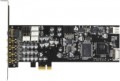 | 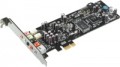 |
|---|---|---|
| Asus Xonar DX | Asus Xonar DSX | |
from £650.30 | from $53.60 up to $59.76 | |
| TOP sellers | ||
| Type | gaming | gaming |
Specs | ||
| Form factor | internal | internal |
| Interface | PCIe | PCIe |
| Channels | 7.1 | 7.1 |
| Audiochip | ASUS AV100 | ASUS AV66 |
| Standards | Dolby Digital Live, Dolby Headphone, Dolby Virtual Speaker | DTS |
| ASIO |  | |
| Additional power | |  |
DAC | ||
| DAC resolution | 24 bit | 24 bit |
| Max. sampling rate | 192 kHz | 192 kHz |
| Signal-to-noise ratio | 116 dB | 107 dB |
ADC | ||
| ADC resolution | 24 bit | 24 bit |
| Max. sampling rate | 192 kHz | 192 kHz |
| Signal-to-noise ratio | 100 dB | |
| More features | front panel output | front panel output |
Inputs | ||
| mini-Jack (3.5 mm) | 1 | 1 |
Outputs | ||
| mini-Jack (3.5 mm) | 4 | 4 |
| Optical S/PDIF | 1 | 1 |
| Added to E-Catalog | january 2014 | december 2013 |


Compare Asus Xonar DX and Xonar DSX
You may be interested in
Asus Xonar DX often compared


Asus Xonar DSX often compared


Glossary
Audiochip
Brand of the audio chip installed in the sound card.
The audio chip is one of the most important parts of a sound card, a kind of "heart" of the whole circuit, and it is on its characteristics that the sound quality and other capabilities of a particular model largely depend. Knowing the brand of the chip, you can easily find various information on it — official specifications, test results, reviews, etc. — and based on this, draw a conclusion to what extent this sound card is able to meet your requirements. Of course, for ordinary video cards (see "View") there is no need to delve into such details, but when choosing a gaming or audiophile model, they can be very useful.
The audio chip is one of the most important parts of a sound card, a kind of "heart" of the whole circuit, and it is on its characteristics that the sound quality and other capabilities of a particular model largely depend. Knowing the brand of the chip, you can easily find various information on it — official specifications, test results, reviews, etc. — and based on this, draw a conclusion to what extent this sound card is able to meet your requirements. Of course, for ordinary video cards (see "View") there is no need to delve into such details, but when choosing a gaming or audiophile model, they can be very useful.
Standards
Various standards and special digital audio technologies that the sound card is officially compatible with. For example, the Dolby and DTS standards in various variations are used primarily for multi-channel audio tracks in films, while DirectSound and EAX provide high-quality “surround” sound in games. In fact, the ability to work with one or another standard is largely determined by the software part of the system, and not by the characteristics of the sound card; however, official compatibility means at least the full compliance of the card with the requirements of the standard and the minimum risk of conflicts at the hardware level.
Additional power
The need to connect additional power to the sound card.
Most of both internal and external (see "Type") sound cards are powered directly through the connection connector (see "Connection interface"). At the same time, for normal operation of advanced models (for example, audiophile and gaming, as well as some DACs; see "View"), this power may not be enough, which requires an additional power source. In internal audio cards, it is carried out from the computer power supply, in external ones — directly from the 230 V network.
Most of both internal and external (see "Type") sound cards are powered directly through the connection connector (see "Connection interface"). At the same time, for normal operation of advanced models (for example, audiophile and gaming, as well as some DACs; see "View"), this power may not be enough, which requires an additional power source. In internal audio cards, it is carried out from the computer power supply, in external ones — directly from the 230 V network.
Signal-to-noise ratio
This parameter determines the ratio of the "clean" sound produced by the DAC at the output to all extraneous noise. As such, it is a pretty strong indicator of sound purity. According to the signal-to-noise ratio, DACs in modern sound cards can be divided as follows:
up to 90 dB — initial level;
90-100 dB — average level, advanced "home" models;
more than 100 dB — professional level.
up to 90 dB — initial level;
90-100 dB — average level, advanced "home" models;
more than 100 dB — professional level.
Signal-to-noise ratio
The signal-to-noise ratio provided by the analogue-to-digital converter (ADC) of the sound card in the processed signal. For more information about this ratio, see the paragraph of the same name above. Here we note that in domestic use it does not play a decisive role, but if you plan to record sound in good quality, you should choose a card with a high value of this indicator.