
Comparison Totem Hunter vs Trek Planet Sydney
Add to comparison | 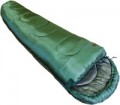 | 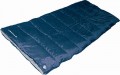 |
|---|---|---|
| Totem Hunter | Trek Planet Sydney | |
from $23.36 up to $25.97 | from $25.84 up to $27.96 | |
| User reviews | ||
| TOP sellers | ||
| By features | trekking | camping |
| Type | bag-cocoon | blanket bag |
| Suitable for | universal | universal |
| Seasonality | spring/autumn summer | spring/autumn summer |
| Weight | 1.15 kg | 1.5 kg |
Temperature and materials | ||
| comfort t° (for men) | 7 °C | 6 °C |
| comfort t° (for women) | 7 °C | 10 °C |
| extreme t° | -5 °C | -5 °C |
| External material | polyester | polyester |
| Inner material | polyester | polyester |
| Insulation | synthetics | synthetics |
| Insulation layers | 1 | |
Features | ||
| Equipment | fastening possibility inner pocket pillow compartment insulated zip (fastener) drying loops compression bag | fastening possibility inner pocket insulated zip (fastener) drying loops |
| Zipper | side | side |
General | ||
| Bag dimensions | 220x80x55 cm | 200x80x80 cm |
| Dimensions (folded) | 35x20x20 cm | 38x25x25 cm |
| Volume (folded) | 14 l | |
| Color | ||
| Added to E-Catalog | july 2016 | december 2014 |


Compare Totem Hunter and Trek Planet Sydney
You may be interested in
Totem Hunter often compared


Glossary
By features
— Expeditionary. The most "extreme" type of sleeping bags, designed primarily for use on long trips, including in the cold season and in high mountains. A prerequisite for expedition bags is a low extreme temperature (see below) — -20 °C and below; exceptions are found only among children's models. As for the design, bags of this type are often equipped with hoods, thermal collars, they can provide fastening (for more details, see "Characteristics").
— Trekking. Sleeping bags designed primarily for use on hiking or cycling trips. Their key features are compactness and light weight, which make it easy to transport on your own. Because of this, trekking sleeping bags are much more expensive than camping ones with similar characteristics — lightweight and at the same time high-quality materials are not cheap. So for a permanent stay in one place, it hardly makes sense to pay attention to this category. Also note that sleeping bags for this purpose are designed mainly for use in the warm season — in spring / autumn and/or summer — and are made mainly in the form of cocoons, although there are exceptions to both rules.
— Camping. A type of sleeping bag designed to provide comfort while constantly staying in one place in relatively uncomplicated conditions. Such a bag can be useful, for example, at a picnic with an overnight sta...y, a multi-day summer festival, etc.; but for long-term wearing “on oneself”, camping models are poorly suited due to their relatively large dimensions and weight. The seasonality of sleeping bags for this purpose may be different, but it is worth noting that most of these products are made in the form of blanket bags (see "Type").
— Trekking. Sleeping bags designed primarily for use on hiking or cycling trips. Their key features are compactness and light weight, which make it easy to transport on your own. Because of this, trekking sleeping bags are much more expensive than camping ones with similar characteristics — lightweight and at the same time high-quality materials are not cheap. So for a permanent stay in one place, it hardly makes sense to pay attention to this category. Also note that sleeping bags for this purpose are designed mainly for use in the warm season — in spring / autumn and/or summer — and are made mainly in the form of cocoons, although there are exceptions to both rules.
— Camping. A type of sleeping bag designed to provide comfort while constantly staying in one place in relatively uncomplicated conditions. Such a bag can be useful, for example, at a picnic with an overnight sta...y, a multi-day summer festival, etc.; but for long-term wearing “on oneself”, camping models are poorly suited due to their relatively large dimensions and weight. The seasonality of sleeping bags for this purpose may be different, but it is worth noting that most of these products are made in the form of blanket bags (see "Type").
Type
- Cocoon bag. Cocoon bags have an uneven width: they are wider at the shoulders, and narrow towards the legs. This form is considered optimal for keeping warm due to the small (compared to a blanket bag) area of \u200b\u200bthe outer surface of the sleeping bag, as well as the fact that it is quite dense to lie in a cocoon. As a consequence, most camping and expedition sleeping bags are of this type (see "Intended Use"). The disadvantage of cocoons is somewhat less comfort than blanket bags.
- Blanket bag. Bags of this type are rectangular in shape, with a uniform width along the entire length. They are somewhat less suitable for low temperatures than cocoons, however, they are more convenient and versatile: there is more free space in the bag itself, and the design usually allows you to unzip it completely and use it as a blanket or bedding.
- Bag-overalls. Sleeping bag, made, in accordance with the name, in the form of overalls and having sleeves and legs. In such a product, you can not only sleep, but also move around the camp; some manufacturers directly position the overalls as a solution for tech "who hate to get out of a warm sleeping bag in the morning." Such “clothing”, as a rule, is not an obstacle either during passive recreation like gatherings around a fire, or even during active activities like chopping firewood. The design usually provides...cutouts for the hands, as well as removable "boots" that can be removed before putting on more serious shoes or used as "slippers" for walking a few meters. In terms of direction (see above), overalls are usually camping bags - more traditional designs are better suited for trekking and even more expeditionary use.
— Bivouac. A bivouac bag is a windproof and waterproof cover for a sleeping bag. Initially, the bivouac was created for mountain climbing and winter hiking. Bivi come with an arch at the head and without it. Bivouac bags are made of breathable membrane fabric. They allow you to use sleeping bags with rugs or mats of different seasonality. The bivouac takes up minimal space in a backpack, is light in weight, does not require selection of an installation site, and dries quickly after rain. This attribute of tourist ammunition will come in handy for tech who do not want to take a tent on a hike or sleep under an awning.
- Blanket bag. Bags of this type are rectangular in shape, with a uniform width along the entire length. They are somewhat less suitable for low temperatures than cocoons, however, they are more convenient and versatile: there is more free space in the bag itself, and the design usually allows you to unzip it completely and use it as a blanket or bedding.
- Bag-overalls. Sleeping bag, made, in accordance with the name, in the form of overalls and having sleeves and legs. In such a product, you can not only sleep, but also move around the camp; some manufacturers directly position the overalls as a solution for tech "who hate to get out of a warm sleeping bag in the morning." Such “clothing”, as a rule, is not an obstacle either during passive recreation like gatherings around a fire, or even during active activities like chopping firewood. The design usually provides...cutouts for the hands, as well as removable "boots" that can be removed before putting on more serious shoes or used as "slippers" for walking a few meters. In terms of direction (see above), overalls are usually camping bags - more traditional designs are better suited for trekking and even more expeditionary use.
— Bivouac. A bivouac bag is a windproof and waterproof cover for a sleeping bag. Initially, the bivouac was created for mountain climbing and winter hiking. Bivi come with an arch at the head and without it. Bivouac bags are made of breathable membrane fabric. They allow you to use sleeping bags with rugs or mats of different seasonality. The bivouac takes up minimal space in a backpack, is light in weight, does not require selection of an installation site, and dries quickly after rain. This attribute of tourist ammunition will come in handy for tech who do not want to take a tent on a hike or sleep under an awning.
Weight
Since a sleeping bag is a travel outfit, its weight can be one of the key characteristics. Two points should be taken into account here: firstly, more insulation usually requires more material and increases weight, and secondly, warm models with low weight are much more expensive than heavier options with the same temperature characteristics.
Also, when choosing a sleeping bag, you should decide what exactly you are buying it for. If we are talking about picnics, festivals and other simple trips to nature without long walks, or if you plan to carry equipment by car, you can not pay much attention to weight, focus on other characteristics. If you plan to go on long hiking or cycling trips, you should choose a model with a minimum weight.
As for specific numbers, most modern sleeping bags are in the range of 1.1 – 1.5 kg or 1.6 – 2 kg, although there are quite a few ultra-light models — 1 kg or less. An indicator of 2.1 – 2.5 kg is already considered quite significant, and a weight of 2.6 – 3 kg or more is found mainly in two types of sleeping bags: separate expeditionary models with a high degree of insulation, as well as double products.
Also, when choosing a sleeping bag, you should decide what exactly you are buying it for. If we are talking about picnics, festivals and other simple trips to nature without long walks, or if you plan to carry equipment by car, you can not pay much attention to weight, focus on other characteristics. If you plan to go on long hiking or cycling trips, you should choose a model with a minimum weight.
As for specific numbers, most modern sleeping bags are in the range of 1.1 – 1.5 kg or 1.6 – 2 kg, although there are quite a few ultra-light models — 1 kg or less. An indicator of 2.1 – 2.5 kg is already considered quite significant, and a weight of 2.6 – 3 kg or more is found mainly in two types of sleeping bags: separate expeditionary models with a high degree of insulation, as well as double products.
comfort t° (for men)
Some manufacturers use their own criteria to designate this temperature; however, they predominantly use the accepted standard. According to it, the comfort temperature is the lowest ambient temperature at which a man in thermal underwear can comfortably sleep in a sleeping bag all night (a minimum of 8 hours) without waking from the cold, in a relaxed position. Naturally, actual comfort will depend on the individual's body and preparation.
comfort t° (for women)
Some manufacturers use their own criteria to designate this temperature, but predominantly, the common standard is used. According to it, the comfort temperature is the lowest ambient air temperature at which a woman in thermal underwear can sleep comfortably, without waking up from the cold, in a sleeping bag throughout the night (at least 8 hours) in a relaxed position. Of course, actual comfort will depend on the individual's body characteristics and specific person's preparation.
Insulation layers
The number of individual insulation layers provided in a sleeping bag. A multi-layer construction significantly improves the "insulating" characteristics of the sleeping bag — firstly, due to additional air layers between the filler layers, and secondly, due to the overlap of one layer's seam by another layer. For summer sleeping bags (see "Seasonality"), 1-2 layers are considered sufficient, in autumn-spring bags there are usually 2-3, and in winter bags — a minimum of 3 layers.
It is worth noting that the number of layers is usually specified for synthetic filler (see "Insulation"); down insulation is not laid in layers.
It is worth noting that the number of layers is usually specified for synthetic filler (see "Insulation"); down insulation is not laid in layers.
Equipment
In addition to the standard elements of the sleeping bag design in the form of a hood(can also be removable), headrest, inner pocket, thermal zipper roller, drying loop and the ability to zip up, there may also be a light-accumulating loop, a compartment for a pillow, a warm collar, a fastener at the feet, a mosquito net, a compression bag.
— Hood. A classic hood that covers the head of a person in a sleeping bag. This detail provides additional thermal insulation: firstly, due to the fact that it protects the neck, the back of the head and most of the head from the cold, and secondly, due to the reduction of the space through which heat can escape from the sleeping bag.
— Removable hood. A type of hood (see above) with the ability to remove it at the user's discretion. This makes the sleeping bag more versatile: in warm weather, you can remove the hood so that it does not interfere, and when it gets cold, you can fasten it back, providing maximum protection from the cold.
— Headrest. A lining without the ability to...tighten around the head, used for more comfortable placement on the sleeping place and to reduce heat loss through the head on cool nights. Used in sleeping bags of the blanket type. Headrests for sleeping bags are often rectangular in shape and have an integrated pillow.
— Mosquito net. A protective net that covers the face of a person lying in a sleeping bag. Such a net holds back mosquitoes and other annoying insects, while at the same time air passes through it freely.
— Leg closure. A separate closure located in the leg area of the sleeping bag. In warm weather, this closure can be unzipped without opening the entire bag — this way, your legs won’t sweat in the sleeping bag, and the rest of your body will remain covered. The closure can be either a zipper or a drawstring.
— Zip-up capability. The ability to connect the sleeping bag to another bag (bags), creating a sleeping place for several people (usually for two, but in some models it is possible for more). This function will be useful in case of cold weather: it can be difficult to warm up in a sleeping bag alone, but several people in one bag additionally warm each other. When choosing, it is worth considering that sleeping bags from different manufacturers (and even different models from the same manufacturer) may differ in design and size of zippers. So if you are going to use this function, you should pay special attention to compatibility.
— Light-accumulating loop. A loop on the zipper puller that has an insert made of light-accumulating material. This material “charges” during daylight hours and glows itself in the dark. Thus, the fastener can be found even in complete darkness; this provides not only comfort, but also additional safety in case you need to quickly get out of your sleeping bag.
— Inner pocket. A pocket located on the inside of the sleeping bag. This compartment is convenient for storing documents and other small but valuable items: it is not easy to steal them from an inner pocket, and the likelihood of losing the contents while sleeping is reduced to almost zero.
— Pillow compartment. A special compartment in which you can place a pillow or its substitute (for example, a bag of spare clothes) without fear of damaging or stretching the sleeping bag itself.
— Insulated collar. An additional collar that tightly covers the neck of the person in the sleeping bag. This provides additional sealing and maximally blocks the access of outside air to the body and legs. In addition, the collar helps the head and neck warm up faster.
— Insulated zipper (fastener). A system of zipper insulation, usually in the form of a heat-insulating roller or strip along the entire fastener. The zipper is one of the weakest points of a sleeping bag in terms of thermal insulation, and therefore when choosing a sleeping bag for low temperatures (especially an expedition one, see "By Purpose"), it is worth paying attention to the presence of a thermal roller, preventing heat loss.
— Drying loops. Special loops that allow you to hang your sleeping bag to dry — on a rope or even on tree branches. Note that experienced tourists recommend “ventilating” your sleeping bag every morning, as moisture inevitably accumulates in it overnight; and in any case, a wet sleeping bag dries much faster when suspended than when lying on the ground.
— Compression bag. A bag-cover for storing and carrying a sleeping bag, equipped with compression straps. Such straps allow you to strongly compress the cover with the sleeping bag packed in it, maximally “squeeze out” the air from the inside and thus reduce the size of the package - this significantly simplifies transportation. However, we note that you cannot keep the sleeping bag compressed all the time; for long-term storage, the straps should be loosened.
— Hood. A classic hood that covers the head of a person in a sleeping bag. This detail provides additional thermal insulation: firstly, due to the fact that it protects the neck, the back of the head and most of the head from the cold, and secondly, due to the reduction of the space through which heat can escape from the sleeping bag.
— Removable hood. A type of hood (see above) with the ability to remove it at the user's discretion. This makes the sleeping bag more versatile: in warm weather, you can remove the hood so that it does not interfere, and when it gets cold, you can fasten it back, providing maximum protection from the cold.
— Headrest. A lining without the ability to...tighten around the head, used for more comfortable placement on the sleeping place and to reduce heat loss through the head on cool nights. Used in sleeping bags of the blanket type. Headrests for sleeping bags are often rectangular in shape and have an integrated pillow.
— Mosquito net. A protective net that covers the face of a person lying in a sleeping bag. Such a net holds back mosquitoes and other annoying insects, while at the same time air passes through it freely.
— Leg closure. A separate closure located in the leg area of the sleeping bag. In warm weather, this closure can be unzipped without opening the entire bag — this way, your legs won’t sweat in the sleeping bag, and the rest of your body will remain covered. The closure can be either a zipper or a drawstring.
— Zip-up capability. The ability to connect the sleeping bag to another bag (bags), creating a sleeping place for several people (usually for two, but in some models it is possible for more). This function will be useful in case of cold weather: it can be difficult to warm up in a sleeping bag alone, but several people in one bag additionally warm each other. When choosing, it is worth considering that sleeping bags from different manufacturers (and even different models from the same manufacturer) may differ in design and size of zippers. So if you are going to use this function, you should pay special attention to compatibility.
— Light-accumulating loop. A loop on the zipper puller that has an insert made of light-accumulating material. This material “charges” during daylight hours and glows itself in the dark. Thus, the fastener can be found even in complete darkness; this provides not only comfort, but also additional safety in case you need to quickly get out of your sleeping bag.
— Inner pocket. A pocket located on the inside of the sleeping bag. This compartment is convenient for storing documents and other small but valuable items: it is not easy to steal them from an inner pocket, and the likelihood of losing the contents while sleeping is reduced to almost zero.
— Pillow compartment. A special compartment in which you can place a pillow or its substitute (for example, a bag of spare clothes) without fear of damaging or stretching the sleeping bag itself.
— Insulated collar. An additional collar that tightly covers the neck of the person in the sleeping bag. This provides additional sealing and maximally blocks the access of outside air to the body and legs. In addition, the collar helps the head and neck warm up faster.
— Insulated zipper (fastener). A system of zipper insulation, usually in the form of a heat-insulating roller or strip along the entire fastener. The zipper is one of the weakest points of a sleeping bag in terms of thermal insulation, and therefore when choosing a sleeping bag for low temperatures (especially an expedition one, see "By Purpose"), it is worth paying attention to the presence of a thermal roller, preventing heat loss.
— Drying loops. Special loops that allow you to hang your sleeping bag to dry — on a rope or even on tree branches. Note that experienced tourists recommend “ventilating” your sleeping bag every morning, as moisture inevitably accumulates in it overnight; and in any case, a wet sleeping bag dries much faster when suspended than when lying on the ground.
— Compression bag. A bag-cover for storing and carrying a sleeping bag, equipped with compression straps. Such straps allow you to strongly compress the cover with the sleeping bag packed in it, maximally “squeeze out” the air from the inside and thus reduce the size of the package - this significantly simplifies transportation. However, we note that you cannot keep the sleeping bag compressed all the time; for long-term storage, the straps should be loosened.
Bag dimensions
Dimensions of the sleeping bag when unfolded. Although the designation of sizes includes the traditional three numbers, in the case of sleeping bags there is a peculiarity: these numbers do not indicate length, width and height (depth, thickness), but length, width at the shoulders and width at the legs. For example, the designation 220x80x50 means 220 cm in length, 80 cm in width at the shoulders and 50 cm in width at the legs (for more information about sleeping bags with different widths, see “Type”).
It is believed that the optimal sleeping bag sizes are:
- Length - 15-20 cm more than a person’s height (for sleeping bags with a hood) or his height to the shoulders (for sleeping bags without a hood).
— The width at the shoulders is such that the sleeping bag fits tightly and at the same time does not interfere with movement.
— The width in the legs (for cocoons, see “Type”) is such that you can slightly bend your legs without tension on the fabric of the sleeping bag (otherwise heat loss is possible, and it will wear out more).
Note that these requirements apply primarily to sleeping bags intended for use in cold weather. If you are purchasing a sleeping bag for summer trips, the width requirements are not so critical - the main thing is that it does not feel cramped and the length matches.
Of course, when folded, the sleeping bag takes up significantly less space - see “Dimensions (folded)”.
It is believed that the optimal sleeping bag sizes are:
- Length - 15-20 cm more than a person’s height (for sleeping bags with a hood) or his height to the shoulders (for sleeping bags without a hood).
— The width at the shoulders is such that the sleeping bag fits tightly and at the same time does not interfere with movement.
— The width in the legs (for cocoons, see “Type”) is such that you can slightly bend your legs without tension on the fabric of the sleeping bag (otherwise heat loss is possible, and it will wear out more).
Note that these requirements apply primarily to sleeping bags intended for use in cold weather. If you are purchasing a sleeping bag for summer trips, the width requirements are not so critical - the main thing is that it does not feel cramped and the length matches.
Of course, when folded, the sleeping bag takes up significantly less space - see “Dimensions (folded)”.
Dimensions (folded)
The dimensions of the sleeping bag when folded, when packed in a complete cover; if this cover is made in the form of a compression bag(see "Equipment"), then the dimensions are indicated with the compression straps tightened to the maximum.
Other things being equal, the smaller the size of the sleeping bag, the more convenient it is in storage and transportation. At the same time, more compact models are usually more expensive.
Other things being equal, the smaller the size of the sleeping bag, the more convenient it is in storage and transportation. At the same time, more compact models are usually more expensive.