
Comparison JBL CS-752 vs JBL CS-753
Add to comparison | 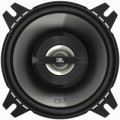 | 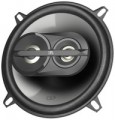 |
|---|---|---|
| JBL CS-752 | JBL CS-753 | |
from $46.00 up to $54.36 | from $57.00 | |
| TOP sellers | ||
| Application area | car | car |
| Type | coaxial | coaxial |
| Size | 5.25" (13 cm) | 5.25" (13 cm) |
| Number of bands | 2 | 3 |
Specs | ||
| Rated power | 35 W | 35 W |
| Max. power | 105 W | 105 W |
| Frequency range | 70 – 20000 Hz | 70 – 20000 Hz |
| Impedance | 4 Ohm | 4 Ohm |
| Sensitivity | 93 dB | 93 dB |
Size | ||
| Woofer size | 130 mm | 130 mm |
| Mounting depth | 58 mm | |
| Added to E-Catalog | september 2014 | september 2014 |


Compare JBL CS-752 and CS-753
You may be interested in
JBL CS-752 often compared


JBL CS-753 often compared

Glossary
Number of bands
The number of separate frequency ranges into which the total frequency range reproduced by the speaker is divided. In this case, a separate speaker (or even several) is allocated for each range (band). the optimal speaker parameters for each band are different. Therefore, multi-band speakers are considered to provide better sound quality than full-range speakers. In modern multi-band car audio, 2(HF / LF) or 3(HF / MF / LF) bands are usually provided.
Mounting depth
The mounting depth of car audio is, in fact, the size of the speaker in depth. Note that for component sets (see "Type") this parameter is given for the largest speaker, and for case models it is generally irrelevant.
The mounting depth, along with the diameter of the speaker (see above), determines the amount of space needed to mount the speaker — in this case, how deep a niche would be required for normal mounting. At the same time, the larger the speaker, the larger, usually, the installation depth. And with similar diameters of equal size, a more powerful model is likely to be more “deep”.
The smallest amount of space — up to 15 mm deep — is required by some tweeters. A depth of 16 – 30mm is normal for tweeters and very shallow for general range speakers, most of these models have a depth of 30mm or more. At the same time, full-range speakers are usually "recessed" by less than 60 mm, component systems — by less than 90 mm, and more depth may be required only for some coaxial and mid-range models and, oddly enough, tweeters.
The mounting depth, along with the diameter of the speaker (see above), determines the amount of space needed to mount the speaker — in this case, how deep a niche would be required for normal mounting. At the same time, the larger the speaker, the larger, usually, the installation depth. And with similar diameters of equal size, a more powerful model is likely to be more “deep”.
The smallest amount of space — up to 15 mm deep — is required by some tweeters. A depth of 16 – 30mm is normal for tweeters and very shallow for general range speakers, most of these models have a depth of 30mm or more. At the same time, full-range speakers are usually "recessed" by less than 60 mm, component systems — by less than 90 mm, and more depth may be required only for some coaxial and mid-range models and, oddly enough, tweeters.