
Comparison In-Sink-Erator Evolution 250 vs In-Sink-Erator Evolution 200
Add to comparison | 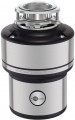 | 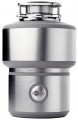 |
|---|---|---|
| In-Sink-Erator Evolution 250 | In-Sink-Erator Evolution 200 | |
from £549.00 | from £549.00 | |
| User reviews | ||
| TOP sellers | ||
3-level grinding system. Amplifier. Auto reverse. Air switch included. Low noise level. Six year warranty. | 3-level grinding system. Amplifier. Auto reverse. Air switch included. Low noise level. Six year warranty. Continuous supply of food waste. | |
| Power | 0.75 hp | 0.75 hp |
| Number of revolutions | 1425 rpm | 1425 rpm |
| Chamber capacity | 1180 mL | 1180 mL |
| Grinding stages | 3 | 3 |
| Chamber material | metal | metal |
| Auto-reverse |  | |
| Overload protection | | |
| Noise level | 23 dB | 25 dB |
| Dimensions (HxD) | 344x234 mm | 344x234 mm |
| Weight | 11.6 kg | 11.6 kg |
| Manufacturer's warranty | 8 years | 6 years |
| Added to E-Catalog | march 2017 | february 2014 |


Compare In-Sink-Erator Evolution 250 and Evolution 200
"In-Sink-Erator Evolution 250" and "In-Sink-Erator Evolution 200" grinders have similar features, such as 0.75 HP power, 1180 ml chamber capacity, and 3 grinding stages. However, the Evolution 250 stands out with a lower noise level of 23 dB compared to 25 dB for the Evolution 200, making it slightly quieter in operation. It is also worth noting that the Evolution 250 comes with an 8-year warranty, while the Evolution 200 has a 6-year warranty. Both devices have auto-reverse and overload protection, ensuring reliability and efficiency in food waste processing.
You may be interested in
In-Sink-Erator Evolution 250 often compared


In-Sink-Erator Evolution 200 often compared


Glossary
Noise level
The average noise level generated by the device during normal operation.
A waste disposal unit that produces less noise is more convenient to use, especially in situations where loud noises are unwanted, such as having a baby in the house or working in the kitchen late at night. However, it's important to consider that a powerful motor and a metal chamber may increase the noise level despite having advanced features.
Decibel values are used to indicate the noise level of waste disposal units, and it is a non-linear quantity. The easiest way to assess the noise is by comparing values in tables. Below is a simple table of noise values that are relevant for modern devices:
— 25 – 26 dB — the volume of a person's whisper at a distance of about 1 m, the noise level of the quietest models;
— 30 dB — the noise level that is acceptable for residential premises at night according to health regulations is equivalent to a soft whisper or a constant background noise at its maximum volume.;
— 35 dB — talking in an undertone;
— 40 dB — normal speech, the maximum volume of a constant background noise, permissible in living quarters during the day;
— 50 dB — conversation in slightly raised tones;
— 60 dB — loud conversation;
— 70 dB — The noise level of several loud conversations occurring within a range of approximately 1 m from each other;
— 73 – 75 dB — scream or loud laughter; the maximum noise level enco...untered in waste disposal units.
A waste disposal unit that produces less noise is more convenient to use, especially in situations where loud noises are unwanted, such as having a baby in the house or working in the kitchen late at night. However, it's important to consider that a powerful motor and a metal chamber may increase the noise level despite having advanced features.
Decibel values are used to indicate the noise level of waste disposal units, and it is a non-linear quantity. The easiest way to assess the noise is by comparing values in tables. Below is a simple table of noise values that are relevant for modern devices:
— 25 – 26 dB — the volume of a person's whisper at a distance of about 1 m, the noise level of the quietest models;
— 30 dB — the noise level that is acceptable for residential premises at night according to health regulations is equivalent to a soft whisper or a constant background noise at its maximum volume.;
— 35 dB — talking in an undertone;
— 40 dB — normal speech, the maximum volume of a constant background noise, permissible in living quarters during the day;
— 50 dB — conversation in slightly raised tones;
— 60 dB — loud conversation;
— 70 dB — The noise level of several loud conversations occurring within a range of approximately 1 m from each other;
— 73 – 75 dB — scream or loud laughter; the maximum noise level enco...untered in waste disposal units.