
Comparison In-Sink-Erator Model 66 vs In-Sink-Erator Model 75
Add to comparison | 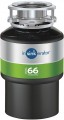 | 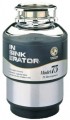 |
|---|---|---|
| In-Sink-Erator Model 66 | In-Sink-Erator Model 75 | |
from £506.21 | from $250.00 | |
| User reviews | ||
| TOP sellers | ||
Plastic camera. | ||
| Power | 0.75 hp | 0.75 hp |
| Number of revolutions | 1725 rpm | 1425 rpm |
| Chamber capacity | 980 mL | |
| Grinding stages | 1 | 1 |
| Chamber material | plastic | plastic |
| Auto-reverse |  | |
| Overload protection | | |
| Dimensions (HxD) | 318x185 mm | 321x210 mm |
| Weight | 8.2 kg | |
| Manufacturer's warranty | 4 years | |
| Added to E-Catalog | november 2015 | march 2014 |


Compare In-Sink-Erator Model 66 and Model 75
You may be interested in
In-Sink-Erator Model 66 often compared


In-Sink-Erator Model 75 often compared


Glossary
Number of revolutions
The motor shaft's nominal speed is a crucial factor in the operation of the waste disposal unit, as it determines the speed of processing. Models with higher nominal speeds can process waste faster than those with lower speeds, provided that their power and other features are equal. However, high speed can also lead to increased noise levels and a reduced ability to handle solid particles.
Chamber capacity
The working volume of the waste disposal unit's chamber. This parameter determines how much waste can be placed in the device in one load. For everyday use in an average family, a volume of up to 1 liter or even less (about 600 – 700 ml) is considered quite sufficient, however, there are also more capacious models.