
Comparison Philips CSS5530 vs Sony BDV-E3100
Add to comparison | 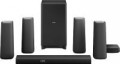 | 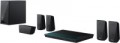 |
|---|---|---|
| Philips CSS5530 | Sony BDV-E3100 | |
| Outdated Product | from $480.00 | |
| TOP sellers | ||
Acoustic system | ||
| Acoustics | 5.1 floor / shelf | 5.1 shelf |
| Front (RMS) | 40 W/channel | 125 W/channel |
| Rear (RMS) | 40 W/channel | 125 W/channel |
| Centre (RMS) | 40 W/channel | 250 W/channel |
| Subwoofer (RMS) | 220 W/channel | 250 W/channel |
| Total power (RMS) | 420 W | 1000 W |
| Frequency range | 45 – 18000 Hz | |
| Impedance | 5 Ohm | 6 Ohm |
| Wireless connection |  |  |
| Bass reflex | | |
| Active subwoofer | | |
Amplifier | ||
| Front | 125 W/channel | |
| Rear | 125 W/channel | |
| Centre | 250 W/channel | |
| Subwoofer | 250 W | |
| Amplifier frequency range | 45 – 18000 Hz | |
Receiver | ||
| Media format | CD/DVD Blu-ray | |
| 3D | | |
| DLNA | | |
| BD-Live | | |
| 24p True Cinema | | |
| Child protection | | |
| Parental control | | |
| Multimedia | Bluetooth NFC | Smart TV FM tuner Bluetooth Wi-Fi NFC |
| Video file formats | DVD/VCD MPEG4 AVCHD MKV VC-1 | |
| Other file formats | MP3/WMA JPEG | |
| Audio decoders | Dolby Digital Dolby Pro Logic II | DTS DTS-HD High Resolution Dolby Digital Dolby Digital Plus Dolby Pro Logic II Dolby TrueHD |
Connection | ||
| Outputs | Dolby Digital 5.1 | |
| HDMI | 1 pc | 1 pc |
| Inputs | linear optical | USB input linear optical LAN (RJ45) |
General | ||
| Remote control | | |
| Satellite body material | plastic | |
| Player dimensions (WxHxD) | 430x50x296 mm | |
| Front speaker dimensions (HxWxD) | 30x11x11 cm | 20.5x9x9 cm |
| Rear speaker dimensions (HxWxD) | 30x11x11 cm | 20.5x9x9 cm |
| Centre channel dimensions (HxWxD) | 58x5x10 cm | 9x24x8.5 cm |
| Subwoofer dimensions (HxWxD) | 41x23x37 cm | 30.5x22x25.5 cm |
| Color | ||
| Added to E-Catalog | april 2016 | february 2015 |


Compare Philips CSS5530 and Sony BDV-E3100
You may be interested in
Philips CSS5530 often compared


Glossary
Front (RMS)
Rated output of one front channel of a home theater system. This paragraph indicates the power of the complete front speaker, however, it can also be used to determine the characteristics of the built-in amplifier — its rated power on a particular channel (not necessarily the front one), usually, slightly exceeds the power of the corresponding speaker.
Rated power in this case is the highest average (root mean square, RMS) sound power that the speaker is capable of delivering for an unlimited time, working without failures and overloads. Individual signal jumps can be stronger, but the power of acoustics is determined precisely by RMS.
The higher this indicator(regardless of whether we are talking about front or some other speakers) — the louder the speakers, the better they are suitable for large rooms. At the same time, in a small room, too high power may be unnecessary, because. operating the speaker at full volume will cause discomfort — despite the fact that powerful acoustics also have the appropriate dimensions, weight and price. More detailed recommendations on the optimal power of the speaker components, depending on the characteristics of the situation, can be found in special sources.
Rated power in this case is the highest average (root mean square, RMS) sound power that the speaker is capable of delivering for an unlimited time, working without failures and overloads. Individual signal jumps can be stronger, but the power of acoustics is determined precisely by RMS.
The higher this indicator(regardless of whether we are talking about front or some other speakers) — the louder the speakers, the better they are suitable for large rooms. At the same time, in a small room, too high power may be unnecessary, because. operating the speaker at full volume will cause discomfort — despite the fact that powerful acoustics also have the appropriate dimensions, weight and price. More detailed recommendations on the optimal power of the speaker components, depending on the characteristics of the situation, can be found in special sources.
Rear (RMS)
Rated output of one home theater rear channel. For more information about the meaning of this parameter, see "Front" above.
Centre (RMS)
Rated power of one centre channel of a home theater. For more information about the meaning of this parameter, see "Front" above.
Subwoofer (RMS)
Rated power of the subwoofer supplied with the home theater. See "Front" above for details on power rating; here we note that subwoofers often have a fairly high power, because. they are designed to cover low frequencies in all audio channels.
Total power (RMS)
The total power rating of all home theater speakers, including subwoofers. The value of the rated power is described in detail in paragraph "Front" above.
Frequency range
The range of audio frequencies reproduced by a home theater speaker system. The wider the range — the richer the sound, the less likely it is that the acoustics will “cut off” part of the low or high frequencies. When evaluating this indicator, one should proceed from the fact that the range perceived by the average human ear is from 16 Hz to 20 kHz. However, modern home cinemas for the most part cover this range completely or almost completely.
Impedance
Home theater speaker system AC impedance. Impedance matters when connected to an amplifier: if the impedance of the speaker system is less than that of the amplifier, distortion in sound is possible, if it is higher, the acoustics may sound quieter than we would like. Naturally, in the original home theater sets, the speakers and amplifier are selected with the optimal impedance ratio, so in fact you only have to pay attention to this parameter when you need to connect acoustics to a “non-native” amplifier.
Wireless connection
The ability to connect speakers to the base via a wireless interface — most often a radio. The main advantage of this connection is the absence of connecting wires, which significantly limit the movement of the speakers and can interfere, getting confused with each other and with other wires. The disadvantages of wireless speakers are often lower sound quality than wired counterparts, as well as high cost.
Active subwoofer
Subwoofer with its own built-in power amplifier. The presence of such an amplifier allows you to "unload" the main amplifier of the cinema, which has a positive effect on the overall volume and sound quality of the speaker system. In addition, active subwoofers are often equipped with fine-tuning tools that allow you to achieve the desired sound quality without moving the subwoofer around the room.