
Comparison Lowrance Hook 5 vs Lowrance Hook 4
Add to comparison | 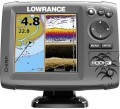 | 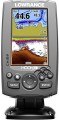 |
|---|---|---|
| Lowrance Hook 5 | Lowrance Hook 4 | |
from $473.86 up to $747.04 | from £270.04 | |
| TOP sellers | ||
| Type | fish finder-chartplotter | fish finder-chartplotter |
Specs | ||
| Scan depth | 762 m | 762 m |
| Number of beams of radiation | 2 | 2 |
| Number of frequencies | 4 | 4 |
| Radiation frequency | 83/200/455/800 kHz | 83/200/455/800 kHz |
| Emitter power | 500 W | 500 W |
| CHIRP Technology |  | |
| Bottom scan | | |
| Digital data processing |  | |
Display specs | ||
| Display | 5 " 480x480 px colour backlight | 4.3 " 480x272 px colour backlight |
Features | ||
| Functions | Sound alarm Determination of the distance to the fish Indication of symbols in the form of fish Real time fish display Shallow/shoal Auto-change depth scale Depth display range Water temperature indicator | Sound alarm Determination of the distance to the fish Indication of symbols in the form of fish Real time fish display Shallow/shoal Auto-change depth scale Depth display range Water temperature indicator |
| Connection interfaces | NMEA | NMEA |
Specs of the chartplotter | ||
| GPS module | | |
| Memory card slot | | |
| Base map | | |
| Adding new maps | | |
| Waypoints | 3000 | 3000 |
| Number of routes | 100 | 100 |
| Number of points in the route | 10000 | 10000 |
General | ||
| Key backlight | | |
| Dust and water protection | | |
| Power source | 12 В | 12 В |
| Dimensions | 174x63x136 mm | 96x56x168 mm |
| Added to E-Catalog | march 2016 | march 2016 |


Compare Lowrance Hook 5 and Hook 4
You may be interested in
Lowrance Hook 5 often compared


Lowrance Hook 4 often compared


Glossary
Digital data processing
The presence of a digital data processing system (DSP) in the design of the echo sounder.
Digital processing allows you to separate the received signal into extraneous noise and useful data. Of course, such a division is not 100% reliable; however, the level of noise in the filtered signal is still significantly reduced, and the screen receives a maximum of useful information and a minimum of extraneous information. The disadvantage of this function is traditional: echo sounders with DSP are somewhat more expensive than usual ones.
Digital processing allows you to separate the received signal into extraneous noise and useful data. Of course, such a division is not 100% reliable; however, the level of noise in the filtered signal is still significantly reduced, and the screen receives a maximum of useful information and a minimum of extraneous information. The disadvantage of this function is traditional: echo sounders with DSP are somewhat more expensive than usual ones.
Display
— Screen size. Diagonal screen size in inches. The larger the screen, the more information can be displayed on it and the more detailed this information can be. On the other hand, this parameter noticeably affects the dimensions of the device, and large screens are expensive, especially since you need the appropriate resolution for normal image quality (see below).
— Touch. The presence of a sensor in the design of the display. This feature allows you to control the device by touching the icons on the screen — similar to how it is done in smartphones and tablets. Touch control provides more options than the classic one, using buttons and switches, besides it is more visual — however, such devices are more expensive.
— Display resolution. Display size in dots (pixels) horizontally and vertically. The higher the resolution, the more detailed image the screen is able to produce, the smaller objects can be clearly displayed on it and the more comfortable viewing. At the same time, the specificity of echo sounders is such that too high resolution is not required even for high-end models: for example, modest by the standards of smartphones or tablets 640x480 with a 5" screen are considered quite sufficient even for an advanced device.
— Colour. The ability of a screen to display colours. In this case, the simplest division is used:
Monochrome.... Displays that display information only in shades of one colour. Theoretically, the main colour can be any, but in this case, the vast majority of monochrome screens are black and white. Their advantages are low cost and energy consumption, as well as good visibility in the sun; at the same time, such an image allows you to work with quite a variety of types of data, which is enough even for very advanced echo sounders (see "Type"). However, this variety is not as wide as for colour displays, as a result, for chartplotters (see ibid.), such an image is not suitable — if it is impossible to display different colours, some of the important information on the maps is lost.
Coloured. Screens capable of working with multiple colours. The variety of colours can be quite small, but the image still turns out to be more informative than black and white: different colours can indicate different depths on the map, water temperature changes, etc. Due to this, this type of display is found in all types of navigation devices (see above). Its main disadvantage can be called a higher cost than that of monochrome screens.
— Backlight. The screen has its own backlight system. This feature makes the display independent of ambient light and allows you to see the information on it even in complete darkness. At the same time, the backlight increases power consumption, which is important during long-term operation from an autonomous source (for example, a boat battery). Therefore, it can be turned off.
— Touch. The presence of a sensor in the design of the display. This feature allows you to control the device by touching the icons on the screen — similar to how it is done in smartphones and tablets. Touch control provides more options than the classic one, using buttons and switches, besides it is more visual — however, such devices are more expensive.
— Display resolution. Display size in dots (pixels) horizontally and vertically. The higher the resolution, the more detailed image the screen is able to produce, the smaller objects can be clearly displayed on it and the more comfortable viewing. At the same time, the specificity of echo sounders is such that too high resolution is not required even for high-end models: for example, modest by the standards of smartphones or tablets 640x480 with a 5" screen are considered quite sufficient even for an advanced device.
— Colour. The ability of a screen to display colours. In this case, the simplest division is used:
Monochrome.... Displays that display information only in shades of one colour. Theoretically, the main colour can be any, but in this case, the vast majority of monochrome screens are black and white. Their advantages are low cost and energy consumption, as well as good visibility in the sun; at the same time, such an image allows you to work with quite a variety of types of data, which is enough even for very advanced echo sounders (see "Type"). However, this variety is not as wide as for colour displays, as a result, for chartplotters (see ibid.), such an image is not suitable — if it is impossible to display different colours, some of the important information on the maps is lost.
Coloured. Screens capable of working with multiple colours. The variety of colours can be quite small, but the image still turns out to be more informative than black and white: different colours can indicate different depths on the map, water temperature changes, etc. Due to this, this type of display is found in all types of navigation devices (see above). Its main disadvantage can be called a higher cost than that of monochrome screens.
— Backlight. The screen has its own backlight system. This feature makes the display independent of ambient light and allows you to see the information on it even in complete darkness. At the same time, the backlight increases power consumption, which is important during long-term operation from an autonomous source (for example, a boat battery). Therefore, it can be turned off.