
Comparison Little Doctor LD-22 vs Little Doctor LD-4
Add to comparison | 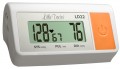 | 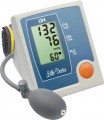 |
|---|---|---|
| Little Doctor LD-22 | Little Doctor LD-4 | |
from $21.16 up to $22.26 | from $24.40 up to $32.72 | |
| TOP sellers | ||
| Type | semi-automatic | semi-automatic |
| Place of measurement | shoulder | shoulder |
| Power source | batteries | batteries |
| Device dimensions | 129x68x54 mm | 120x120x117 mm |
Specs | ||
| Pressure measuring range | 40 – 260 mmHg | 40 – 260 mmHg |
| Pulse measurement range | 40 – 160 bpm | 40 – 160 bpm |
| Cuff dimensions | 25 – 36 cm | 25 – 36 cm |
Features | ||
| Functions | pulse measurement measurement error signal | pulse measurement determination of arrhythmia |
| Added to E-Catalog | june 2016 | february 2012 |


Compare Little Doctor LD-22 and LD-4
You may be interested in
Little Doctor LD-22 often compared


Glossary
Functions
— Pulse measurement. The ability to use a blood pressure monitor to measure heart rate (pulse). This frequency, along with blood pressure, is one of the most important indicators of the state of the cardiovascular system.
— Determination of arrhythmia. Blood pressure monitors with this feature are able to track irregularities in the heartbeat (arrhythmia) — one of the important signals of health problems — and warn the user about it.
— Medium pressure calculation. This function allows you to automatically calculate the average pressure based on several consecutive measurements.
— Signal about measurement errors. Blood pressure monitors with this function are able to display error signals that can affect the accuracy of measurements — such as incorrect cuff application, air leakage from it, movement during measurement, device electronics failure, etc.
— Auto switch-off. Most semi-automatic and automatic models of blood pressure monitors are able to automatically turn off after a few minutes of inactivity. This saves battery power.
— Synchronization with PC. In this case, a wired connection is implied, not Bluetooth. Synchronization of the blood pressure monitor with a PC allows you to track...all the measurement results in one table (in some models — even with the date and time), save the results to the PC, freeing up the device's memory, select measurements for calculating the average pressure, etc.
— Bluetooth. The presence of wireless data transfer technology allows you to use the features described in the paragraph "Synchronization with a PC" by connecting to a smartphone and using a special application. This method is more mobile, easier and faster.
— Voicing the measurements. Such blood pressure monitors are able not only to display the measurement results on the screen, but also to voice them, which can be very useful for elderly people with poor eyesight.
— Date and time indication. Having the ability to display the current date and time is useful for recording blood pressure measurements and tracking them over time. Blood pressure monitors equipped with a clock and calendar feature can automatically store measured pressure results in memory, associating them with specific date and time stamps when there is a recording mode.
— WHO colour scale. The World Health Organization has established standards defining normal, low, or elevated blood pressure values. These standards incorporate a color scale that, after each measurement, aids in assessing the pressure status and determining appropriate actions. It's important to note that individual variations exist, and what constitutes normal pressure differs for each person. Therefore, these standards are generally advisory, providing guidance rather than prescribing specific actions.
— Determination of arrhythmia. Blood pressure monitors with this feature are able to track irregularities in the heartbeat (arrhythmia) — one of the important signals of health problems — and warn the user about it.
— Medium pressure calculation. This function allows you to automatically calculate the average pressure based on several consecutive measurements.
— Signal about measurement errors. Blood pressure monitors with this function are able to display error signals that can affect the accuracy of measurements — such as incorrect cuff application, air leakage from it, movement during measurement, device electronics failure, etc.
— Auto switch-off. Most semi-automatic and automatic models of blood pressure monitors are able to automatically turn off after a few minutes of inactivity. This saves battery power.
— Synchronization with PC. In this case, a wired connection is implied, not Bluetooth. Synchronization of the blood pressure monitor with a PC allows you to track...all the measurement results in one table (in some models — even with the date and time), save the results to the PC, freeing up the device's memory, select measurements for calculating the average pressure, etc.
— Bluetooth. The presence of wireless data transfer technology allows you to use the features described in the paragraph "Synchronization with a PC" by connecting to a smartphone and using a special application. This method is more mobile, easier and faster.
— Voicing the measurements. Such blood pressure monitors are able not only to display the measurement results on the screen, but also to voice them, which can be very useful for elderly people with poor eyesight.
— Date and time indication. Having the ability to display the current date and time is useful for recording blood pressure measurements and tracking them over time. Blood pressure monitors equipped with a clock and calendar feature can automatically store measured pressure results in memory, associating them with specific date and time stamps when there is a recording mode.
— WHO colour scale. The World Health Organization has established standards defining normal, low, or elevated blood pressure values. These standards incorporate a color scale that, after each measurement, aids in assessing the pressure status and determining appropriate actions. It's important to note that individual variations exist, and what constitutes normal pressure differs for each person. Therefore, these standards are generally advisory, providing guidance rather than prescribing specific actions.