
Comparison AKG D5 CS vs AKG D5 S
Add to comparison | 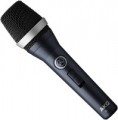 | 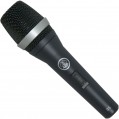 |
|---|---|---|
| AKG D5 CS | AKG D5 S | |
from £141.91 | Compare prices 2 | |
| TOP sellers | ||
Supercardioid. Dual layer Laminate-Varimotion diaphragm. Resistant to high sound pressure levels. Effective feedback suppression. Pure sound transmission. Wind protection. | ||
| Microphone | vocal | vocal |
| Operating principle | dynamic | dynamic |
Specs | ||
| Microphone directivity | unidirectional | unidirectional |
| Directional pattern | cardioid | supercardioid |
| Rated resistance | 600 Ohm | 600 Ohm |
| Frequency range | 20 – 17000 Hz | 70 – 20000 Hz |
| Sensitivity | -52 dB | -52 dB |
| Sound pressure | 160 dB | 156 dB |
Functions and connectors | ||
| Features | mute button | mute button |
| Connection | XLR | XLR |
General | ||
| Material | metal | metal |
| Size | 185x51x51 mm | 182x51x51 mm |
| Weight | 320 g | 340 g |
| In box | rack holder case | rack holder case |
| Color | ||
| Added to E-Catalog | april 2016 | february 2015 |



Compare AKG D5 CS and D5 S
You may be interested in
My comparisons
Glossary
Directional pattern
The polar pattern of a unidirectional microphone (see above). There are models with DN switching.
By itself, such a diagram is a graph of sensitivity versus direction, built in the so-called polar coordinate system. For unidirectional models, there are three main options for the shape of the line on such a chart:
— Cardioid. A chart shaped like an inverted heart symbol (hence the name). Microphones with these characteristics cover a fairly large area in front, which makes it difficult to filter out extraneous sound sources that are close to the main source. At the same time, they are completely insensitive to sound coming from the rear.
— Supercardioid. These mics have a narrower front coverage than "classic" cardioid mics, making it easier to pick up directional sound. The downside of this is some (albeit rather low) sensitivity to sound coming directly from behind.
— Hypercardioid. The hypercardioid pattern further narrows the microphone's sensitivity zone in the front (compared to the supercardioid pattern), but widens this zone in the back.
By itself, such a diagram is a graph of sensitivity versus direction, built in the so-called polar coordinate system. For unidirectional models, there are three main options for the shape of the line on such a chart:
— Cardioid. A chart shaped like an inverted heart symbol (hence the name). Microphones with these characteristics cover a fairly large area in front, which makes it difficult to filter out extraneous sound sources that are close to the main source. At the same time, they are completely insensitive to sound coming from the rear.
— Supercardioid. These mics have a narrower front coverage than "classic" cardioid mics, making it easier to pick up directional sound. The downside of this is some (albeit rather low) sensitivity to sound coming directly from behind.
— Hypercardioid. The hypercardioid pattern further narrows the microphone's sensitivity zone in the front (compared to the supercardioid pattern), but widens this zone in the back.
Frequency range
The range of audio frequencies normally perceived and processed by a microphone.
The wider this range — the fuller the signal, the less likely that too high or low frequencies will be missed due to the imperfection of the microphone. However, in this case, it is worth considering some nuances. First of all: a wide frequency range in itself does not guarantee high sound quality — a lot also depends on the type of microphone (see above) and its frequency response, not to mention the quality of other components of the audio system. In addition, a large width is also not always really necessary. For example, for normal transmission of human speech, a range of 500 Hz — 2 kHz is considered sufficient, which is much narrower than the general range perceived by the human ear. This general range, in turn, averages from 16 Hz to 22 kHz, and also narrows with age. Do not forget about the features of the equipment to which the microphone is connected: it is hardly worth specifically looking for a model with an extensive range, if, for example, the amplifier to which it is planned to be connected severely “cuts off” the frequencies from above and/or below.
The wider this range — the fuller the signal, the less likely that too high or low frequencies will be missed due to the imperfection of the microphone. However, in this case, it is worth considering some nuances. First of all: a wide frequency range in itself does not guarantee high sound quality — a lot also depends on the type of microphone (see above) and its frequency response, not to mention the quality of other components of the audio system. In addition, a large width is also not always really necessary. For example, for normal transmission of human speech, a range of 500 Hz — 2 kHz is considered sufficient, which is much narrower than the general range perceived by the human ear. This general range, in turn, averages from 16 Hz to 22 kHz, and also narrows with age. Do not forget about the features of the equipment to which the microphone is connected: it is hardly worth specifically looking for a model with an extensive range, if, for example, the amplifier to which it is planned to be connected severely “cuts off” the frequencies from above and/or below.
Sound pressure
The maximum sound pressure perceived by the microphone, at which the harmonic oscillation coefficient does not exceed 0.5% — in other words, the highest sound volume at which no noticeable interference occurs.
The higher this indicator, the better the microphone is suitable for working with loud sound. Here it is worth considering that the decibel is a non-linear quantity; in other words, an increase in volume from 10 dB to 20 dB or from 20 to 40 dB does not mean a 2-fold increase in volume. Therefore, when assessing, it is most convenient to refer to comparative tables of noise levels. Here are some examples: a level of 100 dB roughly corresponds to a motorcycle engine or subway car noise; 110 dB — helicopter; 120 dB — the work of a demolition hammer; 130 dB, comparable to the sound of a jet aircraft taking off, is considered a pain threshold for a person. At the same time, many high-end microphones are able to work normally at a sound pressure of 140 – 150 dB — and this is a noise level that can cause physical damage to a person.
The higher this indicator, the better the microphone is suitable for working with loud sound. Here it is worth considering that the decibel is a non-linear quantity; in other words, an increase in volume from 10 dB to 20 dB or from 20 to 40 dB does not mean a 2-fold increase in volume. Therefore, when assessing, it is most convenient to refer to comparative tables of noise levels. Here are some examples: a level of 100 dB roughly corresponds to a motorcycle engine or subway car noise; 110 dB — helicopter; 120 dB — the work of a demolition hammer; 130 dB, comparable to the sound of a jet aircraft taking off, is considered a pain threshold for a person. At the same time, many high-end microphones are able to work normally at a sound pressure of 140 – 150 dB — and this is a noise level that can cause physical damage to a person.