
Comparison Liebherr IG 1024 vs Liebherr IG 1014
Add to comparison | 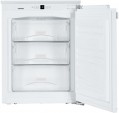 | 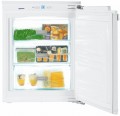 |
|---|---|---|
| Liebherr IG 1024 | Liebherr IG 1014 | |
from $797.36 up to $885.96 | from $766.00 up to $885.96 | |
| TOP sellers | ||
| Product type | freezer | freezer |
| Capacity | 73 L | 74 L |
| Number of compartments | 3 | 3 |
Features | ||
| Minimum temperature | -24 °C | -24 °C |
| Power failure autonomy | 24 h | 26 h |
| Freeze capacity | 11 kg/day | 11 kg/day |
| Fast freeze |  | |
| Reversible door | | |
| Door alarm | sound | + |
More specs | ||
| Controls | push-buttons | push-buttons |
| Display | | |
| Child lock | |  |
| Energy class | A++ | A++ |
| Energy consumption per year | 131 kWh | 144 kWh |
| Climate class | SN, N, ST, T (+10...+43 °С) | SN, N, ST, T (+10...+43 °С) |
| Noise level | 35 dB | 36 dB |
| Door panel hinge | rigid mount | rigid mount |
| Dimensions (HxWxD) | 72x56x54 cm | 72x56x55 cm |
| Embedded dimensions (HxWxD) | 720x560x550 mm | 720x560x550 mm |
| Country of origin | Germany | Germany |
| Added to E-Catalog | march 2017 | june 2014 |


Compare Liebherr IG 1024 and IG 1014
You may be interested in
My comparisons
Liebherr IG 1024 often compared


Liebherr IG 1014 often compared


Glossary
Capacity
The total working volume of the freezer compartment. A larger volume allows for more products to be stored, but it affects the size and cost of the unit; therefore, when choosing based on this parameter, it's important not to chase maximum capacity but to consider what volume you actually need. For example, for household use, the average necessary volume is 50 liters per person; and when choosing a display freezer (see "Type"), you need to consider the number of products to be sold. More detailed recommendations for selecting the optimal volume can be found in specialized sources.
It is also worth considering that the freezer is often divided into several compartments (see below) — which means that a large volume does not necessarily guarantee that large pieces of products can fit into the device.
It is also worth considering that the freezer is often divided into several compartments (see below) — which means that a large volume does not necessarily guarantee that large pieces of products can fit into the device.
Power failure autonomy
The amount of time the freezer keeps food cold enough when the refrigeration system is turned off, for example, due to a breakdown or power outage. Technically, the power failure autonomy for each model is calculated differently; For example, for a freezer with an operating temperature of -18 ° C, this is the period during which the products in the chamber heat up from -18 ° C to -9 ° C. To sum up, the time is indicated during which the frozen products are guaranteed not to heat up to a temperature at which they could lose their properties.
Door alarm
It is a system that monitors the closing of the freezer door. If the door is not closed for a long time or is not closed tightly enough, an audible or light (depending on the model) signal is given. It helps to avoid a critical increase in temperature in the working chamber and preserves the quality of the products.
Child lock
The child lock allows you to block freezer controls and/or access to its internal volumes. This function will be useful in families where there are small children. Thus, the child will not be able to get to the freezer controls and change its operation mode.
Energy consumption per year
It is the average amount of energy consumed by the freezer in a year of operation. Of course, these figures are not absolutely accurate. The actual power consumption may vary depending on the specific operating conditions. However, this parameter makes it possible to evaluate the consumption of the device and compare different models with each other. At the same time, it often turns out to be more convenient and visual than the energy consumption class (see above) because, in this paragraph, we are talking about a specific figure (from which you can also calculate the cost of electricity consumed).
Noise level
The average noise level generated by the freezer during operation. The quietest models give out about 25 - 30 dB — this is the average noise background in a residential area at night (comparable to the ticking of a wall clock); the loudest — is about 60 dB (loud conversation). More detailed comparison tables can be found in special sources.
In any case, the lower the noise level, the more comfortable the use of the unit. However, it does not always make sense to look for the quietest freezer: in some situations (for example, in a noisy workshop), the freezer's sound may be lost against the surrounding noise background. In addition, reduced noise often affects the price.
In any case, the lower the noise level, the more comfortable the use of the unit. However, it does not always make sense to look for the quietest freezer: in some situations (for example, in a noisy workshop), the freezer's sound may be lost against the surrounding noise background. In addition, reduced noise often affects the price.