
Comparison Makita SP6000 vs DeWALT DWS520K
Add to comparison | 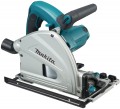 | 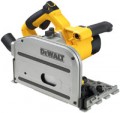 |
|---|---|---|
| Makita SP6000 | DeWALT DWS520K | |
from £451.99 | from £840.34 | |
| User reviews | ||
| TOP sellers | ||
DWS520K comes with normal case without bar, DWS520KR comes with regular case and bar, DWS520KT comes with TSTAK case without bar, and DWS520KTR comes with TSTAK case and bar | ||
| Product type | circular | circular |
| Type | portable | portable |
| Power source | mains (230 V) | mains (230 V) |
Motor | ||
| Engine location | transversely | transversely |
| Power | 1300 W | 1300 W |
| No load blade speed | 6400 rpm | 4000 rpm |
Cutting equipment | ||
| Bar/blade size | 165 mm | 165 mm |
| Bore diameter | 20 mm | 20 mm |
| Cutting depth | 56 mm | 59 mm |
| Cutting depth (45° angle) | 38 mm | 44 mm |
| Saw angle | 48 ° | 47 ° |
Protective functions | ||
| Soft start |  |  |
| Electronic motor protection | | |
| Safety clutch | | |
Features | ||
| Features | speed controller speed control | speed controller speed control |
| In box | case (bag) | |
General | ||
| Noise level | 103 dB | 103 dB |
| Cable length | 4 m | |
| Size | 341x225x250 mm | |
| Weight | 4.4 kg | 5 kg |
| Added to E-Catalog | april 2010 | december 2009 |


Compare Makita SP6000 and DeWALT DWS520K
You may be interested in
Makita SP6000 often compared


Glossary
No load blade speed
The maximum speed of the disk, provided by a saw of the appropriate design — disk, cut-off, etc. (see "Device").
Note that most of these saws use gearboxes, so that the blade revolutions are much lower than the engine revolutions (see above). This achieves an increase in torque, which in the case of saws is often more important than the high speed of the blade.
As for the specific number of revolutions, it is first of all worth noting that only saws with the same disc diameter can be compared according to this indicator. In these cases, higher speeds provide better performance, but the trade-off is reduced torque; such saws do better with relatively "light" materials. Conversely, low speeds reduce productivity, but allow the blade to effectively "bite" even into dense, stubborn workpieces. More specific recommendations regarding the choice of a saw according to the number of revolutions of the blade can be found in special sources.
Note that most of these saws use gearboxes, so that the blade revolutions are much lower than the engine revolutions (see above). This achieves an increase in torque, which in the case of saws is often more important than the high speed of the blade.
As for the specific number of revolutions, it is first of all worth noting that only saws with the same disc diameter can be compared according to this indicator. In these cases, higher speeds provide better performance, but the trade-off is reduced torque; such saws do better with relatively "light" materials. Conversely, low speeds reduce productivity, but allow the blade to effectively "bite" even into dense, stubborn workpieces. More specific recommendations regarding the choice of a saw according to the number of revolutions of the blade can be found in special sources.
Cutting depth
The greatest depth of cut provided by the saw.
In most types of saws (see “Device”), the depth of cut directly depends on both the engine power and the size of the tyre / disk. The specifications give a value for the maximum allowable size of the working nozzle; when using nozzles of a smaller size, the depth of cut, respectively, will be less. But in band saws, this depth is rather weakly related to the actual length of the tape — it is determined primarily by the length of the open section of the tape, which is directly involved in the work.
Anyway, the greater depth of cut makes the tool more versatile, but comes at the cost of weight, price, and electricity/fuel consumption. So when choosing, it is worth considering the real features of the planned work and the dimensions of the workpieces that are planned to be cut. As for specific values, the most modest tools provide a depth of up to 50 mm ; 50 – 75 mm is considered a low indicator, 75 – 100 mm is average, 100 – 125 mm is above average, 125 – 150 mm is already quite an impressive thickness, and the most powerful modern saws can have a cutting depth of more than 150 mm.
In most types of saws (see “Device”), the depth of cut directly depends on both the engine power and the size of the tyre / disk. The specifications give a value for the maximum allowable size of the working nozzle; when using nozzles of a smaller size, the depth of cut, respectively, will be less. But in band saws, this depth is rather weakly related to the actual length of the tape — it is determined primarily by the length of the open section of the tape, which is directly involved in the work.
Anyway, the greater depth of cut makes the tool more versatile, but comes at the cost of weight, price, and electricity/fuel consumption. So when choosing, it is worth considering the real features of the planned work and the dimensions of the workpieces that are planned to be cut. As for specific values, the most modest tools provide a depth of up to 50 mm ; 50 – 75 mm is considered a low indicator, 75 – 100 mm is average, 100 – 125 mm is above average, 125 – 150 mm is already quite an impressive thickness, and the most powerful modern saws can have a cutting depth of more than 150 mm.
Cutting depth (45° angle)
Maximum cutting depth achieved when sawing at a 45° bevel.
This feature is indicated only for those models that are originally designed for sawing at an angle — for example, due to the special design of the attachment for the blade / blade (in stationary models, see "Type") or due to the inclined support platform (in manual) . The maximum angle of inclination of the saw in such models can be different (see below for more details), however, 45 ° is considered the standard option, so it is for this inclination that data on the depth of cut is given.
The general meaning of this parameter is quite obvious. On the one hand, a greater depth of cut allows you to cope with thicker workpieces and generally gives you more options; on the other hand, an increase in depth requires an increase in the size of the disk / canvas and an increase in power, which, accordingly, affects the price, dimensions and consumption of electricity / fuel.
This feature is indicated only for those models that are originally designed for sawing at an angle — for example, due to the special design of the attachment for the blade / blade (in stationary models, see "Type") or due to the inclined support platform (in manual) . The maximum angle of inclination of the saw in such models can be different (see below for more details), however, 45 ° is considered the standard option, so it is for this inclination that data on the depth of cut is given.
The general meaning of this parameter is quite obvious. On the one hand, a greater depth of cut allows you to cope with thicker workpieces and generally gives you more options; on the other hand, an increase in depth requires an increase in the size of the disk / canvas and an increase in power, which, accordingly, affects the price, dimensions and consumption of electricity / fuel.
Saw angle
The maximum angle at which the working part of the saw can be tilted relative to the vertical. It can be indicated not only for stationary tools, but also for manual ones — in the event that the design provides for a support platform. It is worth paying attention to this parameter if you have to deal with oblique cuts: making such cuts by setting the saw to a certain angle is much more convenient than adjusting this angle manually.
Soft start
A function that starts the engine smoothly without a sudden jerk and gradually brings the tool up to working speed. It makes the start safer and more comfortable because the saw doesn't jerk in your hands at the moment of activation. In practice, soft start is convenient when you need to make a precise cut in mid-air, work in an awkward position, or simply better control the tool from the first seconds.
Compared to models without such a function, the load on the hands, gearbox, and power network is lower. This is especially useful for powerful circular, reciprocating, and chain saws, where a sudden start is felt most strongly.
Electronic motor protection
Electronic motor protection in a saw controls the load on the motor and helps protect it from overheating, overload, or damage. If the tool is operating in a mode that is too heavy, the system can limit power, shut off the engine, or prevent it from overheating. This is beneficial not only for user safety but also for extending the lifespan of the saw itself. For example, when cutting dense wood, wet timber, or during long continuous work, such a feature helps avoid costly breakdowns.
Safety clutch
Protective mechanism that disengages the drive when the equipment suddenly jams. Its purpose is to prevent the tool from transmitting the full impact to the user's hands and at the same time reduce the load on the engine and gearbox. Compared to models without such protection, the saw behaves more safely if the blade or chain suddenly gets stuck in the material. Safety clutch is especially important when working with dense wood, knots, wet workpieces, and complex cuts. In practice, it helps avoid sudden tool jerks and reduces the risk of damage to internal components.
In box
- Disc. The presence of a saw blade is included in the delivery set of the circular tool. It can be either one or several, which allows you to use the saw “out of the box” without the need to purchase additional consumables. If you already have a saw blade or intend to select it for specific tasks, it is worth taking a closer look at the configurations without a blade - they are usually cheaper.
- Chain. One or more chains included as standard with the saw. The presence of a chain with teeth for cutting allows you to do without purchasing a separate executive body for chain saw. However, there are configurations without a chain - it is assumed that the customer already has a chain or he will select the required option himself.
— Saw blade. The presence of one or more saw blades in the complete set of a reciprocating or band tool. They ensure that the saw is ready for use literally immediately after unpacking. There are also configurations of reciprocating or band models without a saw blade - they are cheaper, and the customer has the right to choose a suitable blade independently.
— Dust collector. A dust collector is included with the saw. The dust collector is a container for collecting sawdust and other d...ebris generated during operation; As a rule, such a container is made removable. Installing a dust collector slightly increases the dimensions of the entire tool, but this is compensated by cleanliness and convenience: dust and other production waste mostly settle in the container and not on surrounding objects.
- Charger. The presence of a charging block in the package allows you to charge batteries. Accordingly, for models with batteries, this accessory is necessary to power the battery. However, there are models without a charger. And saw with it may differ in the charger model, the name of which will allow you to learn more about its characteristics and, if necessary or if required (breakdown), purchase a similar one.
— Case (bag). Availability of a case or bag included with the instrument. A case is a container-suitcase made of hard material; bags are usually made of soft material. This way the case provides maximum protection and the bag can be folded away compactly when not in use. The specific type of case that comes with the saw should be specified separately. However, in any case, a complete case or bag will be more convenient for storing and transporting the instrument than impromptu packaging.
- Stand. The stand makes the saw tool more stable, reliable and safe. The presence of a stand is typical for stationary type saw. Mostly these are powerful, productive, large and heavy models that are located in a separate place. The stand can be implemented either with classic legs (bed) or with a cabinet with a tool compartment. The stand can be equipped with various types of saw: circular saw, miter saw, band saw, cutting saw and even chain saw (with electric drive).
— Wheels for transportation. Transport wheels make it easy to move sawing equipment around the shop. The presence of wheels will come in handy when the saw needs to be moved a little to install some large workpieces or simply when cleaning the workshop. As a rule, wheels are typical for stationary saw with a table top or work holder.
- Chain. One or more chains included as standard with the saw. The presence of a chain with teeth for cutting allows you to do without purchasing a separate executive body for chain saw. However, there are configurations without a chain - it is assumed that the customer already has a chain or he will select the required option himself.
— Saw blade. The presence of one or more saw blades in the complete set of a reciprocating or band tool. They ensure that the saw is ready for use literally immediately after unpacking. There are also configurations of reciprocating or band models without a saw blade - they are cheaper, and the customer has the right to choose a suitable blade independently.
— Dust collector. A dust collector is included with the saw. The dust collector is a container for collecting sawdust and other d...ebris generated during operation; As a rule, such a container is made removable. Installing a dust collector slightly increases the dimensions of the entire tool, but this is compensated by cleanliness and convenience: dust and other production waste mostly settle in the container and not on surrounding objects.
- Charger. The presence of a charging block in the package allows you to charge batteries. Accordingly, for models with batteries, this accessory is necessary to power the battery. However, there are models without a charger. And saw with it may differ in the charger model, the name of which will allow you to learn more about its characteristics and, if necessary or if required (breakdown), purchase a similar one.
— Case (bag). Availability of a case or bag included with the instrument. A case is a container-suitcase made of hard material; bags are usually made of soft material. This way the case provides maximum protection and the bag can be folded away compactly when not in use. The specific type of case that comes with the saw should be specified separately. However, in any case, a complete case or bag will be more convenient for storing and transporting the instrument than impromptu packaging.
- Stand. The stand makes the saw tool more stable, reliable and safe. The presence of a stand is typical for stationary type saw. Mostly these are powerful, productive, large and heavy models that are located in a separate place. The stand can be implemented either with classic legs (bed) or with a cabinet with a tool compartment. The stand can be equipped with various types of saw: circular saw, miter saw, band saw, cutting saw and even chain saw (with electric drive).
— Wheels for transportation. Transport wheels make it easy to move sawing equipment around the shop. The presence of wheels will come in handy when the saw needs to be moved a little to install some large workpieces or simply when cleaning the workshop. As a rule, wheels are typical for stationary saw with a table top or work holder.
Cable length
The length of the network cable can tell you how far from the outlet you can operate the device. Therefore, for domestic use, it is more relevant to choose models with a short cord, for construction work or use in production, in the garage a longer cable is better.