
Comparison Nomi Play vs Sven PS-250BL
Add to comparison |  | 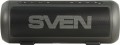 |
|---|---|---|
| Nomi Play | Sven PS-250BL | |
| Outdated Product | Outdated Product | |
| User reviews | ||
| TOP sellers | ||
Pen. Rubberized inserts and legs. Stereo sound. FM receiver. Card reader. Flash drive playback. Up to 20 hours of work. | ||
Connection | ||
| Sources and media | Bluetooth mini-Jack (3.5 mm) card reader FM receiver | Bluetooth mini-Jack (3.5 mm) card reader FM receiver |
Acoustic characteristics | ||
| Number of channels | 2.0 (stereo) | 2.0 (stereo) |
| Signal-to-noise ratio | 86 dB | |
| Output power | 12 W | 10 W |
| Frequency range | 150 – 20000 Hz | 100 – 22000 Hz |
| Features | speakerphone | speakerphone |
| More features | handle / strap | handle / strap |
Battery | ||
| Battery capacity | 2200 mAh | |
| Battery life | 10 h | 20 h |
| USB charging port | microUSB | microUSB |
General | ||
| Material | plastic | plastic |
| Size (HxWxD) | 233x105x77 mm | 90x230x90 mm |
| Weight | 382 g | 840 g |
| Color | ||
| Added to E-Catalog | january 2018 | july 2017 |


Compare Nomi Play and Sven PS-250BL
You may be interested in
Nomi Play often compared


Sven PS-250BL often compared


Glossary
Signal-to-noise ratio
The ratio of the level of the useful signal (the actual sound being reproduced) to the level of extraneous noise provided by the speaker amplifier in normal mode.
Any amplifier inevitably creates its own noise; You cannot get rid of them, but you can reduce their level. The higher the signal-to-noise ratio, the cleaner the sound will be, the less noticeable extraneous interference will be. However, it is worth keeping in mind that the signal-to-noise ratio is far from the only parameter that affects sound quality, and its high value does not guarantee pleasant sound from the speakers.
Any amplifier inevitably creates its own noise; You cannot get rid of them, but you can reduce their level. The higher the signal-to-noise ratio, the cleaner the sound will be, the less noticeable extraneous interference will be. However, it is worth keeping in mind that the signal-to-noise ratio is far from the only parameter that affects sound quality, and its high value does not guarantee pleasant sound from the speakers.
Output power
The total power of all channels of the speaker system. The higher the power, the larger the size of the room in which the audio system can be used, however, more powerful portable speakers usually have larger dimensions and weight.
Frequency range
The range of audio frequencies reproduced by the audio system. The wider the range, the richer the sound, the more details the speakers can convey, especially in the low and high frequencies. At the same time, we note that the average human ear is able to hear sounds in the range of about 16 – 20,000 Hz, and it makes no sense to provide a wider range in speakers — a person simply will not hear it. Also note that a wide frequency range alone does not guarantee good sound quality.
Battery capacity
Theoretically, a higher capacity allows to achieve greater battery life, but in fact, the operating time also depends on the power consumption of acoustics — and it can be very different, depending on the characteristics and design features. So this parameter is secondary, and when choosing it is worth paying attention not so much to the battery capacity, but to the directly claimed operating time (see below).
Battery life
Operating time of a portable audio system without connecting to an external power source (network or USB port, depending on the capabilities). Note that manufacturers tend to indicate battery life in their specifications under optimal conditions for energy saving: at low volume, without using additional functions, etc. Therefore, in fact, this indicator may be noticeably lower than the claimed one, and speakers with a long operating time will not sound at full volume for the specified hours.