
Comparison Makita UR3501 vs Makita UR3500
Add to comparison | 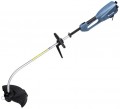 | 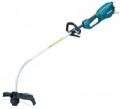 |
|---|---|---|
| Makita UR3501 | Makita UR3500 | |
| Compare prices 2 | from £142.20 | |
| User reviews | ||
| TOP sellers | ||
Shoulder strap. Telescopic rod. | ||
| Type | grass trimmer | grass trimmer |
| Motor type | electric (mains) | electric (mains) |
Mowing | ||
| Cutting width | 35 cm | 35 cm |
| Cutting system | rotary | rotary |
Trimmer design | ||
| Motor location | top | top |
| Shaft type | curved | curved |
| Handle type | loop-shaped (D-shaped) | loop-shaped (D-shaped) |
| Line diameter | 2 mm | 2 mm |
| More features | shoulder strap | shoulder strap |
In box | ||
| Nozzles | spool of line | spool of line |
Motor | ||
| Motor power | 1000 W | 700 W |
General | ||
| Deck material | plastic | plastic |
| Noise level | 80 dB | |
| Dimensions | 155x41x50 cm | 155x41x50 cm |
| Weight | 4.3 kg | 4.3 kg |
| Added to E-Catalog | april 2015 | april 2015 |




Compare Makita UR3501 and UR3500
Price comparison
You may be interested in
Makita UR3501 often compared


Glossary
Motor power
Lawnmower engine power expressed in watts. This designation is used absolutely for all electric models (see "Engine type"), and it is also often found in gasoline and diesel units along with horsepower (these units are clearly related, 1 hp is about 735 watts).
In general, the more powerful the engine, the more performant the mower and the better it will cope with heavy work such as cutting thick grass, bushes, etc. On the other hand, high power has a corresponding effect on fuel / electricity consumption, as well as the weight and price of the engine. In addition, note that the power requirements depend on the type of mower itself and its engine (see above for both). For example, for most robots, the power does not exceed 500 W — more, taking into account specialization, is not required, besides, otherwise the devices would turn out to be too bulky and heavy. Trimmers and lawn mowers of similar power are only electric, and the power limit for power tools is 2500 – 3000 W when powered from the mains and 1500 – 2000 W for battery models. But in gasoline tools, the minimum power is about 500 – 1000 W for trimmers and 1000 – 1500 W for mowers; the maximum value can exceed 4 kW.
Detailed recommendations for choosing a lawn mower d...epending on its type and features of the planned work can be found in special sources.
In general, the more powerful the engine, the more performant the mower and the better it will cope with heavy work such as cutting thick grass, bushes, etc. On the other hand, high power has a corresponding effect on fuel / electricity consumption, as well as the weight and price of the engine. In addition, note that the power requirements depend on the type of mower itself and its engine (see above for both). For example, for most robots, the power does not exceed 500 W — more, taking into account specialization, is not required, besides, otherwise the devices would turn out to be too bulky and heavy. Trimmers and lawn mowers of similar power are only electric, and the power limit for power tools is 2500 – 3000 W when powered from the mains and 1500 – 2000 W for battery models. But in gasoline tools, the minimum power is about 500 – 1000 W for trimmers and 1000 – 1500 W for mowers; the maximum value can exceed 4 kW.
Detailed recommendations for choosing a lawn mower d...epending on its type and features of the planned work can be found in special sources.
Noise level
The level of noise produced by the device during operation. Usually, a certain average indicator is indicated in the characteristics — in the standard mode of operation; however, the actual values usually do not differ much from the claimed ones.
The lower the noise level, the more convenient the unit to use and the less tired the operator. In the case of lawn mowers, this is especially true, since such equipment is quite noisy — even the quietest models (some robots) give out about 47 – 48 dB, which is comparable to talking at an average volume. Note that the decibel is a non-linear quantity, and it is easiest to evaluate the actual loudness using comparative tables. Here is the simplest table for the values found in modern lawn mowers:
— 60 – 65 dB — talking in raised tones at a distance of about 1 m;
70 dB — loud conversation of several people at the same distance;
75 dB — loud laughter at a distance of 1 m;
80 dB — motorcycle engine, medium power vacuum cleaner.
90 dB — loud screams, freight car at a distance of 7 – 10 m;
100 dB — a subway train or a loud car signal at a distance of 5 – 7 m, an industrial workshop;
110 dB — tractor engine at a distance of about 1 m.
In addition to subjective sensations, there are specific sanitary standards that limit the impact of strong noise. So, according to European standards, noise of 85 dB is allowed to be heard without protective equipment for 8 hours, 91 dB — 2 hours, 97...dB — half an hour, and 103 dB — only 7 minutes. So when choosing a unit, you should take into account the duration of work with it — with high noise, you may need protective headphones.
The lower the noise level, the more convenient the unit to use and the less tired the operator. In the case of lawn mowers, this is especially true, since such equipment is quite noisy — even the quietest models (some robots) give out about 47 – 48 dB, which is comparable to talking at an average volume. Note that the decibel is a non-linear quantity, and it is easiest to evaluate the actual loudness using comparative tables. Here is the simplest table for the values found in modern lawn mowers:
— 60 – 65 dB — talking in raised tones at a distance of about 1 m;
70 dB — loud conversation of several people at the same distance;
75 dB — loud laughter at a distance of 1 m;
80 dB — motorcycle engine, medium power vacuum cleaner.
90 dB — loud screams, freight car at a distance of 7 – 10 m;
100 dB — a subway train or a loud car signal at a distance of 5 – 7 m, an industrial workshop;
110 dB — tractor engine at a distance of about 1 m.
In addition to subjective sensations, there are specific sanitary standards that limit the impact of strong noise. So, according to European standards, noise of 85 dB is allowed to be heard without protective equipment for 8 hours, 91 dB — 2 hours, 97...dB — half an hour, and 103 dB — only 7 minutes. So when choosing a unit, you should take into account the duration of work with it — with high noise, you may need protective headphones.