
Comparison Pixus Active vs Hoco BS9 Light textile
Add to comparison | 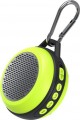 | 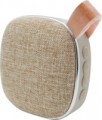 |
|---|---|---|
| Pixus Active | Hoco BS9 Light textile | |
| Outdated Product | Outdated Product | |
| User reviews | ||
| TOP sellers | ||
Connection | ||
| Sources and media | Bluetooth mini-Jack (3.5 mm) card reader | Bluetooth mini-Jack (3.5 mm) card reader |
Acoustic characteristics | ||
| Number of channels | 1.0 (mono) | 1.0 (mono) |
| Output power | 3 W | 3 W |
| Frequency range | 120 – 20000 Hz | |
| Features | speakerphone | speakerphone |
| More features | carbine / clamping | carbine / clamping |
Battery | ||
| Battery life | 6 h | 6 h |
| USB charging port | microUSB | microUSB |
General | ||
| Material | rubber / silicone | |
| Size (HxWxD) | 82x72x40 mm | 90x90x40 mm |
| Weight | 101 g | 290 g |
| Color | ||
| Added to E-Catalog | january 2018 | november 2017 |


Compare Pixus Active and Hoco BS9 Light textile
You may be interested in
My comparisons
Pixus Active often compared


Glossary
Frequency range
The range of audio frequencies reproduced by the audio system. The wider the range, the richer the sound, the more details the speakers can convey, especially in the low and high frequencies. At the same time, we note that the average human ear is able to hear sounds in the range of about 16 – 20,000 Hz, and it makes no sense to provide a wider range in speakers — a person simply will not hear it. Also note that a wide frequency range alone does not guarantee good sound quality.
Material
The main material used in the construction of the hull.
— Plastic. Inexpensive and at the same time very convenient material for portable acoustics. Plastic easily accepts a variety of colours and complex shapes; the latter not only gives space to designers, creating speakers of unusual design, but also allows you to apply various tricks to improve sound quality. In addition, this material is not afraid of moisture. It is believed that the strength of plastic is not very high, but this disadvantage is easily compensated by the large thickness of the material or the use of special impact-resistant grades. Therefore, plastic is found in all categories of speakers, from low-cost to high-end and from "home" to extreme, designed for an active lifestyle and frequent outdoor use.
— Metal. The metal gives the speakers a solid and expensive appearance, and on the practical side, this material is remarkable primarily for its high strength. At the same time, it is much more expensive than plastic — also due to the fact that manufacturers have to use shock-absorbing inserts and other tricks to avoid an unpleasant "metallic" coloration of the sound; and the mentioned strength is most often not critical. Therefore, metal cases are much less common than plastic cases, mainly in rather expensive portable acoustics.
— Silicone. Relatively soft and elastic mate...rial, not afraid of moisture. Suitable for creating dust, moisture and shock-proof speakers; in addition, it is convenient for models with suction cups (see above) — the part of the body that has the appropriate shape can play the role of a suction cup directly. At the same time, silicone has no other noticeable advantages over plastic, so its use is limited to specific models of portable acoustics.
— Rubber. For a number of reasons, rubber is considered well suited for models with dust and water protection, almost all speakers made of this material are protected. In addition, due to the softness of the rubber provides good shockproof properties.
— Wood. Wood is considered the optimal material for speaker cabinets in terms of acoustics. However, the specificity of portable speakers is such that this moment is not decisive in this case, and the main advantage of wooden cases over others (primarily plastic ones) is their aesthetic appearance, with characteristic colours and patterns. In addition, many consider wood a more pleasant to the touch and “natural” material. But this option does not have any special practical advantages, despite the fact that it is quite expensive. As a result, portable speakers with wooden cases are rare — they are mostly designer models created based on the original design.
— Plastic. Inexpensive and at the same time very convenient material for portable acoustics. Plastic easily accepts a variety of colours and complex shapes; the latter not only gives space to designers, creating speakers of unusual design, but also allows you to apply various tricks to improve sound quality. In addition, this material is not afraid of moisture. It is believed that the strength of plastic is not very high, but this disadvantage is easily compensated by the large thickness of the material or the use of special impact-resistant grades. Therefore, plastic is found in all categories of speakers, from low-cost to high-end and from "home" to extreme, designed for an active lifestyle and frequent outdoor use.
— Metal. The metal gives the speakers a solid and expensive appearance, and on the practical side, this material is remarkable primarily for its high strength. At the same time, it is much more expensive than plastic — also due to the fact that manufacturers have to use shock-absorbing inserts and other tricks to avoid an unpleasant "metallic" coloration of the sound; and the mentioned strength is most often not critical. Therefore, metal cases are much less common than plastic cases, mainly in rather expensive portable acoustics.
— Silicone. Relatively soft and elastic mate...rial, not afraid of moisture. Suitable for creating dust, moisture and shock-proof speakers; in addition, it is convenient for models with suction cups (see above) — the part of the body that has the appropriate shape can play the role of a suction cup directly. At the same time, silicone has no other noticeable advantages over plastic, so its use is limited to specific models of portable acoustics.
— Rubber. For a number of reasons, rubber is considered well suited for models with dust and water protection, almost all speakers made of this material are protected. In addition, due to the softness of the rubber provides good shockproof properties.
— Wood. Wood is considered the optimal material for speaker cabinets in terms of acoustics. However, the specificity of portable speakers is such that this moment is not decisive in this case, and the main advantage of wooden cases over others (primarily plastic ones) is their aesthetic appearance, with characteristic colours and patterns. In addition, many consider wood a more pleasant to the touch and “natural” material. But this option does not have any special practical advantages, despite the fact that it is quite expensive. As a result, portable speakers with wooden cases are rare — they are mostly designer models created based on the original design.