
Comparison Tramp TRC-028 1.2 L vs Vitesse VS-8339 1.2 L
Add to comparison | 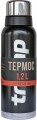 | 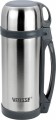 |
|---|---|---|
| Tramp TRC-028 1.2 L | Vitesse VS-8339 1.2 L | |
from $25.00 up to $27.80 | from $31.56 up to $34.64 | |
| User reviews | ||
| TOP sellers | ||
Long time to maintain the temperature of the contents. Possibility of pouring liquid without completely unscrewing the cap. Additional cup. | ||
| Type | thermos | thermos |
Specs | ||
| Capacity | 1200 ml | 1200 ml |
| Closure / dispensing | screw-on (screw type) | valve (push-button) |
| Flask material | stainless steel | stainless steel |
| Material | stainless steel | stainless steel |
| Temperature after 6 hours | 82 ° | |
| Temperature after 12 hours | 72 ° | |
| Temperature after 24 hours | 58 ° | |
| Additional cup / bowl |  |  |
| Carrying handle | | |
| Shoulder strap | | |
| Dimensions (HxD) | 305x90 mm | |
| Weight | 612 g | |
| Color | ||
| Added to E-Catalog | august 2013 | august 2013 |


Compare Tramp TRC-028 and Vitesse VS-8339
You may be interested in
My comparisons
Tramp TRC-028 often compared


Glossary
Closure / dispensing
Type of main lid provided with the thermos. The main lid in this case is the device that directly closes the working volume of the vessel; an additional cap may be fitted over it, often also serving as a cup. Modern thermoses feature the following types of main lids: screw-on (threaded), valve, lid, flip-top lid, drinking lid, pump, stopper. Here are the features of each.
— Screw-on (threaded). A solid (without openings) screw-on lid secured with threads. Such lids are very simple and reliable, but a classic screw-on lid cannot be used for drinking or pouring out the contents — it must be removed completely. There are also more advanced designs that allow the contents to be poured out without removing the screw-on lid — it is enough to unscrew it partially; however, this is a rather specialized option that is used infrequently. In any case, screw-on lids are found mainly among classic and food thermoses (see “Type”), for which these nuances are not decisive.
— Valve. A lid (most often threaded) equipped with a valve through which the liquid contents of the thermos can flow freely. Such lids are more complex and expensive than “sealed” screw-on lids (see above), but accessing the contents does not require unscrewing the l...id every time — it is enough to open the valve. This not only provides additional convenience but also reduces heat loss. Thanks to these advantages, valves are extremely popular in classic thermoses and are also often used in thermal mugs (see “Type”). One disadvantage of this option is that the valve opening is usually quite narrow and can easily become clogged with impurities (for example, tea leaves or coffee grounds). Therefore, a valve can only be used for liquids without such impurities (this also applies to food thermoses, which may likewise be equipped with valves). However, some models come with two different valves for drinks of different consistencies and flavors.
— Lid. In this case, lids are devices without threads (unlike the screw-on lids described above) that are held in place solely by friction or a latch. The design of lids may vary: some fit around the neck from the outside, while others are pressed inward when closed; more specialized options are also available. In any case, lids are easy to remove and replace, but are not very reliable — for example, turning such vessels upside down is not recommended. Therefore, this option is found mainly in thermal mugs and food thermoses (see “Type”), for which these disadvantages are not critical.
— Flip-top lid. A type of the lids described above that, when opened, does not come off completely but flips to the side on a special hinge. This reduces the likelihood of loss: essentially, the lid can only be lost together with the thermos itself; a latch, spring, or similar device is usually provided to hold the lid open. On the other hand, the attachment somewhat affects the price and dimensions of the vessel. This disadvantage is least critical for flasks and mugs (see “Type”), and flip-top lids are most commonly found among these types.
— Drinking lid. A lid (ordinary or threaded) supplemented with a special drinking opening. This design allows you to drink from the vessel without removing the lid; when not in use, the opening is covered by a flap or another similar device. Drinking lids are extremely popular in thermal mugs and car mugs (see “Type”): they allow you to drink comfortably from the mug while minimizing heat loss and the risk of spilling the contents.
— Pump. A lid (classic or threaded) with a built-in pump. Most often, this pump is operated by a special button: when the button is pressed, a portion of liquid flows from the spout, so the thermos does not need to be tilted. However, such devices are rather complex and bulky, so they make sense only in thermos pitchers (see “Type”): the pump’s size and weight are small compared with the dimensions of the pitcher itself, and tilting such a thermos can be difficult — using the pump is easier.
— Stopper. A classic stopper that fits tightly into the neck of the thermos and is held there without threads or other similar devices. Unlike the lids described above, stoppers are thicker and are inserted into the neck from the inside (whereas a lid may fit around the vessel from the outside). Stoppers are very simple to use but have low reliability, which decreases further as they wear out. As a result, this option has virtually fallen out of use.
— Screw-on (threaded). A solid (without openings) screw-on lid secured with threads. Such lids are very simple and reliable, but a classic screw-on lid cannot be used for drinking or pouring out the contents — it must be removed completely. There are also more advanced designs that allow the contents to be poured out without removing the screw-on lid — it is enough to unscrew it partially; however, this is a rather specialized option that is used infrequently. In any case, screw-on lids are found mainly among classic and food thermoses (see “Type”), for which these nuances are not decisive.
— Valve. A lid (most often threaded) equipped with a valve through which the liquid contents of the thermos can flow freely. Such lids are more complex and expensive than “sealed” screw-on lids (see above), but accessing the contents does not require unscrewing the l...id every time — it is enough to open the valve. This not only provides additional convenience but also reduces heat loss. Thanks to these advantages, valves are extremely popular in classic thermoses and are also often used in thermal mugs (see “Type”). One disadvantage of this option is that the valve opening is usually quite narrow and can easily become clogged with impurities (for example, tea leaves or coffee grounds). Therefore, a valve can only be used for liquids without such impurities (this also applies to food thermoses, which may likewise be equipped with valves). However, some models come with two different valves for drinks of different consistencies and flavors.
— Lid. In this case, lids are devices without threads (unlike the screw-on lids described above) that are held in place solely by friction or a latch. The design of lids may vary: some fit around the neck from the outside, while others are pressed inward when closed; more specialized options are also available. In any case, lids are easy to remove and replace, but are not very reliable — for example, turning such vessels upside down is not recommended. Therefore, this option is found mainly in thermal mugs and food thermoses (see “Type”), for which these disadvantages are not critical.
— Flip-top lid. A type of the lids described above that, when opened, does not come off completely but flips to the side on a special hinge. This reduces the likelihood of loss: essentially, the lid can only be lost together with the thermos itself; a latch, spring, or similar device is usually provided to hold the lid open. On the other hand, the attachment somewhat affects the price and dimensions of the vessel. This disadvantage is least critical for flasks and mugs (see “Type”), and flip-top lids are most commonly found among these types.
— Drinking lid. A lid (ordinary or threaded) supplemented with a special drinking opening. This design allows you to drink from the vessel without removing the lid; when not in use, the opening is covered by a flap or another similar device. Drinking lids are extremely popular in thermal mugs and car mugs (see “Type”): they allow you to drink comfortably from the mug while minimizing heat loss and the risk of spilling the contents.
— Pump. A lid (classic or threaded) with a built-in pump. Most often, this pump is operated by a special button: when the button is pressed, a portion of liquid flows from the spout, so the thermos does not need to be tilted. However, such devices are rather complex and bulky, so they make sense only in thermos pitchers (see “Type”): the pump’s size and weight are small compared with the dimensions of the pitcher itself, and tilting such a thermos can be difficult — using the pump is easier.
— Stopper. A classic stopper that fits tightly into the neck of the thermos and is held there without threads or other similar devices. Unlike the lids described above, stoppers are thicker and are inserted into the neck from the inside (whereas a lid may fit around the vessel from the outside). Stoppers are very simple to use but have low reliability, which decreases further as they wear out. As a result, this option has virtually fallen out of use.
Temperature after 6 hours
The main property of a thermos is to maintain the temperature of the liquid poured into it. Accordingly, the key parameter of efficiency is not so much the case material or some of its heat-insulating marketing chips, but the value of the water temperature after a certain period of time. So manufacturers, confident in the quality of their products, are happy to share their achievements. The temperature value after 6 hours shows how many degrees the boiling water poured into the thermos (98 °C) will cool down at an ambient temperature of about 20 °. And values of more than 80 ° can be considered very worthy.
Temperature after 12 hours
The main property of a thermos is to maintain the temperature of the liquid poured into it. Accordingly, the key parameter of efficiency is not so much the case material or some of its heat-insulating marketing chips, but the value of the water temperature after a certain period of time. So manufacturers, confident in the quality of their products, are happy to share their achievements. The temperature value after 12 hours shows how many degrees the boiling water poured into the thermos will cool (98 ° C) at an ambient temperature of about 20 °.
Temperature after 24 hours
The main property of a thermos is to maintain the temperature of the liquid poured into it. Accordingly, the key parameter of efficiency is not so much the case material or some of its heat-insulating marketing chips, but the value of the water temperature after a certain period of time. So manufacturers, confident in the quality of their products, are happy to share their achievements. The temperature value after 24 hours shows how many degrees the boiling water poured into the thermos will cool (98 °C) at an ambient temperature of about 20 °. And with values of more than 50 °, a thermos can be considered one that keeps the temperature for a long time.
Additional cup / bowl
This feature means that the thermos is equipped with two cups or bowls at once (depending on the type, see above).
Many modern thermoses are equipped with a drinking cup or a food bowl; in the stowed position, such a container usually plays the role of a lid. In some models of cups / bowls, there can be two at once, which is useful if the thermos is used not only for yourself: you do not have to carry additional dishes with you separately.
Many modern thermoses are equipped with a drinking cup or a food bowl; in the stowed position, such a container usually plays the role of a lid. In some models of cups / bowls, there can be two at once, which is useful if the thermos is used not only for yourself: you do not have to carry additional dishes with you separately.
Carrying handle
The special handle for convenience of carrying of a thermos. The design of such a handle can be different: for example, in ordinary thermoses and thermo mugs (see "Type") it is usually installed on the side, in food thermoses and jugs — from above (and is made collapsible). The handle can be a structural element of both the thermos itself and its cover (see below). In addition, the small carrying strap that some models are equipped with is also considered a handle in this case (but the shoulder strap does not count, see below).
Anyway, holding a thermos by the handle is usually more convenient and safer than by the smooth body, especially when it comes to a large-capacity model.
Anyway, holding a thermos by the handle is usually more convenient and safer than by the smooth body, especially when it comes to a large-capacity model.
Shoulder strap
The presence in the design of the thermos of a special belt, which allows you to comfortably carry the container on your shoulder. This function is usually found in large-capacity models, primarily food ones (see "Type"): it is much easier to carry a weighty thermos in this way than in your hands, and it's more convenient — your hands themselves remain free. Most often, the shoulder strap is attached to the thermos itself, however, in some models, it may be part of the complete cover (see below).