
Comparison Garrett Pro-Pointer AT vs Garrett Pro-Pointer
Add to comparison | 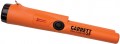 |  |
|---|---|---|
| Garrett Pro-Pointer AT | Garrett Pro-Pointer | |
| Compare prices 1 | from £286.40 | |
| User reviews | ||
| TOP sellers | ||
Comb for cleaning finds | Comb for cleaning finds | |
| Type | pinpointer | pinpointer |
| Suitable for | underwater | ground |
| Principle of operation | VLF | VLF |
Coil/frame | ||
| Waterproof |  | |
Specs | ||
| Number of detection frequencies | 1 | 1 |
| Detection frequency | 11.5 kHz | 12 kHz |
Features | ||
| Functions | tone identification vibration response | tone identification vibration response |
| More features | built-in speaker built-in flashlight | built-in speaker built-in flashlight |
General | ||
| Power source | PP3 x1 | PP3 x1 |
| Max. operating hours | 30 h | 30 h |
| Additionally included | battery, case | battery, case |
| Weight | 0.2 kg | 0.2 kg |
| Added to E-Catalog | august 2015 | august 2014 |


Compare Garrett Pro-Pointer AT and Pro-Pointer
Price comparison
You may be interested in
Garrett Pro-Pointer AT often compared


Garrett Pro-Pointer often compared
Glossary
Suitable for
- Ground. Metal detectors designed to find metal objects buried in the ground - from coins and other historical artifacts to pipelines and caches. They can have different characteristics and scope of application - from the simplest models, suitable only for collecting scrap metal, to powerful professional devices capable of searching even at a depth of a couple of meters. The coil can be protected from moisture (see below), but ground metal detectors are not designed for complete immersion in water.
- Underwater. Metal detectors, designed, as the name suggests, to search for objects under water - primarily at the bottom of reservoirs. Their main features are due to optimization for the environment: a sealed waterproof case (in most cases, with the ability to submerge the entire body to a depth of several meters), the ability to work with wet salty soils, and a weight distribution designed for ease of use under water. Also, such models are usually equipped with waterproof headphones. Note that buying such a device for land use is hardly justified: holding an underwater metal detector in the air is not as convenient as a regular ground detector, and the expensive moisture protection of the case loses all its meaning.
- Inspector. Devices designed to conduct searches and search for metal objects on the human body, under clothing. They are used by law enfo...rcement agencies, security services at airports, train stations, security agencies, etc. Note that in this case we are not talking about stationary “frames”, but only about hand-held detectors. Almost all of them belong to pinpointers (see “Type”) and have a fairly compact size. Thanks to this, the device can be used as a portable device for express inspections, constantly carried with you along with other equipment. However, such a detector can also be useful at a stationary checkpoint, in addition to the frame - it helps to determine exactly where on the body the object that “disturbed” the frame is located.
— For mine clearance. Highly specialized metal detectors for detecting mines or other explosive objects left by the echo of wars and hostilities. Such devices do not need to separate finds by type of metal. Their main purpose is to search for large projectiles, but there are other types of devices for solving specific problems (for example, detecting plastid with a fuse). Small pieces of hardware are usually ignored by such metal detectors. Mine clearance detectors are rarely found in common use, and they are incredibly expensive. Devices for this purpose are heavy and inconvenient, but durable and resistant to weather conditions. They are aimed at professional use by the military and rescue workers.
- Underwater. Metal detectors, designed, as the name suggests, to search for objects under water - primarily at the bottom of reservoirs. Their main features are due to optimization for the environment: a sealed waterproof case (in most cases, with the ability to submerge the entire body to a depth of several meters), the ability to work with wet salty soils, and a weight distribution designed for ease of use under water. Also, such models are usually equipped with waterproof headphones. Note that buying such a device for land use is hardly justified: holding an underwater metal detector in the air is not as convenient as a regular ground detector, and the expensive moisture protection of the case loses all its meaning.
- Inspector. Devices designed to conduct searches and search for metal objects on the human body, under clothing. They are used by law enfo...rcement agencies, security services at airports, train stations, security agencies, etc. Note that in this case we are not talking about stationary “frames”, but only about hand-held detectors. Almost all of them belong to pinpointers (see “Type”) and have a fairly compact size. Thanks to this, the device can be used as a portable device for express inspections, constantly carried with you along with other equipment. However, such a detector can also be useful at a stationary checkpoint, in addition to the frame - it helps to determine exactly where on the body the object that “disturbed” the frame is located.
— For mine clearance. Highly specialized metal detectors for detecting mines or other explosive objects left by the echo of wars and hostilities. Such devices do not need to separate finds by type of metal. Their main purpose is to search for large projectiles, but there are other types of devices for solving specific problems (for example, detecting plastid with a fuse). Small pieces of hardware are usually ignored by such metal detectors. Mine clearance detectors are rarely found in common use, and they are incredibly expensive. Devices for this purpose are heavy and inconvenient, but durable and resistant to weather conditions. They are aimed at professional use by the military and rescue workers.
Detection frequency
The operating frequency (or frequency range) of the metal detector. This is one of the most important parameters when choosing a device, because the optimal frequency for different cases will be different — depending on the size and material of the items being searched, the characteristics of the soil and other factors. Detailed recommendations on the choice of frequency for each specific situation can be found in special sources; And already on the basis of this information, it is worth choosing a specific model.
Note that the actual frequency at which the metal detector will operate also depends on the installed coil — they are usually made for a specific frequency. Therefore, to use the full capabilities of the device with the ability to adjust this parameter, you may need replaceable coils.
Note that the actual frequency at which the metal detector will operate also depends on the installed coil — they are usually made for a specific frequency. Therefore, to use the full capabilities of the device with the ability to adjust this parameter, you may need replaceable coils.