
Comparison Gazer CC100 Universal vs Gazer CC125
Add to comparison | 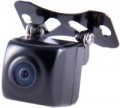 | 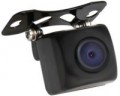 |
|---|---|---|
| Gazer CC100 Universal | Gazer CC125 | |
from $42.00 up to $52.18 | from $55.72 up to $65.27 | |
| TOP sellers | ||
A car monitor can be sold with a reversing camera | Reversing camera can be sold with a car monitor | |
| Type | reversing camera | reversing camera |
| Instalation type | universal | universal |
Camera | ||
| Sensor type | CMOS | CMOS |
| Sensor size | 1/4 " | 1/4 " |
| Video resolution | 720х576 px | 720х576 px |
| Video resolution (TVL) | 540 | 540 |
| Camera angle | 170 ° | 170 ° |
| Сolour encoding system | NTSC | NTSC, PAL |
| Signal-to-noise ratio | 46 dB | 46 dB |
| Min. illumination | 0.1 lux | 0.1 lux |
| Image mode | mirror | mirror / non-mirror |
Features | ||
| More features | parking marks waterproof | parking marks waterproof |
| Added to E-Catalog | may 2016 | february 2016 |


Compare Gazer CC100 Universal and CC125
You may be interested in
Gazer CC100 Universal often compared

Gazer CC125 often compared


Glossary
Сolour encoding system
The colour system refers to the format in which colour information is transmitted in an analogue video signal. In modern reversing cameras, the European PAL system or the American NTSC are most often used. It makes no sense to describe them in detail — suffice it to say that for the normal operation of the camera you need a radio tape recorder (or other device with a screen on which the image is displayed) with support for the same colour system. However, incompatibility in this parameter is not fatal — with such a connection, the image will only turn from colour to black and white (in extreme cases, its overall quality will slightly deteriorate).
Image mode
The format for displaying the image on the connected screen. For each type of review (see above), there is a different option that is optimal.
— Direct. The traditional way of displaying an image: the user sees on the screen the same thing that the camera lens "sees" in front of him, with the same arrangement of the details of the situation. Simply put, if some object is located to the left of the centre of the camera's field of view, it will also be visible on the screen on the left side. All front view cameras work this way.
— Mirror. In this mode, an image is displayed on the screen that is “mirrored” horizontally — roughly speaking, one in which “left” and “right” are reversed: an object to the left of the camera lens will be visible on the right side of the screen, and vice versa. All cameras with a rear view type work in a similar way. This is due to the fact that in an ordinary rear-view mirror the driver sees exactly the picture inverted horizontally; therefore, in order for the sides of the picture on the screen to correspond to the usual view in the mirror, the image coming from the camera has to be “mirrored”.
— Direct / mirror. Cameras capable of operating in any of the picture modes described above. Usually, these are universal models (see “Installation”), which formally refer to the rear view type in our catalog (see above), but also allow front view.
— Direct. The traditional way of displaying an image: the user sees on the screen the same thing that the camera lens "sees" in front of him, with the same arrangement of the details of the situation. Simply put, if some object is located to the left of the centre of the camera's field of view, it will also be visible on the screen on the left side. All front view cameras work this way.
— Mirror. In this mode, an image is displayed on the screen that is “mirrored” horizontally — roughly speaking, one in which “left” and “right” are reversed: an object to the left of the camera lens will be visible on the right side of the screen, and vice versa. All cameras with a rear view type work in a similar way. This is due to the fact that in an ordinary rear-view mirror the driver sees exactly the picture inverted horizontally; therefore, in order for the sides of the picture on the screen to correspond to the usual view in the mirror, the image coming from the camera has to be “mirrored”.
— Direct / mirror. Cameras capable of operating in any of the picture modes described above. Usually, these are universal models (see “Installation”), which formally refer to the rear view type in our catalog (see above), but also allow front view.