
Comparison URAGAN 90140 vs URAGAN 90130
Add to comparison | 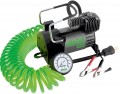 | 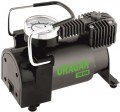 |
|---|---|---|
| URAGAN 90140 | URAGAN 90130 | |
from $24.68 | from $19.60 up to $23.60 | |
| TOP sellers | ||
| Type | compressor | compressor |
| Power source | 12 В | 12 В |
Specs | ||
| Pressure gauge | analogue | analogue |
| Max. pressure | 7 Atm | 7 Atm |
| Performance | 40 L/min | 37 L/min |
| Connection | crocodiles | cigarette lighter |
| Power cord length | 3 m | 3 m |
| Hose length | 5.7 m | 1 m |
General | ||
| Cover/case |  | |
| Added to E-Catalog | february 2016 | february 2016 |


Compare URAGAN 90140 and 90130
You may be interested in
My comparisons
URAGAN 90140 often compared


URAGAN 90130 often compared


Glossary
Performance
The capacity of the compressor (see "Type") is the maximum amount of air that it can pump into the tyre in a minute.
Higher performance reduces the time required to inflate the wheel; on the other hand, this parameter directly affects the dimensions, weight, power consumption and price of the compressor. So it is worth choosing according to performance, taking into account real needs. So, for a “duty” tyre inflation in a passenger car, a compressor with a low operating speed is quite enough — up to 20 L / min inclusive. And if the speed of full pumping is also important for you (for example, after replacing the rubber) — you can choose a unit for 21 – 40 L / min. In turn, models with more solid characteristics — 41 – 60 L / min and more — are intended mainly for heavy equipment like SUVs, trucks, tractors, etc.
Separately, it should be noted that this parameter is NOT suitable for calculating the exact inflation time (even if the exact volume of air in the wheel is known). The fact is that the actual performance of the compressor is always lower than the claimed one: the figures in the characteristics are indicated for free air outlet, and when pumping the wheels, the pumping speed will inevitably be lower due to the resistance of the nipple.
Higher performance reduces the time required to inflate the wheel; on the other hand, this parameter directly affects the dimensions, weight, power consumption and price of the compressor. So it is worth choosing according to performance, taking into account real needs. So, for a “duty” tyre inflation in a passenger car, a compressor with a low operating speed is quite enough — up to 20 L / min inclusive. And if the speed of full pumping is also important for you (for example, after replacing the rubber) — you can choose a unit for 21 – 40 L / min. In turn, models with more solid characteristics — 41 – 60 L / min and more — are intended mainly for heavy equipment like SUVs, trucks, tractors, etc.
Separately, it should be noted that this parameter is NOT suitable for calculating the exact inflation time (even if the exact volume of air in the wheel is known). The fact is that the actual performance of the compressor is always lower than the claimed one: the figures in the characteristics are indicated for free air outlet, and when pumping the wheels, the pumping speed will inevitably be lower due to the resistance of the nipple.
Connection
Methods of connecting to a power source provided by the compressor’s design (see “Type”).
— Cigarette lighter. Connection to a standard cigarette lighter socket (or a separate automotive socket of the same format). This method is convenient because you do not need to open the hood to operate the compressor. On the other hand, cigarette lighter sockets have maximum power limitations, and these limitations can vary considerably between different vehicles (and even between different sockets in the same vehicle). For details, see “Power consumption”.
— “Crocodile clips”. Direct connection to the battery terminals using crocodile-style clamps. This method is somewhat more complicated than operating from a cigarette lighter socket—you need to open the hood and run the wires to the battery. On the other hand, it allows the vehicle’s electrical system to be used at full capacity, without worrying about overloads or the integrity of the fuses, making it suitable even for the most powerful and high-performance compressors. In addition, the device can be connected with crocodile clips not only to the vehicle’s electrical system but also to a separate battery; in some cases, this option can be useful (for example, if the vehicle’s own battery is already running low but a charged battery is available nearby).
— Cigarette lighter/“crocodile clips”. The opti...on to use either of the connection methods described above, as preferred. This provides convenience and allows you to choose the optimal operating format depending on the situation. For example, you can use the cigarette lighter socket to quickly inflate one or two tires, while power through crocodile clips is better suited for extended operation.
— Plug. A plug for connection to a standard 230 V socket (see “Power supply”). Used in compressors that have only this type of power supply.
— Cigarette lighter/plug. An option found in models that can operate from both 12 V and 230 V; the cigarette lighter socket is used for the former, and the plug for the latter.
— Cable (to the battery). Direct connection to the battery using cables with flat contacts, which are secured in the battery terminals when connected. This design provides a more secure connection than the “crocodile clips” described above, but is less convenient when connecting and disconnecting the compressor.
— Cigarette lighter. Connection to a standard cigarette lighter socket (or a separate automotive socket of the same format). This method is convenient because you do not need to open the hood to operate the compressor. On the other hand, cigarette lighter sockets have maximum power limitations, and these limitations can vary considerably between different vehicles (and even between different sockets in the same vehicle). For details, see “Power consumption”.
— “Crocodile clips”. Direct connection to the battery terminals using crocodile-style clamps. This method is somewhat more complicated than operating from a cigarette lighter socket—you need to open the hood and run the wires to the battery. On the other hand, it allows the vehicle’s electrical system to be used at full capacity, without worrying about overloads or the integrity of the fuses, making it suitable even for the most powerful and high-performance compressors. In addition, the device can be connected with crocodile clips not only to the vehicle’s electrical system but also to a separate battery; in some cases, this option can be useful (for example, if the vehicle’s own battery is already running low but a charged battery is available nearby).
— Cigarette lighter/“crocodile clips”. The opti...on to use either of the connection methods described above, as preferred. This provides convenience and allows you to choose the optimal operating format depending on the situation. For example, you can use the cigarette lighter socket to quickly inflate one or two tires, while power through crocodile clips is better suited for extended operation.
— Plug. A plug for connection to a standard 230 V socket (see “Power supply”). Used in compressors that have only this type of power supply.
— Cigarette lighter/plug. An option found in models that can operate from both 12 V and 230 V; the cigarette lighter socket is used for the former, and the plug for the latter.
— Cable (to the battery). Direct connection to the battery using cables with flat contacts, which are secured in the battery terminals when connected. This design provides a more secure connection than the “crocodile clips” described above, but is less convenient when connecting and disconnecting the compressor.
Hose length
The length of the hose through which air is pumped into the tyre. The larger it is, the more convenient the device is to use. But it is rare that the compressor is left far from the wheel, especially if a pressure gauge is placed on the device, which must be periodically checked. For domestic use in cars, a one and a half metre long hose is enough. Powerful and performant models can be equipped with a hose of 7 metres or more, but these are more solutions for commercial use in car services.